
Selayar Whistler
Pachycephala teysmanni
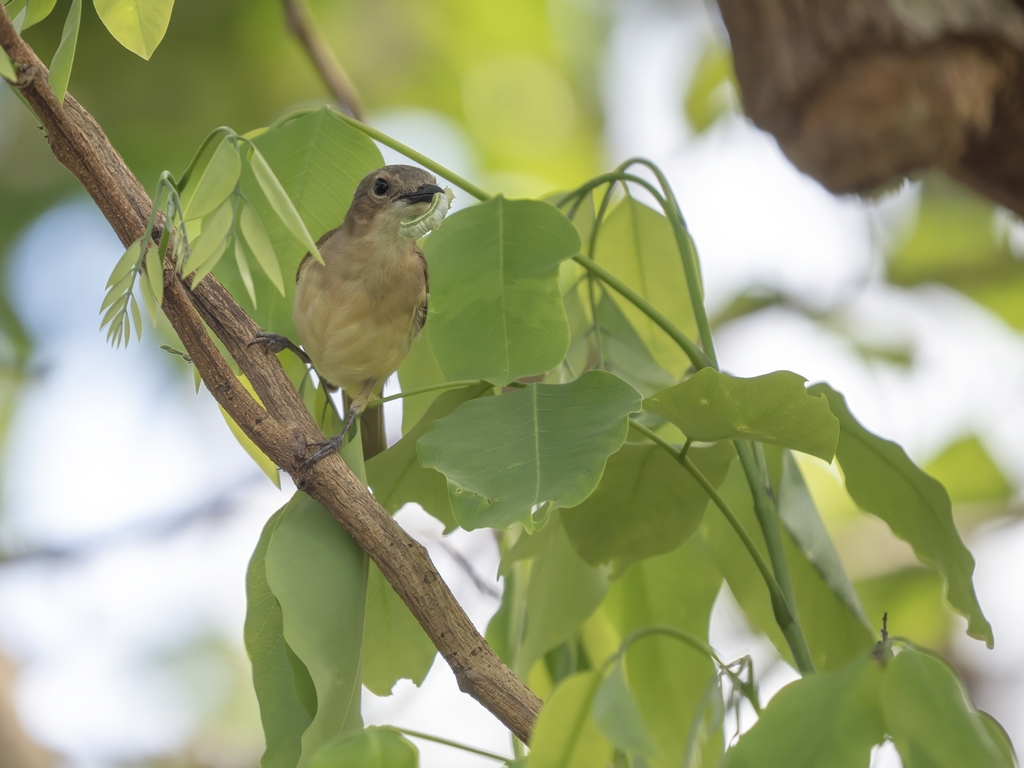
The Selayar whistler (Pachycephala teysmanni) is a species of songbird in the family Pachycephalidae.
- Kingdom
- Animalia
- Phylum
- Chordata
- Class
- Aves
- Order
- Passeriformes
- Family
- Pachycephalidae
- Genus
- Pachycephala
- Species
- Pachycephala teysmanni
Description
The Selayar whistler (Pachycephala teysmanni) is a species of songbird in the family Pachycephalidae. Described by the Swiss zoologist Johann Büttikofer in 1878, it is endemic to the Indonesian island of Selayar, off the southwestern coast of Sulawesi. After its initial description, it was long considered a subspecies of the golden whistler and later the rusty-breasted whistler, before being raised to species status again in 2016. Selayar whistlers are around 16–17 cm (6.3–6.7 in) in length. Adult males have grey heads, white throats, olive-green upperparts, pinkish underparts, and brownish-olive tail and wing feathers. Adult females are largely similar to males, but have dark ochre lores and rufous ear-coverts. The similar appearances of the sexes in this species helps differentiate it from the rusty-breasted whistler; in that species, males have black-and-yellow plumage, contrasting with the female's olive-brown colouration. The Selayar whistler prefers forested habitats, but also occurs in shrubland, savanna, and rural gardens. Its natural history is poorly studied, but it is known to feed on invertebrates and fruit. The whistler is classified as being of least concern by the International Union for Conservation of Nature, as its population is thought to be stable and no significant threats to the species are known.
Gallery
Ajouter des photos
Partagez vos photos de cette espèce (jusqu'à 20 à la fois) : elles sont vérifiées automatiquement, puis publiées.
Répartition
Occurrences observées (données GBIF). Les zones hors aire d'origine peuvent indiquer une présence introduite ou invasive.
Sources et crédits
Informations provenant de plusieurs sources vérifiées. Dernière mise à jour : .
Crédits photos (6)
- Photo : James Eaton (@james_birdtourasia) · CC0 (domaine public) · via iNaturalist
- Photo : @khalebyordan · CC BY-NC 4.0 · via iNaturalist
- Photo : Forest Botial-Jarvis (@tiluchi) · CC BY 4.0 · via iNaturalist
- Photo : @boasemmanuel · CC BY-NC 4.0 · via iNaturalist
- Photo : James Eaton (@james_birdtourasia) · CC0 (domaine public) · via iNaturalist
- Photo : Forest Botial-Jarvis (@tiluchi) · CC BY 4.0 · via iNaturalist
Mentions de licence
Texte disponible sous licence CC BY-SA 4.0. Il adapte notamment Wikipedia (CC BY-SA) : Selayar whistler (Wikipédia, auteurs dans l’historique de l’article).
- Taxonomie : GBIF Backbone Taxonomy (CC BY 4.0)
- Carte : occurrences GBIF, fond © contributeurs OpenStreetMap (ODbL)
- Statut de conservation : Liste rouge de l'UICN, via Wikidata (CC0)
Détail : Sources et licences.
Discussion (0)
Aucun message pour l’instant. Lancez la discussion sur cette fiche (sources, précisions, débats éditoriaux).
Connectez-vous pour participer à la discussion.