
Audubon's Oriole
Icterus graduacauda
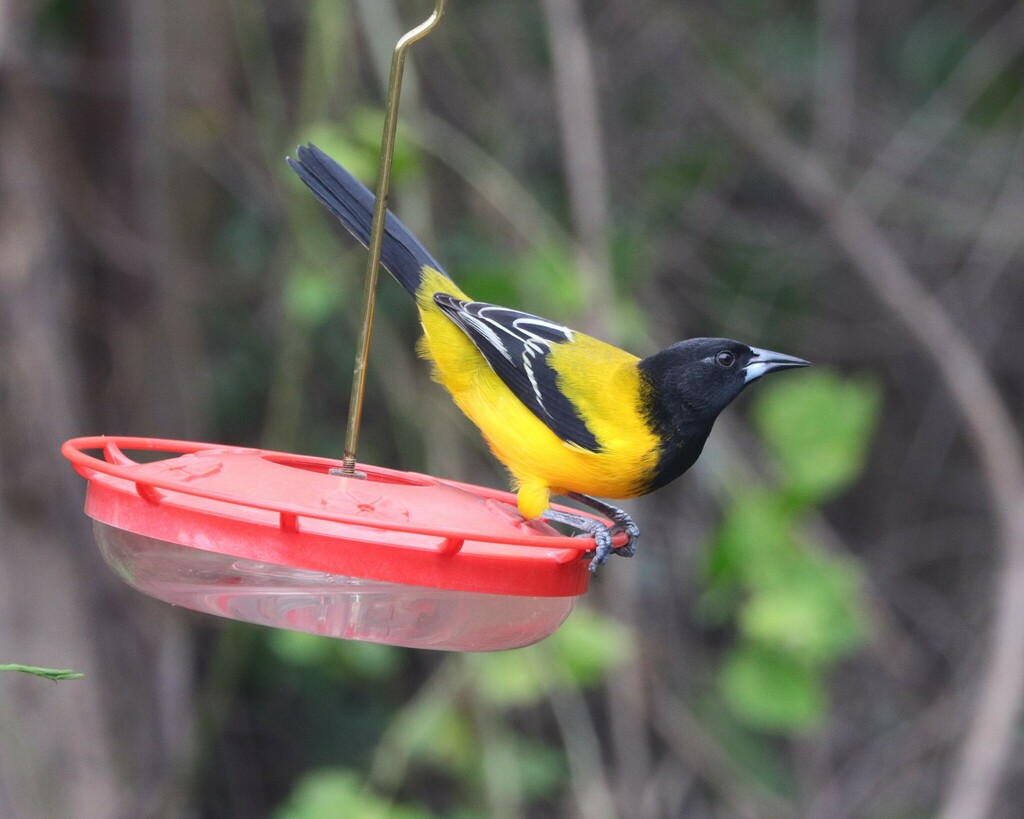
Audubon's oriole (Icterus graduacauda), formerly known as the black-headed oriole, is a New World passerine inhabiting the forests and thickets of southeastern Texas and the Mexican coast.
- Kingdom
- Animalia
- Phylum
- Chordata
- Class
- Aves
- Order
- Passeriformes
- Family
- Icteridae
- Genus
- Icterus
- Species
- Icterus graduacauda
Description
Audubon's oriole (Icterus graduacauda), formerly known as the black-headed oriole, is a New World passerine inhabiting the forests and thickets of southeastern Texas and the Mexican coast. It is the only species to have a black hood and yellow body. It is divided into four subspecies and two allopatric breeding ranges. The westernmost range extends from Nayarit south to southern Oaxaca, whereas the eastern range stretches from the lower Rio Grande valley to northern Querétaro. The most common in the western range are the subspecies I. g. dickeyae and I. g. nayaritensis; I. g. graduacauda and I. g. audubonii can be found in the eastern range. Like most Central American birds, it is not a migratory species and does not display significant sexual dimorphism. DNA analysis of the ND2 and cyt-b genes strongly suggests that I. graduacauda is most closely related to I. chrysater, the yellow-backed oriole. It is a member of the genus Icterus and therefore should not be confused with the Old World orioles.
Gallery
Ajouter des photos
Partagez vos photos de cette espèce (jusqu'à 20 à la fois) : elles sont vérifiées automatiquement, puis publiées.
Répartition
Occurrences observées (données GBIF). Les zones hors aire d'origine peuvent indiquer une présence introduite ou invasive.
Sources et crédits
Informations provenant de plusieurs sources vérifiées. Dernière mise à jour : .
Crédits photos (8)
- Photo : Javi Gonzalez (@javigonz) · CC BY-NC 4.0 · via iNaturalist
- Photo : Diego Pino (@diegopino94) · CC BY-NC 4.0 · via iNaturalist
- Photo : @uzun · CC BY-NC 4.0 · via iNaturalist
- Photo : Rick Nirschl (@ricknirschl) · CC BY-NC 4.0 · via iNaturalist
- Photo : Faby Galleta (@fabygalleta) · CC BY-NC 4.0 · via iNaturalist
- Photo : @rakshas · CC BY-NC 4.0 · via iNaturalist
- Photo : Guardianes de la Reserva (@ecochavoscasitas) · CC BY-NC 4.0 · via iNaturalist
- Photo : Nathan Wahler (@narwahl) · CC BY-NC 4.0 · via iNaturalist
Mentions de licence
Texte disponible sous licence CC BY-SA 4.0. Il adapte notamment Wikipédia (EN) : Audubon's oriole, Oriole d'Audubon, Wikipedia (CC BY-SA) : Audubon's oriole (Wikipédia, auteurs dans l’historique de l’article).
- Taxonomie : GBIF Backbone Taxonomy (CC BY 4.0)
- Carte : occurrences GBIF, fond © contributeurs OpenStreetMap (ODbL)
- Statut de conservation : Liste rouge de l'UICN, via Wikidata (CC0)
Détail : Sources et licences.
Discussion (0)
Aucun message pour l’instant. Lancez la discussion sur cette fiche (sources, précisions, débats éditoriaux).
Connectez-vous pour participer à la discussion.