
Curve-billed Thrasher
Toxostoma curvirostre
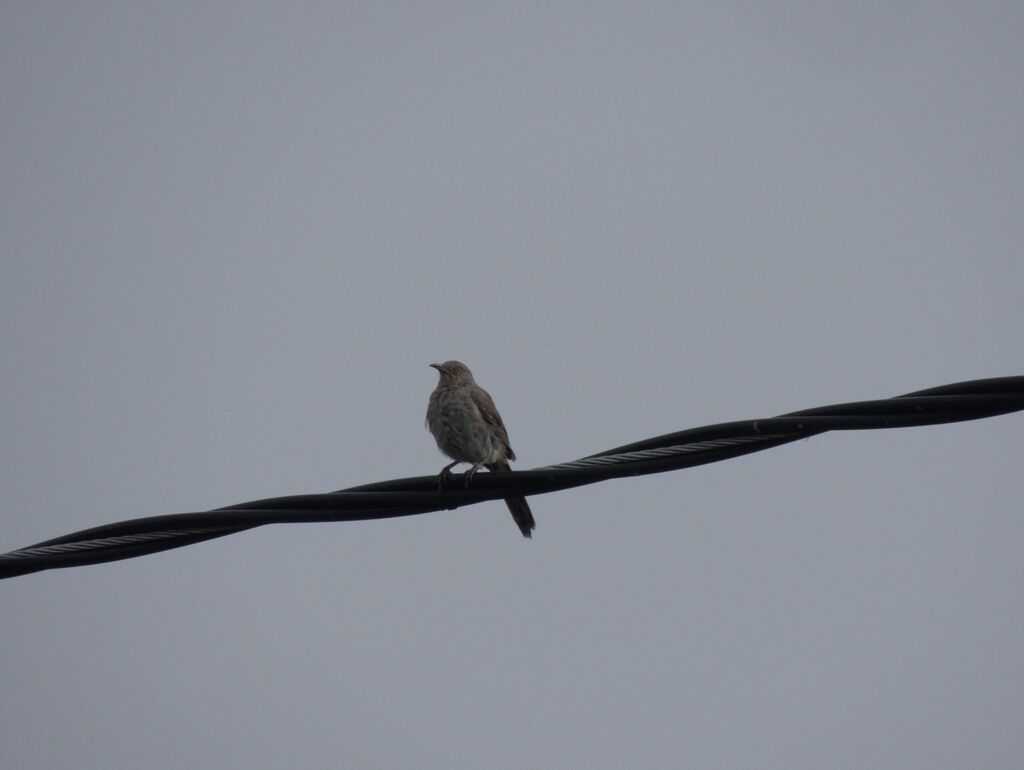
The curve-billed thrasher (Toxostoma curvirostre) is a medium-sized mimid native to most of Mexico and to the deserts of southwestern United States.
- Kingdom
- Animalia
- Phylum
- Chordata
- Class
- Aves
- Order
- Passeriformes
- Family
- Mimidae
- Genus
- Toxostoma
- Species
- Toxostoma curvirostre
Description
The curve-billed thrasher (Toxostoma curvirostre) is a medium-sized mimid native to most of Mexico and to the deserts of southwestern United States. It is a non-migratory species, and throughout most of its range it is the most common desert thrasher. Several subspecies have been classified since 1827, though there is no consensus on the number. Allopatric speciation is believed to have played a major role in the variations of the curve-billed. It is grey-brown overall with a slightly curved bill, and is similar in appearance to the related Bendire's thrasher. It generally resides in desert regions of the United States and Mexico, but can inhabit areas predominately populated by humans. The demeanor of the curve-billed has been described as "shy and rather wild", but it allows humans to view it closely. It is very aggressive in driving out potential threats, whether competitors for food or predators of its chicks. The curve-billed thrasher sometimes mimics several other species, though not to the extent of other mimics. It has a variety of distinctive songs, and this extensive repertoire of melodies has led it to be known as cuicacoche (songbird) in Mexico.
Gallery
Ajouter des photos
Partagez vos photos de cette espèce (jusqu'à 20 à la fois) : elles sont vérifiées automatiquement, puis publiées.
Répartition
Occurrences observées (données GBIF). Les zones hors aire d'origine peuvent indiquer une présence introduite ou invasive.
Sources et crédits
Informations provenant de plusieurs sources vérifiées. Dernière mise à jour : .
Crédits photos (8)
- Photo : Monserrat Ramírez (@tari) · CC BY-NC 4.0 · via iNaturalist
- Photo : Gilberto Ponce Tejeda (@poncetejedai) · CC BY-NC 4.0 · via iNaturalist
- Photo : Steve Jones (@stevejones) · CC BY-NC 4.0 · via iNaturalist
- Photo : Reximiliano (@reximiliano) · CC BY-NC 4.0 · via iNaturalist
- Photo : Hector Caballero Ballesteros (@hcaballero79) · CC BY-NC 4.0 · via iNaturalist
- Photo : Jesús Lenin Lara Galván (@jesus_lenin_lara_galvan) · CC BY-NC 4.0 · via iNaturalist
- Photo : @dsmith81 · CC BY-NC 4.0 · via iNaturalist
- Photo : @temo_design · CC BY-NC 4.0 · via iNaturalist
Mentions de licence
Texte disponible sous licence CC BY-SA 4.0. Il adapte notamment Wikipedia (CC BY-SA) : Curve-billed thrasher (Wikipédia, auteurs dans l’historique de l’article).
- Taxonomie : GBIF Backbone Taxonomy (CC BY 4.0)
- Carte : occurrences GBIF, fond © contributeurs OpenStreetMap (ODbL)
- Statut de conservation : Liste rouge de l'UICN, via Wikidata (CC0)
Détail : Sources et licences.
Discussion (0)
Aucun message pour l’instant. Lancez la discussion sur cette fiche (sources, précisions, débats éditoriaux).
Connectez-vous pour participer à la discussion.