
White-winged Fairywren
Malurus leucopterus
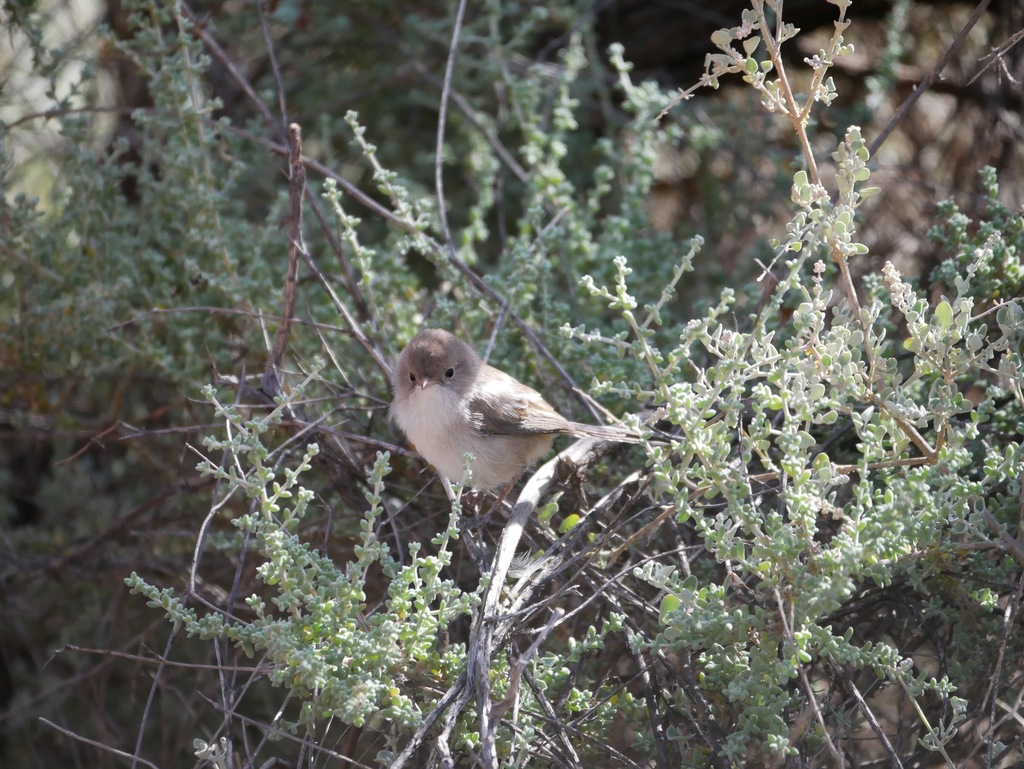
The white-winged fairywren (Malurus leucopterus) is a species of passerine bird in the Australasian wren family, Maluridae.
- Kingdom
- Animalia
- Phylum
- Chordata
- Class
- Aves
- Order
- Passeriformes
- Family
- Maluridae
- Genus
- Malurus
- Species
- Malurus leucopterus
Description
The white-winged fairywren (Malurus leucopterus) is a species of passerine bird in the Australasian wren family, Maluridae. It lives in the drier parts of Central Australia; from central Queensland and South Australia across to Western Australia. Like other fairywrens, this species displays marked sexual dimorphism and one or more males of a social group grow brightly coloured plumage during the breeding season. The female is sandy-brown with light-blue tail feathers; it is smaller than the male, which, in breeding plumage, has a bright-blue body, black bill, and white wings. Younger sexually mature males are almost indistinguishable from females and are often the breeding males. In spring and summer, a troop of white-winged fairywrens has a brightly coloured older male accompanied by small, inconspicuous brown birds, many of which are also male. Three subspecies are recognised. Apart from the mainland subspecies, one is found on Dirk Hartog Island, and another on Barrow Island off the coast of Western Australia. Males from these islands have black rather than blue breeding plumage. The white-winged fairywren mainly eats insects, supplementing this with small fruits and leaf buds. It occurs in heathland and arid scrubland, where low shrubs provide cover. Like other fairywrens, it is a cooperative breeding species, and small groups of birds maintain and defend territories year-round. Groups consist of a socially monogamous pair with several helper birds who assist in raising the young. These helpers are progeny that have attained sexual maturity but remain with the family group for one or more years after fledging. Although not yet confirmed genetically, the white-winged fairywren may be promiscuous and assist in raising the young from other pairings. As part of a courtship display, the male wren plucks petals from flowers and displays them to female birds.
Gallery
Ajouter des photos
Partagez vos photos de cette espèce (jusqu'à 20 à la fois) : elles sont vérifiées automatiquement, puis publiées.
Répartition
Occurrences observées (données GBIF). Les zones hors aire d'origine peuvent indiquer une présence introduite ou invasive.
Sources et crédits
Informations provenant de plusieurs sources vérifiées. Dernière mise à jour : .
Crédits photos (8)
- Photo : Keith Morris (@boobook99) · CC BY-NC 4.0 · via iNaturalist
- Photo : Graham Armstrong (@grahamarmstrong) · CC BY-NC 4.0 · via iNaturalist
- Photo : @rivendel · CC BY-NC 4.0 · via iNaturalist
- Photo : Dave Kuchel (@davecrow) · CC BY-NC 4.0 · via iNaturalist
- Photo : Sally McTiernan (@sallymctiernan) · CC BY-NC 4.0 · via iNaturalist
- Photo : Antoni Camozzato (@chuditch) · CC BY-NC 4.0 · via iNaturalist
- Photo : @ladyrobyn · CC BY-NC 4.0 · via iNaturalist
- Photo : Dario Di Pasquale (@dariodipas) · CC BY-NC 4.0 · via iNaturalist
Mentions de licence
Texte disponible sous licence CC BY-SA 4.0. Il adapte notamment Wikipedia (CC BY-SA) : White-winged fairywren (Wikipédia, auteurs dans l’historique de l’article).
- Taxonomie : GBIF Backbone Taxonomy (CC BY 4.0)
- Carte : occurrences GBIF, fond © contributeurs OpenStreetMap (ODbL)
- Statut de conservation : Liste rouge de l'UICN, via Wikidata (CC0)
Détail : Sources et licences.
Discussion (0)
Aucun message pour l’instant. Lancez la discussion sur cette fiche (sources, précisions, débats éditoriaux).
Connectez-vous pour participer à la discussion.