
Purple-crowned Fairywren
Malurus coronatus
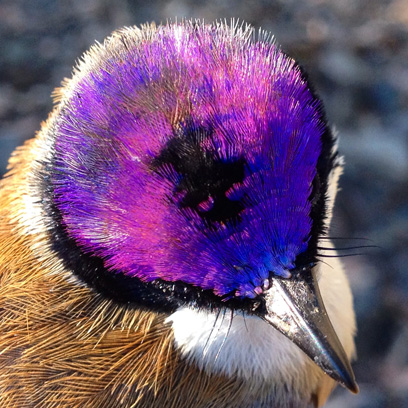
The purple-crowned fairywren (Malurus coronatus) is a species of bird in the Australasian wren family, Maluridae.
- Kingdom
- Animalia
- Phylum
- Chordata
- Class
- Aves
- Order
- Passeriformes
- Family
- Maluridae
- Genus
- Malurus
- Species
- Malurus coronatus
Description
The purple-crowned fairywren (Malurus coronatus) is a species of bird in the Australasian wren family, Maluridae. It is the largest of the twelve species in the genus Malurus and is endemic to northern Australia. The species name is derived from the Latin word cǒrōna meaning "crown", owing to the distinctive purple circle of crown feathers sported by breeding males. Genetic evidence shows that the purple-crowned fairywren is most closely related to the superb fairywren and splendid fairywren. Purple-crowned fairywrens can be distinguished from other fairywrens in northern Australia by the presence of cheek patches (either black in males or reddish-chocolate in females) and the deep blue colour of their perky tails. Like other fairywrens, the purple-crowned fairywren is socially monogamous. However, unlike other species in the genus, it is not sexually promiscuous and shows low rates of extra-pair paternity. However, females with related males as partners will mate with other individuals. This is thought to be an adaptation to avoid inbreeding depression. They build small dome-shaped nests in which 2–3 eggs are laid, with up to three clutches per year. It is mainly insectivorous, feeding on a wide variety of invertebrates, and supplements its diet with seeds. The purple-crowned fairywren inhabits riparian habitat with dense vegetation, such as well-developed midstoreys composed of dense shrubs or tall, dense thickets of river grass. Unlike the related superb fairywren, it has not adapted to urbanised habitats very well and has suffered severe population loss in some areas. While the species overall is considered of least-concern for conservation, its western subspecies is listed as endangered. Livestock grazing, fires, and invasive species are chief concerns for the population. The Australian government and conservation groups have active conservation interventions for the species, including for fire and invasive species management.
Gallery
Ajouter des photos
Partagez vos photos de cette espèce (jusqu'à 20 à la fois) : elles sont vérifiées automatiquement, puis publiées.
Répartition
Occurrences observées (données GBIF). Les zones hors aire d'origine peuvent indiquer une présence introduite ou invasive.
Sources et crédits
Informations provenant de plusieurs sources vérifiées. Dernière mise à jour : .
Crédits photos (7)
- Photo : Paul Barden · CC BY-SA 4.0
- Photo : P Barden · CC BY 4.0
- Photo : Wayne and Pam Osborn (@wayneosborn) · CC BY-NC 4.0 · via iNaturalist
- Photo : Keith Morris (@boobook99) · CC BY-NC 4.0 · via iNaturalist
- Photo : Kenneth Bader (@kucycads) · CC BY-NC 4.0 · via iNaturalist
- Photo : @coanne · CC BY-NC 4.0 · via iNaturalist
- Photo : Keith Morris (@boobook99) · CC BY-NC 4.0 · via iNaturalist
Mentions de licence
Texte disponible sous licence CC BY-SA 4.0. Il adapte notamment Wikipedia (CC BY-SA) : Purple-crowned fairywren (Wikipédia, auteurs dans l’historique de l’article).
- Taxonomie : GBIF Backbone Taxonomy (CC BY 4.0)
- Carte : occurrences GBIF, fond © contributeurs OpenStreetMap (ODbL)
- Statut de conservation : Liste rouge de l'UICN, via Wikidata (CC0)
Détail : Sources et licences.
Discussion (0)
Aucun message pour l’instant. Lancez la discussion sur cette fiche (sources, précisions, débats éditoriaux).
Connectez-vous pour participer à la discussion.