
Red-backed Fairywren
Malurus melanocephalus
The red-backed fairywren (Malurus melanocephalus) is a species of passerine bird in the Australasian wren family, Maluridae.
- Kingdom
- Animalia
- Phylum
- Chordata
- Class
- Aves
- Order
- Passeriformes
- Family
- Maluridae
- Genus
- Malurus
- Species
- Malurus melanocephalus
Description
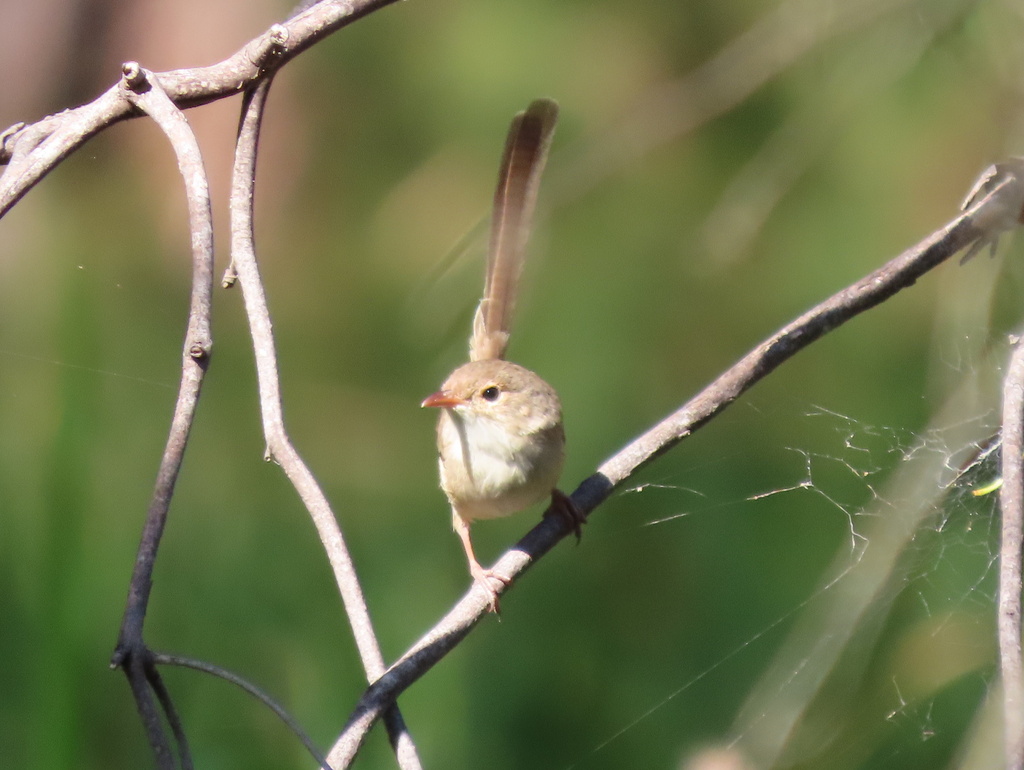
The red-backed fairywren (Malurus melanocephalus) is a species of passerine bird in the Australasian wren family, Maluridae. It is endemic to Australia and can be found near rivers and coastal areas along the northern and eastern coastlines from the Kimberley in the northwest to the Hunter Region in New South Wales. The male adopts a striking breeding plumage, with a black head, upperparts and tail, and a brightly coloured red back and brown wings. The female has brownish upperparts and paler underparts. The male in eclipse plumage and the juvenile resemble the female. Some males remain in non-breeding plumage while breeding. Two subspecies are recognised; the nominate M. m. melanocephalus of eastern Australia has a longer tail and orange back, and the short-tailed M. m. cruentatus from northern Australia has a redder back. The red-backed fairywren mainly eats insects, and supplements its diet with seed and small fruit. The preferred habitat is heathland and savannah, particularly where low shrubs and tall grasses provide cover. It can be nomadic in areas where there are frequent bushfires, although pairs or small groups of birds maintain and defend territories year-round in other parts of its range. Groups consist of a socially monogamous pair with one or more helper birds who assist in raising the young. These helpers are progeny that have attained sexual maturity yet remain with the family group for one or more years after fledging. The red-backed fairywren is sexually promiscuous, and each partner may mate with other individuals and even assist in raising the young from such pairings. Older males in breeding plumage are more likely to engage in this behaviour than are those breeding in eclipse plumage. As part of a courtship display, the male wren plucks red petals from flowers and displays them to females.
Gallery
Ajouter des photos
Partagez vos photos de cette espèce (jusqu'à 20 à la fois) : elles sont vérifiées automatiquement, puis publiées.
Répartition
Occurrences observées (données GBIF). Les zones hors aire d'origine peuvent indiquer une présence introduite ou invasive.
Sources et crédits
Informations provenant de plusieurs sources vérifiées. Dernière mise à jour : .
Crédits photos (8)
- Photo : Ron Dowling (@ron4133) · CC BY-NC 4.0 · via iNaturalist
- Photo : Sylvia Felicity Ann Haworth (@sylviafelicityannhaworth) · CC BY-NC 4.0 · via iNaturalist
- Photo : @beaurystateforest · CC BY-NC 4.0 · via iNaturalist
- Photo : @lachlan_harriman · CC BY-NC 4.0 · via iNaturalist
- Photo : @djmartinfocus · CC BY-NC 4.0 · via iNaturalist
- Photo : Ged Tranter (@gedtranter) · CC BY 4.0 · via iNaturalist
- Photo : Steve Murray (@sjmurray55) · CC BY-NC 4.0 · via iNaturalist
- Photo : Kenton (@sirkendizzle) · CC BY-NC 4.0 · via iNaturalist
Mentions de licence
Texte disponible sous licence CC BY-SA 4.0. Il adapte notamment Wikipedia (CC BY-SA) : Red-backed fairywren (Wikipédia, auteurs dans l’historique de l’article).
- Taxonomie : GBIF Backbone Taxonomy (CC BY 4.0)
- Carte : occurrences GBIF, fond © contributeurs OpenStreetMap (ODbL)
- Statut de conservation : Liste rouge de l'UICN, via Wikidata (CC0)
Détail : Sources et licences.
Discussion (0)
Aucun message pour l’instant. Lancez la discussion sur cette fiche (sources, précisions, débats éditoriaux).
Connectez-vous pour participer à la discussion.