
Yellow-faced Honeyeater
Caligavis chrysops
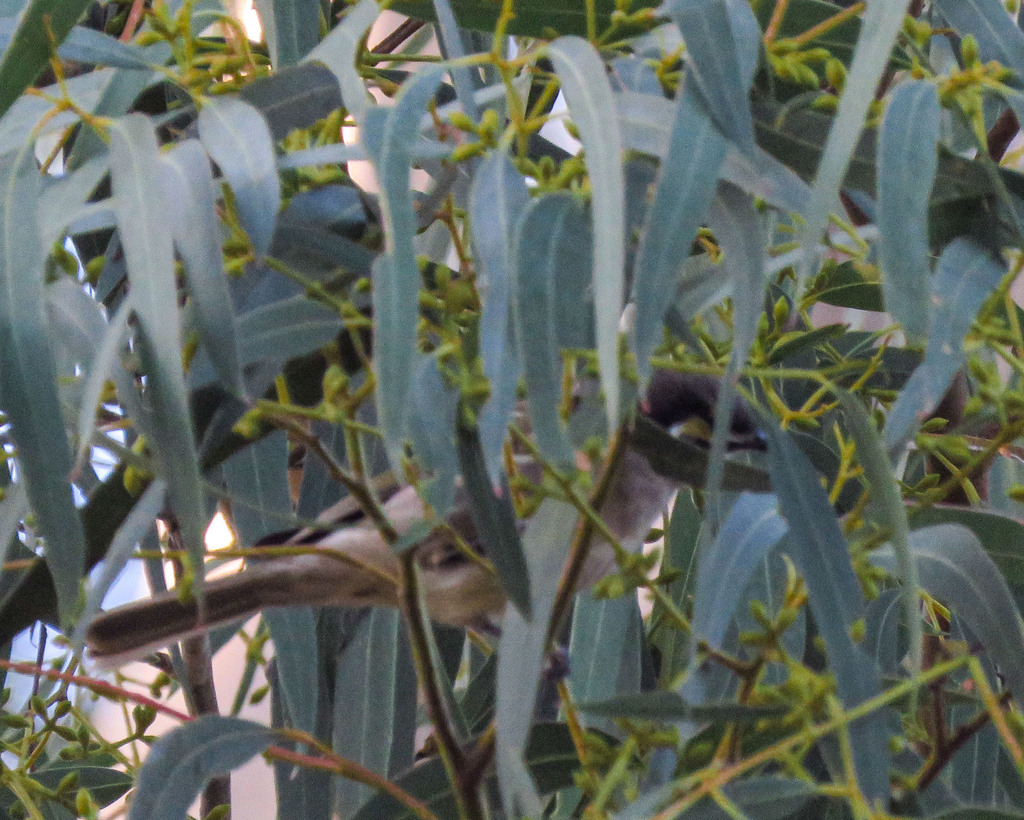
The yellow-faced honeyeater (Caligavis chrysops) is a small to medium-sized bird in the honeyeater family, Meliphagidae.
- Kingdom
- Animalia
- Phylum
- Chordata
- Class
- Aves
- Order
- Passeriformes
- Family
- Meliphagidae
- Genus
- Caligavis
- Species
- Caligavis chrysops
Description
The yellow-faced honeyeater (Caligavis chrysops) is a small to medium-sized bird in the honeyeater family, Meliphagidae. It takes its common and scientific names from the distinctive yellow stripes on the sides of its head. Its loud, clear call often begins twenty or thirty minutes before dawn. It is widespread across eastern and southeastern Australia, in open sclerophyll forests from coastal dunes to high-altitude subalpine areas, and woodlands along creeks and rivers. Comparatively short-billed for a honeyeater, it is thought to have adapted to a diet of flies, spiders, and beetles, as well as nectar and pollen from the flowers of plants, such as Banksia and Grevillea, and soft fruits. It catches insects in flight as well as gleaning them from the foliage of trees and shrubs. Some yellow-faced honeyeaters are sedentary, but hundreds of thousands migrate northwards between March and May to spend the winter in southern Queensland, and return in July and August to breed in southern New South Wales and Victoria. They form socially monogamous pairs and lay two or three eggs in a delicate cup-shaped nest. The success rate can be low, and the pairs nest several times during the breeding season. Honeyeaters' preferred woodland habitat is vulnerable to the effects of land-clearing, grazing, and weeds. As it is common and widespread, the yellow-faced honeyeater is considered by the International Union for Conservation of Nature (IUCN) to be of least concern for conservation. It is considered a pest in orchards in some areas.
Gallery
Ajouter des photos
Partagez vos photos de cette espèce (jusqu'à 20 à la fois) : elles sont vérifiées automatiquement, puis publiées.
Répartition
Occurrences observées (données GBIF). Les zones hors aire d'origine peuvent indiquer une présence introduite ou invasive.
Sources et crédits
Informations provenant de plusieurs sources vérifiées. Dernière mise à jour : .
Crédits photos (8)
- Photo : Mononymous (@mononymous) · CC BY-NC 4.0 · via iNaturalist
- Photo : @lachlan_harriman · CC BY-NC 4.0 · via iNaturalist
- Photo : Alex Kenins (@ozalga) · CC BY-NC 4.0 · via iNaturalist
- Photo : Sally McTiernan (@sallymctiernan) · CC BY-NC 4.0 · via iNaturalist
- Photo : TJ Jones (@moon_sun) · CC BY 4.0 · via iNaturalist
- Photo : James Hills (@lamejamesbirdboy) · CC BY-NC 4.0 · via iNaturalist
- Photo : Matt (@manderson80) · CC BY-NC 4.0 · via iNaturalist
- Photo : Mick Drews (@mickdrews) · CC BY-NC 4.0 · via iNaturalist
Mentions de licence
Texte disponible sous licence CC BY-SA 4.0. Il adapte notamment Wikipedia (CC BY-SA) : Yellow-faced honeyeater (Wikipédia, auteurs dans l’historique de l’article).
- Taxonomie : GBIF Backbone Taxonomy (CC BY 4.0)
- Carte : occurrences GBIF, fond © contributeurs OpenStreetMap (ODbL)
- Statut de conservation : Liste rouge de l'UICN, via Wikidata (CC0)
Détail : Sources et licences.
Discussion (0)
Aucun message pour l’instant. Lancez la discussion sur cette fiche (sources, précisions, débats éditoriaux).
Connectez-vous pour participer à la discussion.