
Lanceolated Warbler
Locustella lanceolata
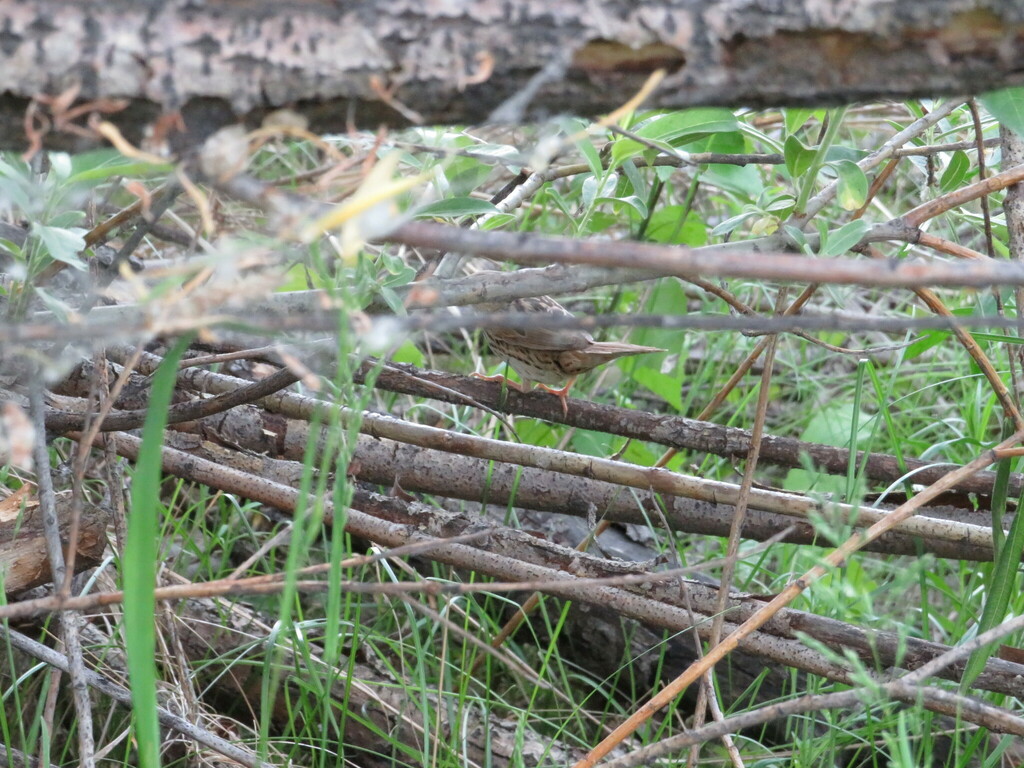
The lanceolated warbler (Locustella lanceolata) is a species of Old World warbler in the genus Locustella.
- Kingdom
- Animalia
- Phylum
- Chordata
- Class
- Aves
- Order
- Passeriformes
- Family
- Locustellidae
- Genus
- Locustella
- Species
- Locustella lanceolata
Description
The lanceolated warbler (Locustella lanceolata) is a species of Old World warbler in the genus Locustella. It breeds from northwest European Russia across the Palearctic to northern Hokkaidō, Japan. It is migratory, wintering in Southeast Asia. The genus name Locustella is from Latin and is a diminutive of locusta, "grasshopper". This refers to the song of the common grasshopper warbler and some others in this genus. The specific lanceolata is Latin for "spear-shaped" and refers to the streaks on the breast. This small passerine bird is a species found in grassland with some thicker shrubby vegetation or trees, often close to water in bogs or wet clearings. Five eggs are laid in a nest in a tussock. This species is a rare vagrant to western Europe. One of the best places to see this skulking species as a vagrant is Fair Isle, Shetland. This is a small warbler. The adult has a streaked brown back and whitish grey underparts, which have small lance-head like streaks, that are also found on the undertail. The sexes are identical, as with most warblers, but young birds are yellower below. Like most warblers, it is insectivorous. This is a skulking species which is very difficult to see except sometimes when singing. It creeps through grass and low foliage. The song is a monotonous mechanical insect-like reeling as in other species in the group, often given at dusk. There are two subspecies recorded, as L. l. lanceolata (Temminck, 1840) and L. l. hendersonii (Cassin, 1858).
Gallery
Ajouter des photos
Partagez vos photos de cette espèce (jusqu'à 20 à la fois) : elles sont vérifiées automatiquement, puis publiées.
Répartition
Occurrences observées (données GBIF). Les zones hors aire d'origine peuvent indiquer une présence introduite ou invasive.
Sources et crédits
Informations provenant de plusieurs sources vérifiées. Dernière mise à jour : .
Crédits photos (8)
- Photo : @noyablokov · CC BY-NC 4.0 · via iNaturalist
- Photo : @damiangan · CC BY-NC 4.0 · via iNaturalist
- Photo : @ryannaturalist · CC BY-NC 4.0 · via iNaturalist
- Photo : James M. Maley (@jmaley) · CC BY 4.0 · via iNaturalist
- Photo : Dmitriy Davydov (@dmitriydavydov) · CC BY-NC 4.0 · via iNaturalist
- Photo : Anastasia Stepanishcheva (@nastasya40) · CC BY-NC 4.0 · via iNaturalist
- Photo : Альфия «Alf_feya» Travel (@alf_feya) · CC BY-NC 4.0 · via iNaturalist
- Photo : @mikhailbelousov · CC BY-NC 4.0 · via iNaturalist
Mentions de licence
Texte disponible sous licence CC BY-SA 4.0. Il adapte notamment Locustelle lancéolée, Wikipedia (CC BY-SA) : Lanceolated warbler (Wikipédia, auteurs dans l’historique de l’article).
- Taxonomie : GBIF Backbone Taxonomy (CC BY 4.0)
- Carte : occurrences GBIF, fond © contributeurs OpenStreetMap (ODbL)
- Statut de conservation : Liste rouge de l'UICN, via Wikidata (CC0)
Détail : Sources et licences.
Discussion (0)
Aucun message pour l’instant. Lancez la discussion sur cette fiche (sources, précisions, débats éditoriaux).
Connectez-vous pour participer à la discussion.