
Chestnut-capped Piha
Lipaugus weberi
The chestnut-capped piha (Lipaugus weberi) is a species of bird in the family Cotingidae.
- Kingdom
- Animalia
- Phylum
- Chordata
- Class
- Aves
- Order
- Passeriformes
- Family
- Cotingidae
- Genus
- Lipaugus
- Species
- Lipaugus weberi
Description
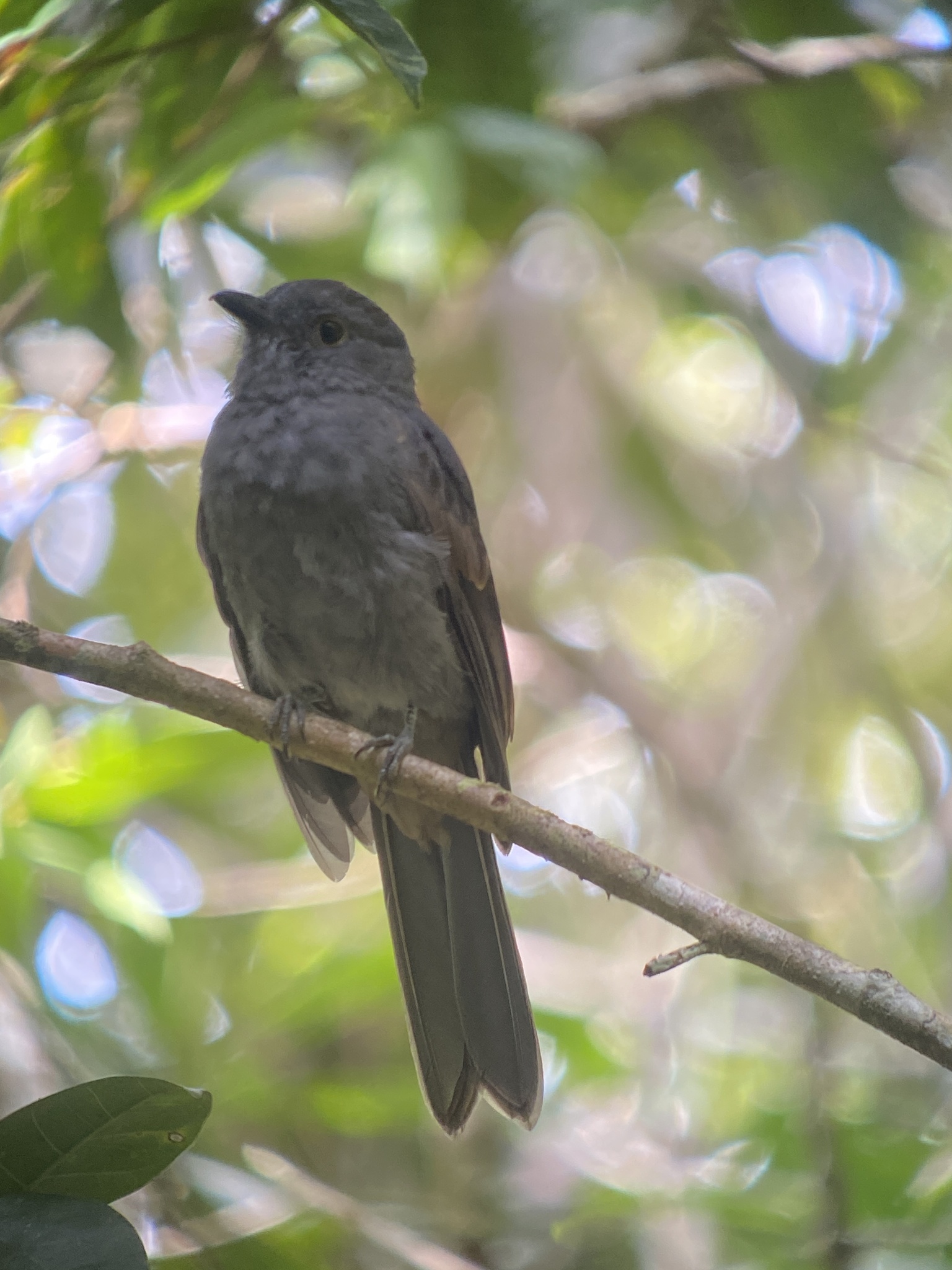
The chestnut-capped piha (Lipaugus weberi) is a species of bird in the family Cotingidae. It is endemic to a small portion of Colombia's central Andes in the department of Antioquia. The chestnut-capped piha resides only in a narrow band of humid premontane cloud forest. It is a dark grey passerine with a notable chestnut crown on the upper nape and pale cinnamon-colored undertail coverts. Adults are small for pihas, measuring about 20 to 25 cm (8 to 10 in) long. Males have modified primary feathers with elongated and stiff barbules that enable them to create a whirring noise with their wings, which the piha likely uses for display purposes. Its call is extremely loud and can be heard over 100 m (330 ft) away. The chestnut-capped piha is mostly frugivorous, although it will eat some invertebrates. Little is known about the species' breeding ecology, although it is believed to be a lekking species. The chestnut-capped piha was not discovered until 1999, due in large part to the very limited and to political instability in central Colombia. The chestnut-capped piha is considered by the IUCN to be critically endangered, and the population may be as low as 250 birds. It is primarily threatened by habitat destruction as its cloud forests are converted into usage for farming, mining, and agriculture. Although several reserves have been set up to protect portions of its range, more conservation work needs to be done to protect the species from extinction.
Gallery
Ajouter des photos
Partagez vos photos de cette espèce (jusqu'à 20 à la fois) : elles sont vérifiées automatiquement, puis publiées.
Répartition
Occurrences observées (données GBIF). Les zones hors aire d'origine peuvent indiquer une présence introduite ou invasive.
Sources et crédits
Informations provenant de plusieurs sources vérifiées. Dernière mise à jour : .
Crédits photos (6)
- Photo : joselunasolarte · CC BY-NC 4.0 · via GBIF
- Photo : @mkosiewski · CC BY-NC 4.0 · via iNaturalist
- Photo : Mateo Giraldo Tamayo (@mateogiraldot) · CC BY-NC 4.0 · via iNaturalist
- Photo : Edwin Múnera Chavarría (@edwinmunera) · CC BY-NC 4.0 · via iNaturalist
- Photo : Ricardo Sánchez (@ricardo_sanchez) · CC BY-NC 4.0 · via iNaturalist
- Photo : @emskakoon · CC BY-NC 4.0 · via iNaturalist
Mentions de licence
Texte disponible sous licence CC BY-SA 4.0. Il adapte notamment Wikipedia (CC BY-SA) : Chestnut-capped piha (Wikipédia, auteurs dans l’historique de l’article).
- Taxonomie : GBIF Backbone Taxonomy (CC BY 4.0)
- Carte : occurrences GBIF, fond © contributeurs OpenStreetMap (ODbL)
- Statut de conservation : Liste rouge de l'UICN, via Wikidata (CC0)
Détail : Sources et licences.
Discussion (0)
Aucun message pour l’instant. Lancez la discussion sur cette fiche (sources, précisions, débats éditoriaux).
Connectez-vous pour participer à la discussion.