
Pale Crag Martin
Ptyonoprogne obsoleta
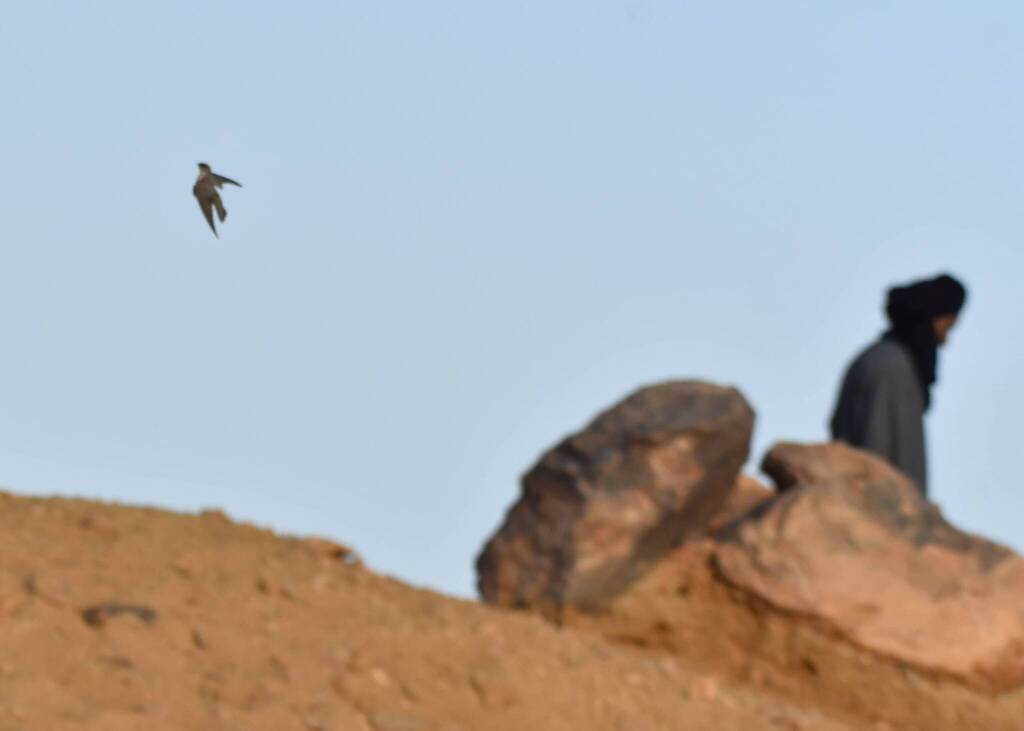
The pale crag martin (Ptyonoprogne obsoleta) is a small passerine bird in the swallow family that is resident in Northern Africa and in Southwestern Asia, east to Pakistan.
- Kingdom
- Animalia
- Phylum
- Chordata
- Class
- Aves
- Order
- Passeriformes
- Family
- Hirundinidae
- Genus
- Ptyonoprogne
- Species
- Ptyonoprogne obsoleta
Description
The pale crag martin (Ptyonoprogne obsoleta) is a small passerine bird in the swallow family that is resident in Northern Africa and in Southwestern Asia, east to Pakistan. It breeds mainly in the mountains, but also at lower altitudes, especially in rocky areas and around towns. Unlike most swallows, it is often found far from water. It is 12–13 cm (4+1⁄2–5 in) long, with mainly brown plumage, paler-toned on the upper breast and underwing coverts, and with white "windows" on the spread tail in flight. The sexes are similar in appearance, but juveniles have pale fringes to the upperparts and flight feathers. It was formerly considered to be the northern subspecies of the rock martin of southern Africa, although it is smaller, paler, and whiter-throated than that species. The pale crag martin hunts along cliff faces for flying insects using a slow flight with much gliding. Its call is a soft twitter. This martin builds a deep bowl nest on a sheltered horizontal surface, or a neat quarter-sphere against a vertical rock face or wall. The nest is constructed with mud pellets and lined with grass or feathers, and may be built on natural sites under cliff overhangs or on man-made structures such as buildings and bridges. It is often reused for subsequent broods or in later years. This species is often a solitary breeder, but small groups may breed close together in suitable locations. The two or three eggs of a typical clutch are white with brown and grey blotches, and are incubated by both adults for 16–19 days prior to hatching. Both parents then feed the chicks. Fledging takes another 22–24 days, although the young birds will return to the nest to roost for a few days after their first flight. The pale crag martin is caught in flight by several fast, agile falcon species, such as hobbies, and it sometimes carries parasites, but it faces no major threats. Because of its range of nearly 20 million square kilometres (7,700,000 sq mi) and a large and apparently increasing population, it is not seen as vulnerable and is assessed as Least Concern on the IUCN Red List.
Gallery
Ajouter des photos
Partagez vos photos de cette espèce (jusqu'à 20 à la fois) : elles sont vérifiées automatiquement, puis publiées.
Répartition
Occurrences observées (données GBIF). Les zones hors aire d'origine peuvent indiquer une présence introduite ou invasive.
Sources et crédits
Informations provenant de plusieurs sources vérifiées. Dernière mise à jour : .
Crédits photos (7)
- Photo : Mourad Harzallah (@mourad-harzallah) · CC BY 4.0 · via iNaturalist
- Photo : Mitch Van Dyke (@mitchvandyke) · CC BY 4.0 · via iNaturalist
- Photo : @interwardrobekieran · CC BY-NC 4.0 · via iNaturalist
- Photo : Mourad Harzallah (@mourad-harzallah) · CC BY 4.0 · via iNaturalist
- Photo : @thai_78 · CC BY-NC 4.0 · via iNaturalist
- Photo : Christian Widmann (@widus) · CC BY-NC 4.0 · via iNaturalist
- Photo : @andreytkachev · CC BY-NC 4.0 · via iNaturalist
Mentions de licence
Texte disponible sous licence CC BY-SA 4.0. Il adapte notamment Wikipedia (CC BY-SA) : Pale crag martin (Wikipédia, auteurs dans l’historique de l’article).
- Taxonomie : GBIF Backbone Taxonomy (CC BY 4.0)
- Carte : occurrences GBIF, fond © contributeurs OpenStreetMap (ODbL)
- Statut de conservation : Liste rouge de l'UICN, via Wikidata (CC0)
Détail : Sources et licences.
Discussion (0)
Aucun message pour l’instant. Lancez la discussion sur cette fiche (sources, précisions, débats éditoriaux).
Connectez-vous pour participer à la discussion.