
White-bibbed Swallow
Hirundo nigrita
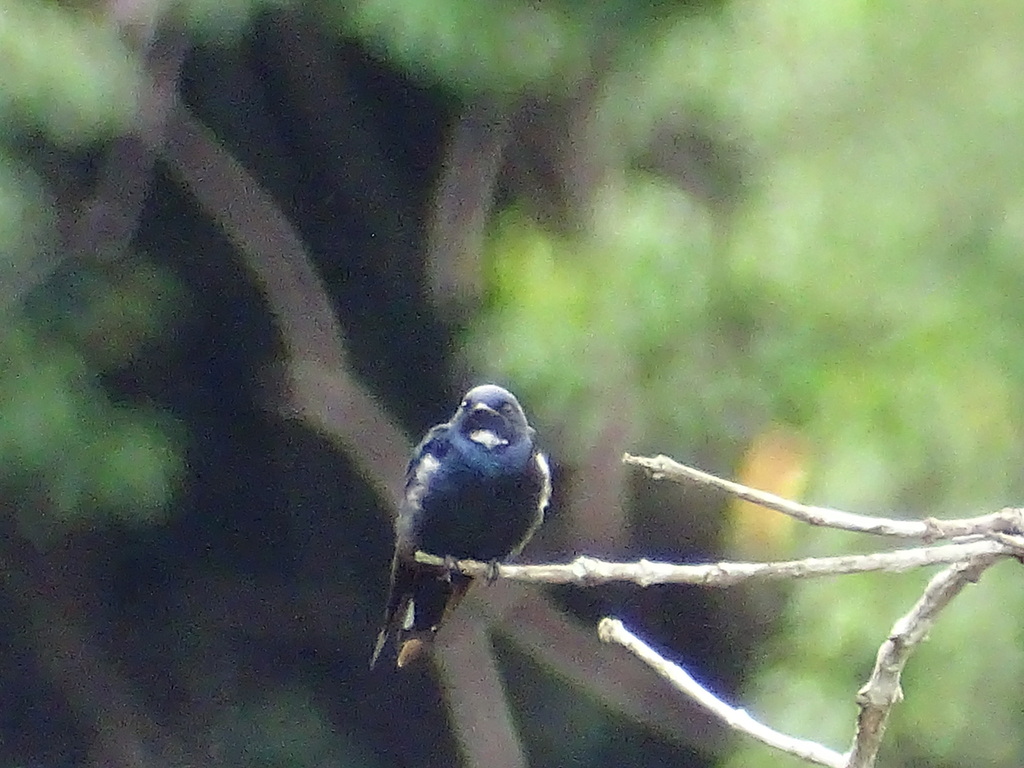
The white-bibbed swallow (Hirundo nigrita), also known as the white-throated blue swallow, is a species of bird in the family Hirundinidae.
- Kingdom
- Animalia
- Phylum
- Chordata
- Class
- Aves
- Order
- Passeriformes
- Family
- Hirundinidae
- Genus
- Hirundo
- Species
- Hirundo nigrita
Description
The white-bibbed swallow (Hirundo nigrita), also known as the white-throated blue swallow, is a species of bird in the family Hirundinidae. The plumage is mainly glossy dark blue, but may appear black at a distance. It is widespread but generally uncommon across the African tropical rainforest (including Dahomey Gap). It is generally a resident, non-migratory bird, though it may undertake minor local movements. In Sierra Leone they are noted mainly from December to July, though long-distance seasonal migrations are not suspected. They are found year-round near tropical rivers, lakes, and rainforest streams. No subspecies are known. They have solitary and territorial nesting habits. The open cup-shaped nests are built by both sexes, and placed from near the water surface to 3 meters up. The nest of mud pellets and some dry grass is lined on the inside with soft material, like feathers, bark strips or grass. Nests are placed on either natural sites like rock faces, cliffs, fallen trees, etc., or less often attached to man-made structures like bridges, piers, etc. The clutch consists of 2 to 3 eggs, and is incubated by the female. The eggs are white and speckled brown and greyish brown. Nestlings leave the nest in 17 to 18 days, but remain in the nest vicinity for some time longer.
Gallery
Ajouter des photos
Partagez vos photos de cette espèce (jusqu'à 20 à la fois) : elles sont vérifiées automatiquement, puis publiées.
Répartition
Occurrences observées (données GBIF). Les zones hors aire d'origine peuvent indiquer une présence introduite ou invasive.
Sources et crédits
Informations provenant de plusieurs sources vérifiées. Dernière mise à jour : .
Crédits photos (8)
- Photo : François Sandrin (@francois_sandrin) · CC BY-NC 4.0 · via iNaturalist
- Photo : Carlo (@jeanlouiscarlo) · CC BY-NC 4.0 · via iNaturalist
- Photo : Dérozier Violette (@violettederozier) · CC BY-NC 4.0 · via iNaturalist
- Photo : Jenn Megyesi (@fatroosterfarm) · CC BY-NC 4.0 · via iNaturalist
- Photo : Saint Guillaume K. ODOUKPE (@sgodoukpe) · CC BY-NC 4.0 · via iNaturalist
- Photo : Markus Merl (@markusm85) · CC BY-NC 4.0 · via iNaturalist
- Photo : Simon Bradfield (@scompeti) · CC BY-NC 4.0 · via iNaturalist
- Photo : Gregoire Dubois (@gregoiredubois) · CC BY-NC 4.0 · via iNaturalist
Mentions de licence
Texte disponible sous licence CC BY-SA 4.0. Il adapte notamment Wikipedia (CC BY-SA) : White-bibbed swallow, Hirondelle à bavette (Wikipédia, auteurs dans l’historique de l’article).
- Taxonomie : GBIF Backbone Taxonomy (CC BY 4.0)
- Carte : occurrences GBIF, fond © contributeurs OpenStreetMap (ODbL)
- Statut de conservation : Liste rouge de l'UICN, via Wikidata (CC0)
Détail : Sources et licences.
Discussion (0)
Aucun message pour l’instant. Lancez la discussion sur cette fiche (sources, précisions, débats éditoriaux).
Connectez-vous pour participer à la discussion.