
- Kingdom
- Animalia
- Phylum
- Chordata
- Class
- Aves
- Order
- Passeriformes
- Family
- Fringillidae
- Genus
- Serinus
- Species
- Serinus canaria domestica
Overview
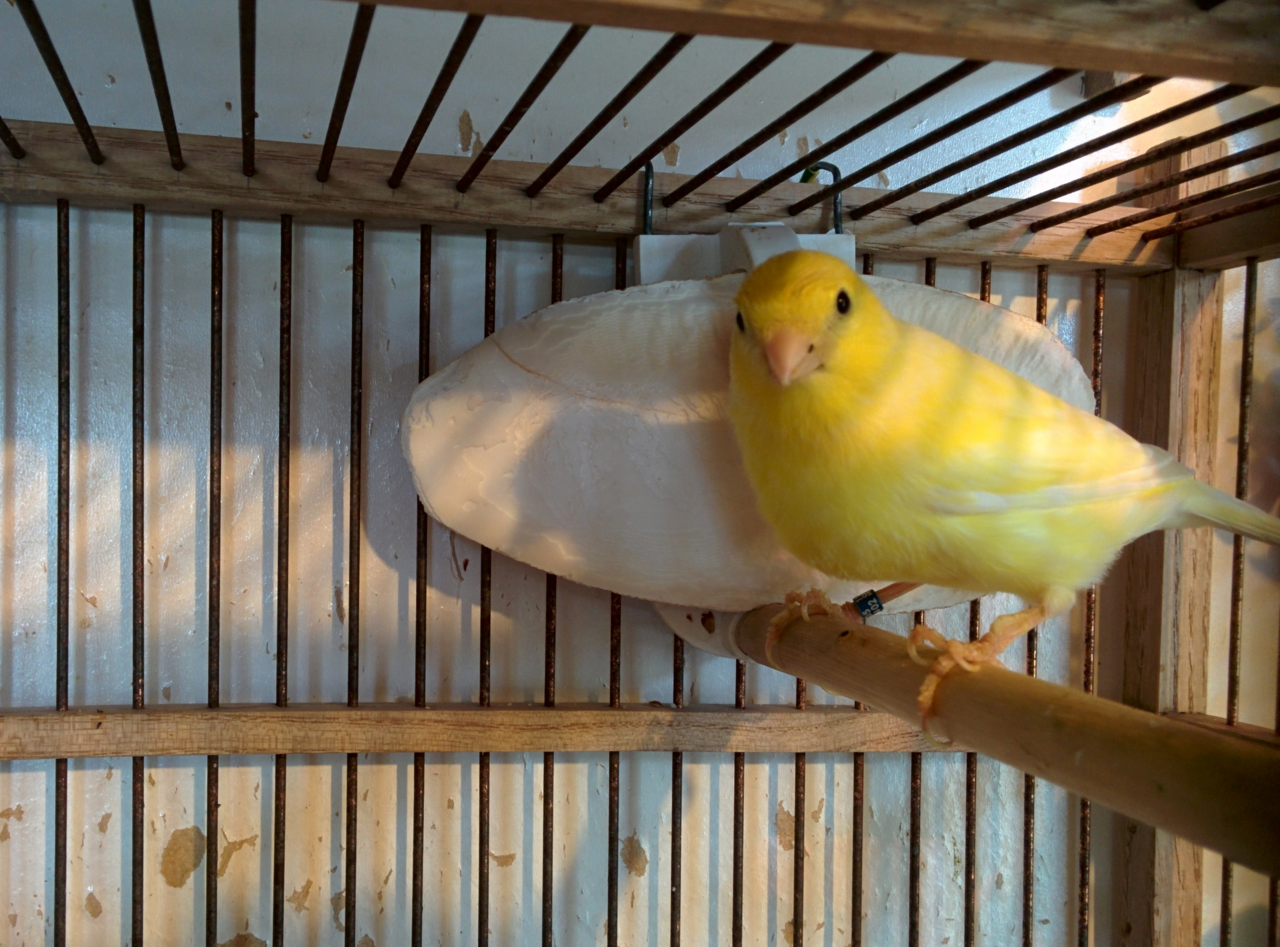
Harz Roller (German: Harzer Roller [ˈhaʁtsɐ ˈʁɔlɐ] ) is the name of a breed of domestic canary bred in the Upper Harz mountains of Germany. The birds were bred in the Upper Harz between Lautenthal and Sankt Andreasberg in the middle of the 19th century and achieved European-wide fame. The song of the Harz Roller, like that of the common canary, is clear and consists of alternating beats, trills, and rolls-which is where the Harz Roller gets its name. The special song, which has made this breed a "best-selling export," must be learned.
The Harz Roller is also alternatively called the Roller Canary and was also known and spelt as Hartz Mountain Canary in historic American sources.
History
The Harz Roller descends from the Atlantic canary, which was introduced to Europe from Madeira and the Azores. Miners from Imst brought the canary to the Upper Harz region as a pet around 1730 in search of work. The wild canary has greenish-yellow and gray plumage, which developed into the Harz Roller during domestication to pale yellow to golden yellow. More recent breeds also include cinnamon-red, cinnamon-brown, orange-yellow, mottled, and tabby birds.
Since 2001 there has been a Harz Roller Museum in Sankt Andreasberg.
Song
By patient breeding, a breed of canary was able to be produced that had a pleasant, melodious song, full of variety and delivered with an apparently closed beak. Different types of canaries can breed with each other, especially including the Harz Roller and the Spanish Timbrado.
Miner's canary
Further information: Sentinel species
The breeding and sale of this popular breed of canary was an important secondary occupation for mining people, as was the making of cages for the birds. In the second half of the 19th century, the breeding and sale of these canaries boomed. As only the cocks, as part of their courtship behaviour, were able to sing the popular song, hens were less suitable for sale. Since only a few hens were needed for breeding, the remaining birds, as well as wild birds caught for this purpose, could be used as warning devices in the mines.
The birds were used as a warning system against used air (German: Matte Wetter), i.e. to indicate the presence of poisonous gases such as carbon monoxide and low levels of oxygen in the surrounding air. Canaries were especially good for this purpose as, unlike finches, doves and mice, they reacted very quickly to carbon monoxide. While a mouse would not have a noticeable reaction until after up to 70 minutes to a carbon monoxide concentration of 0.77% in the air, a canary will fall off its perch after as little as 2.5 minutes from a concentration of 0.29%. For this reason, canaries were not only used in normal operations, but especially to protect rescue units in the case of an accident.
See also
- Wilhelm Trute - breeder
- Domestic canary
- Atlantic canary (wild canary)
- Birdcage
- Birds portal
- Harz portal
External links
Look up Harz Roller in Wiktionary, the free dictionary.
- Harz Roller Museum in Sankt Andreasberg
- Western Roller Canary Association
Gallery
Ajouter des photos
Partagez vos photos de cette espèce (jusqu'à 20 à la fois) : elles sont vérifiées automatiquement, puis publiées.
Autres races de l'espèce (11)
Espèce : Canari
Sources et crédits
Informations provenant de plusieurs sources vérifiées. Dernière mise à jour : .
Crédits photos (3)
- Photo : Ogmios · CC0 (domaine public) · via Wikimedia Commons
- Photo : Ogmios · CC0 (domaine public) · via Wikimedia Commons
- Photo : Samuel Wiese · CC BY-SA 4.0 · via Wikimedia Commons
Mentions de licence
Texte disponible sous licence CC BY-SA 4.0. Il adapte notamment Wikipedia (CC BY-SA): Harz Roller (Wikipédia, auteurs dans l’historique de l’article).
- Taxonomie : GBIF Backbone Taxonomy (CC BY 4.0)
Détail : Sources et licences.
Discussion (0)
Aucun message pour l’instant. Lancez la discussion sur cette fiche (sources, précisions, débats éditoriaux).
Connectez-vous pour participer à la discussion.