
Bearded Vulture
Gypaetus barbatus
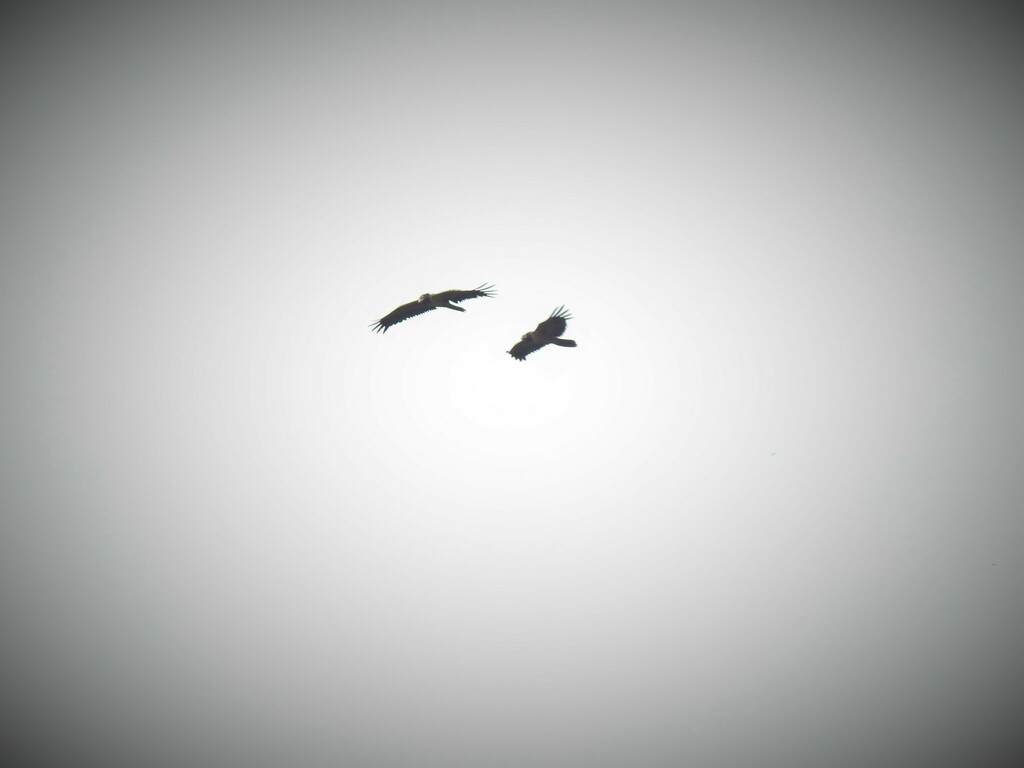
The bearded vulture (Gypaetus barbatus), also known as the lammergeier and ossifrage, is a very large bird of prey in the monotypic genus Gypaetus.
- Kingdom
- Animalia
- Phylum
- Chordata
- Class
- Aves
- Order
- Accipitriformes
- Family
- Accipitridae
- Genus
- Gypaetus
- Species
- Gypaetus barbatus
Description
The bearded vulture (Gypaetus barbatus), also known as the lammergeier and ossifrage, is a very large bird of prey in the monotypic genus Gypaetus. The bearded vulture is the only known vertebrate whose diet consists of 70–90% bone. Traditionally considered an Old World vulture, it actually forms a separate minor lineage of Accipitridae together with the Egyptian vulture (Neophron percnopterus), its closest living relative. It is not much more closely related to the Old World vultures proper than to, for example, hawks, and differs from the former by its feathered neck. Although dissimilar, the Egyptian and bearded vulture each have a lozenge-shaped tail-unusual among birds of prey. It is vernacularly known as Homa, a bird in Iranian mythology. The bearded vulture population is thought to be in decline; in 2004, it was classified on the IUCN Red List as least concern but has been listed as near threatened since 2014. It lives and breeds on crags in high mountains in Iran, southern Europe, East Africa, the Indian subcontinent, Tibet, and the Caucasus. Females lay one or two eggs in mid-winter that hatch at the beginning of spring.
Gallery
Ajouter des photos
Partagez vos photos de cette espèce (jusqu'à 20 à la fois) : elles sont vérifiées automatiquement, puis publiées.
Répartition
Occurrences observées (données GBIF). Les zones hors aire d'origine peuvent indiquer une présence introduite ou invasive.
Sources et crédits
Informations provenant de plusieurs sources vérifiées. Dernière mise à jour : .
Crédits photos (6)
- Photo : @pedrosanz-anapri · CC BY-NC 4.0 · via iNaturalist
- Photo : Eduardo Ramirez Esteban (@eduardoramirez-anapri) · CC BY-NC 4.0 · via iNaturalist
- Photo : Davide Diana (@davidediana) · CC BY-NC 4.0 · via iNaturalist
- Photo : Tero Linjama (@terolinjama) · CC0 (domaine public) · via iNaturalist
- Photo : AlainP (@alain-isr) · CC BY-NC 4.0 · via iNaturalist
- Photo : Davide Diana (@davidediana) · CC BY-NC 4.0 · via iNaturalist
Mentions de licence
Texte disponible sous licence CC BY-SA 4.0. Il adapte notamment Wikipedia (CC BY-SA) : Bearded vulture (Wikipédia, auteurs dans l’historique de l’article).
- Taxonomie : GBIF Backbone Taxonomy (CC BY 4.0)
- Carte : occurrences GBIF, fond © contributeurs OpenStreetMap (ODbL)
- Statut de conservation : Liste rouge de l'UICN, via Wikidata (CC0)
Détail : Sources et licences.
Discussion (0)
Aucun message pour l’instant. Lancez la discussion sur cette fiche (sources, précisions, débats éditoriaux).
Connectez-vous pour participer à la discussion.