
Pigeon Guillemot
Cepphus columba
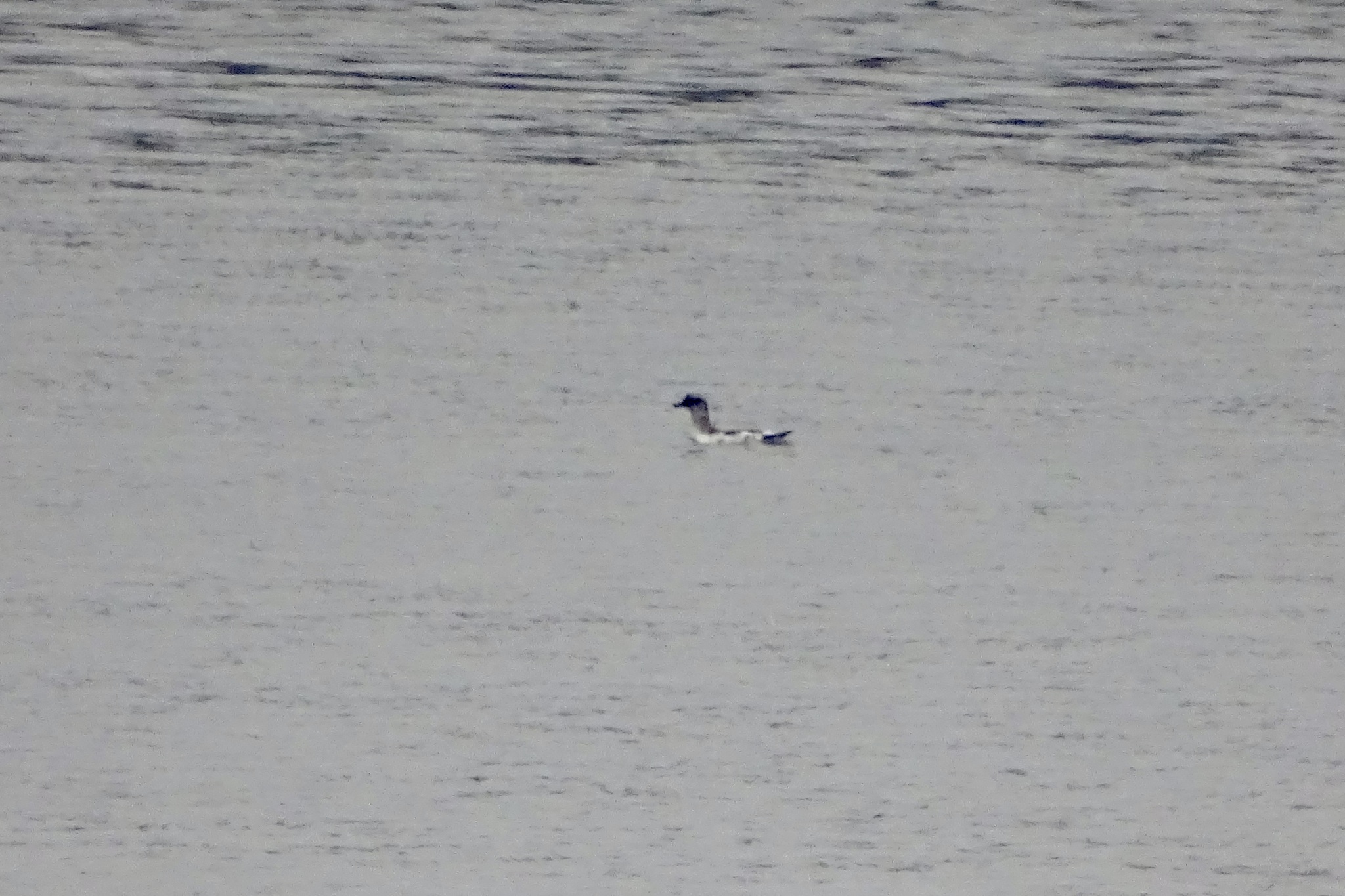
The pigeon guillemot (Cepphus columba) () is a species of bird in the auk family, Alcidae.
- Kingdom
- Animalia
- Phylum
- Chordata
- Class
- Aves
- Order
- Charadriiformes
- Family
- Alcidae
- Genus
- Cepphus
- Species
- Cepphus columba
Description
The pigeon guillemot (Cepphus columba) () is a species of bird in the auk family, Alcidae. One of three species in the genus Cepphus, it is most closely related to the spectacled guillemot. There are five subspecies of the pigeon guillemot; all subspecies, when in breeding plumage, are dark brown with a black iridescent sheen and a distinctive wing patch broken by a brown-black wedge. Its non-breeding plumage has mottled grey and black upperparts and white underparts. The long bill is black, as are the claws. The legs, feet, and inside of the mouth are red. It closely resembles the black guillemot, which is slightly smaller and lacks the dark wing wedge present in the pigeon guillemot. This seabird is found on North Pacific coastal waters, from Siberia through Alaska to California. The pigeon guillemot breeds and sometimes roosts on rocky shores, cliffs, and islands close to shallow water. In the winter, some birds move slightly south in the northernmost part of their range in response to advancing ice and migrate slightly north in the southern part of their range, generally preferring more sheltered areas. This species feeds on small fish and marine invertebrates, mostly near the sea floor, that it catches by pursuit diving. Pigeon guillemots are monogamous breeders, nesting in small colonies close to the shore. They defend small territories around a nesting cavity, in which they lay one or two eggs. Both parents incubate the eggs and feed the chicks. After leaving the nest the young bird is completely independent of its parents. Several birds and other animals prey on the eggs and chicks. The pigeon guillemot is considered to be a least concern species by the International Union for Conservation of Nature due to its large, stable population and wide range. Threats to this bird include climate change, introduced mammalian predators, and oil spills.
Gallery
Ajouter des photos
Partagez vos photos de cette espèce (jusqu'à 20 à la fois) : elles sont vérifiées automatiquement, puis publiées.
Répartition
Occurrences observées (données GBIF). Les zones hors aire d'origine peuvent indiquer une présence introduite ou invasive.
Sources et crédits
Informations provenant de plusieurs sources vérifiées. Dernière mise à jour : .
Crédits photos (6)
- Photo : Carol McDougall · CC BY-NC 4.0 · via GBIF
- Photo : @ldjaffe · CC BY-NC 4.0 · via iNaturalist
- Photo : @johnnyturtle · CC BY-NC 4.0 · via iNaturalist
- Photo : Eric Running (@ewrunn1ng) · CC BY-NC 4.0 · via iNaturalist
- Photo : Josh Emm (@apistopanchax) · CC BY-NC 4.0 · via iNaturalist
- Photo : Eric Running (@ewrunn1ng) · CC BY-NC 4.0 · via iNaturalist
Mentions de licence
Texte disponible sous licence CC BY-SA 4.0. Il adapte notamment Wikipedia (CC BY-SA) : Pigeon guillemot (Wikipédia, auteurs dans l’historique de l’article).
- Taxonomie : GBIF Backbone Taxonomy (CC BY 4.0)
- Carte : occurrences GBIF, fond © contributeurs OpenStreetMap (ODbL)
- Statut de conservation : Liste rouge de l'UICN, via Wikidata (CC0)
Détail : Sources et licences.
Discussion (0)
Aucun message pour l’instant. Lancez la discussion sur cette fiche (sources, précisions, débats éditoriaux).
Connectez-vous pour participer à la discussion.