
European Bee-eater
Merops apiaster
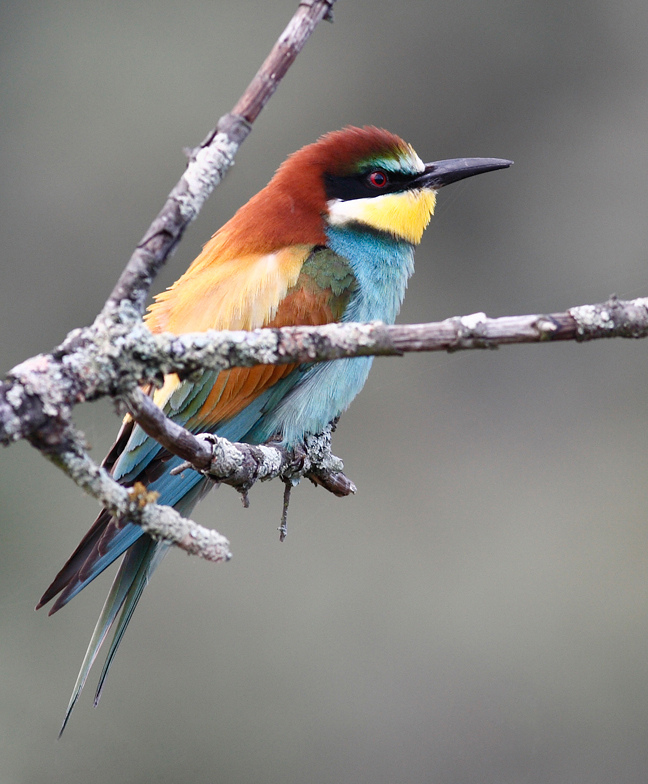
The European bee-eater (Merops apiaster) is a bird species in the bee-eater family, Meropidae.
- Kingdom
- Animalia
- Phylum
- Chordata
- Class
- Aves
- Order
- Coraciiformes
- Family
- Meropidae
- Genus
- Merops
- Species
- Merops apiaster
Description
The European bee-eater (Merops apiaster) is a bird species in the bee-eater family, Meropidae. It has the largest range of any bee-eater species. It breeds in southern and central Europe, northern and southern Africa, and western Asia. Except for the resident southern African population, the species is strongly migratory, wintering in tropical Africa. This species occurs as a spring overshoot north of its usual range, with occasional breeding in northern Europe.
Gallery
Ajouter des photos
Partagez vos photos de cette espèce (jusqu'à 20 à la fois) : elles sont vérifiées automatiquement, puis publiées.
Répartition
Occurrences observées (données GBIF). Les zones hors aire d'origine peuvent indiquer une présence introduite ou invasive.
Sources et crédits
Informations provenant de plusieurs sources vérifiées. Dernière mise à jour : .
Crédits photos (7)
- Photo : Pacomartinezfoto · CC BY-SA 3.0
- Photo : Maroto el bellaco · CC BY-SA 4.0
- Photo : José Antonio León Mangado (@sololeon) · CC0 (domaine public) · via iNaturalist
- Photo : David McCorquodale (@dbmcc09) · CC BY-NC 4.0 · via iNaturalist
- Photo : Liam Huber (@liamhuber) · CC BY-NC 4.0 · via iNaturalist
- Photo : Alexandru Buzatu (@alexandrubuzatu) · CC BY-NC 4.0 · via iNaturalist
- Photo : Татьяна Иванкина (@tatjana_ivankina) · CC BY-NC 4.0 · via iNaturalist
Mentions de licence
Texte disponible sous licence CC BY-SA 4.0. Il adapte notamment Wikipedia (CC BY-SA) : European bee-eater (Wikipédia, auteurs dans l’historique de l’article).
- Taxonomie : GBIF Backbone Taxonomy (CC BY 4.0)
- Carte : occurrences GBIF, fond © contributeurs OpenStreetMap (ODbL)
- Statut de conservation : Liste rouge de l'UICN, via Wikidata (CC0)
Détail : Sources et licences.
Discussion (0)
Aucun message pour l’instant. Lancez la discussion sur cette fiche (sources, précisions, débats éditoriaux).
Connectez-vous pour participer à la discussion.