
Red-necked Grebe
Podiceps grisegena
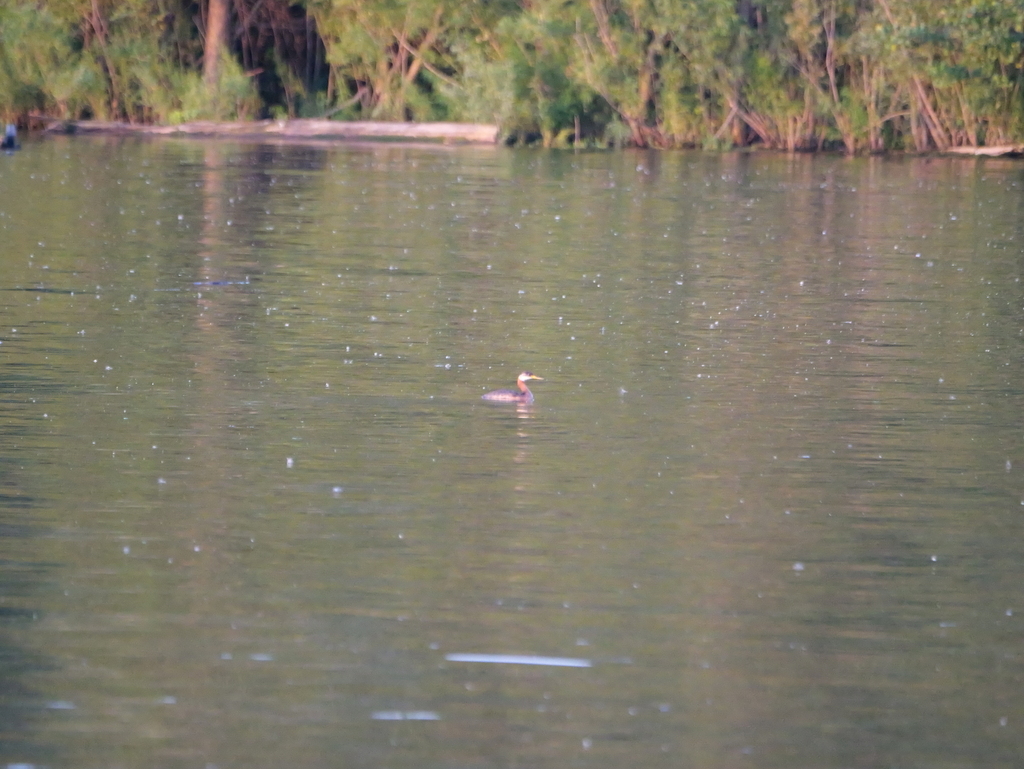
The red-necked grebe (Podiceps grisegena) is an aquatic bird found in the temperate regions of the northern hemisphere.
- Kingdom
- Animalia
- Phylum
- Chordata
- Class
- Aves
- Order
- Podicipediformes
- Family
- Podicipedidae
- Genus
- Podiceps
- Species
- Podiceps grisegena
Description
The red-necked grebe (Podiceps grisegena) is an aquatic bird found in the temperate regions of the northern hemisphere. A migratory bird, its wintering habitat is largely restricted to calm waters just beyond the waves around ocean coasts, although some birds may winter on large lakes. Grebes prefer shallow bodies of fresh water such as lakes, marshes or fish-ponds as breeding sites. The red-necked grebe is a fairly drab dusky-grey bird in winter. During the breeding season, it acquires the distinctive red neck plumage, black cap and contrasting pale grey face from which its name was derived. It also has an elaborate courtship display and a variety of loud mating calls. Once paired, it builds a nest from water plants on top of floating vegetation in a shallow lake or bog. Like all grebes, the red-necked is a good swimmer and particularly swift diver, and responds to danger by diving rather than flying. The feet are positioned far back on the body, near the tail, which makes the bird ungainly on land. It dives for fish or picks insects off vegetation; it also swallows its own feathers, possibly to protect the digestive system. The conservation status of its two subspecies, P. g. grisegena, found in Europe and western Asia, and the larger P. g. holbolii (sometimes called Holbøll's grebe), found in North America and eastern Siberia, is evaluated as Least Concern, and the global population is stable or growing.
Gallery
Ajouter des photos
Partagez vos photos de cette espèce (jusqu'à 20 à la fois) : elles sont vérifiées automatiquement, puis publiées.
Répartition
Occurrences observées (données GBIF). Les zones hors aire d'origine peuvent indiquer une présence introduite ou invasive.
Sources et crédits
Informations provenant de plusieurs sources vérifiées. Dernière mise à jour : .
Crédits photos (8)
- Photo : Philip Rößler (@proessler) · CC BY-NC 4.0 · via iNaturalist
- Photo : @muck8 · CC BY-NC 4.0 · via iNaturalist
- Photo : @mroitto · CC BY-NC 4.0 · via iNaturalist
- Photo : Наталия (@natashatrofimova) · CC BY-NC 4.0 · via iNaturalist
- Photo : David M. Gascoigne (@davidgascoigne) · CC BY-NC 4.0 · via iNaturalist
- Photo : Greg Frie (@gregorysk) · CC BY-NC 4.0 · via iNaturalist
- Photo : Anne (@a_dempsey) · CC BY 4.0 · via iNaturalist
- Photo : @peterweilandt · CC BY-NC 4.0 · via iNaturalist
Mentions de licence
Texte disponible sous licence CC BY-SA 4.0. Il adapte notamment Wikipedia (CC BY-SA) : Red-necked grebe (Wikipédia, auteurs dans l’historique de l’article).
- Taxonomie : GBIF Backbone Taxonomy (CC BY 4.0)
- Carte : occurrences GBIF, fond © contributeurs OpenStreetMap (ODbL)
- Statut de conservation : Liste rouge de l'UICN, via Wikidata (CC0)
Détail : Sources et licences.
Discussion (0)
Aucun message pour l’instant. Lancez la discussion sur cette fiche (sources, précisions, débats éditoriaux).
Connectez-vous pour participer à la discussion.