
Greater Yellow-headed Vulture
Cathartes melambrotus
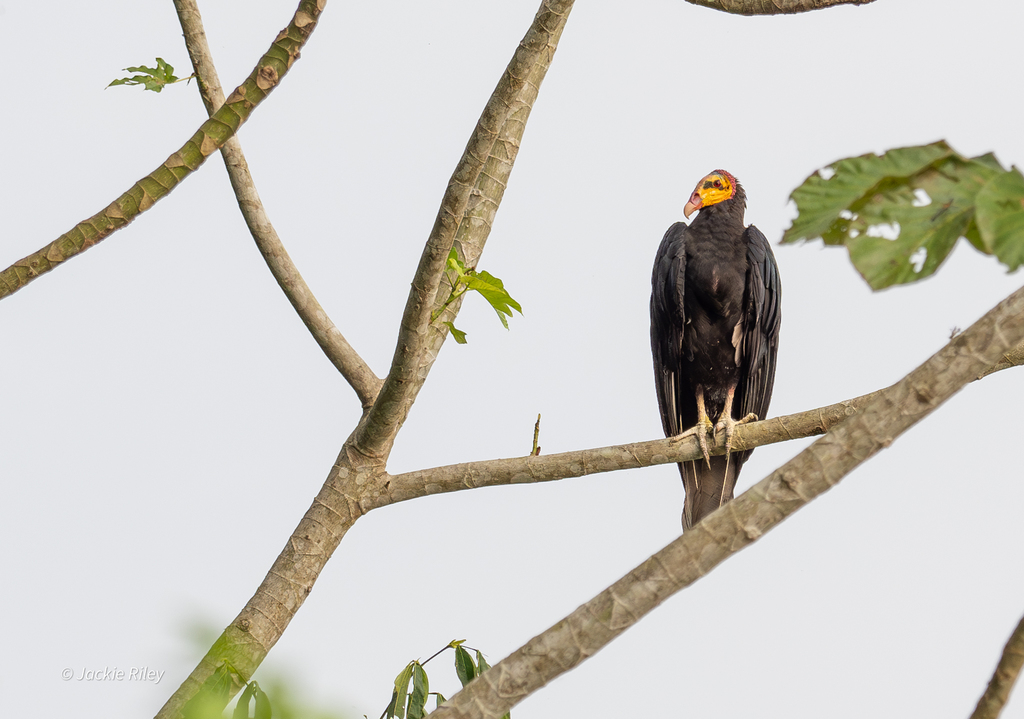
The greater yellow-headed vulture (Cathartes melambrotus), also known as the forest vulture, is a species of bird in the New World vulture family Cathartidae.
- Kingdom
- Animalia
- Phylum
- Chordata
- Class
- Aves
- Order
- Accipitriformes
- Family
- Cathartidae
- Genus
- Cathartes
- Species
- Cathartes melambrotus
Description
The greater yellow-headed vulture (Cathartes melambrotus), also known as the forest vulture, is a species of bird in the New World vulture family Cathartidae. It was considered to be the same species as the lesser yellow-headed vulture until they were split in 1964. It is found in South America in tropical moist lowland forests. It is a fairly large bird, with a wingspan of 166–178 cm (65–70 in), a weight of 1.65 kilograms (3.6 lb) and a body length of 64–75 cm (25–30 in). The body plumage is black, and the head and neck, which are featherless, range in color from deep yellow to pale orange. It lacks a syrinx, and its vocalizations are therefore limited to grunts or low hisses. The greater yellow-headed vulture feeds on carrion and locates carcasses by sight and by smell, an ability which is rare in birds. It is dependent on larger vultures, such as the king vulture, to open the hides of larger animal carcasses, as its bill is not strong enough to do this. Like other New World vultures, the greater yellow-headed vulture utilizes thermals to stay aloft with minimal effort. It lays its eggs on flat surfaces, such as the floors of caves, or in the hollows of stumps. It feeds its young by regurgitation.
Gallery
Ajouter des photos
Partagez vos photos de cette espèce (jusqu'à 20 à la fois) : elles sont vérifiées automatiquement, puis publiées.
Répartition
Occurrences observées (données GBIF). Les zones hors aire d'origine peuvent indiquer une présence introduite ou invasive.
Sources et crédits
Informations provenant de plusieurs sources vérifiées. Dernière mise à jour : .
Crédits photos (8)
- Photo : Jackie Riley (@jackieriley) · CC BY-NC 4.0 · via iNaturalist
- Photo : Matt Muir (@muir) · CC BY 4.0 · via iNaturalist
- Photo : Vanesa Cruz Jumbo (@vkcruzjumbo) · CC BY-NC 4.0 · via iNaturalist
- Photo : Tom Laroche (@en_mode_foret) · CC BY-NC 4.0 · via iNaturalist
- Photo : Allan Harris (@allan7) · CC0 (domaine public) · via iNaturalist
- Photo : Fernando Useros López (@fernandoul) · CC BY-NC 4.0 · via iNaturalist
- Photo : Christoph Nissen (@christonis) · CC BY-NC 4.0 · via iNaturalist
- Photo : Ria Vogels (@ria-vogels) · CC BY-NC 4.0 · via iNaturalist
Mentions de licence
Texte disponible sous licence CC BY-SA 4.0. Il adapte notamment Wikipedia (CC BY-SA) : Greater yellow-headed vulture (Wikipédia, auteurs dans l’historique de l’article).
- Taxonomie : GBIF Backbone Taxonomy (CC BY 4.0)
- Carte : occurrences GBIF, fond © contributeurs OpenStreetMap (ODbL)
- Statut de conservation : Liste rouge de l'UICN, via Wikidata (CC0)
Détail : Sources et licences.
Discussion (0)
Aucun message pour l’instant. Lancez la discussion sur cette fiche (sources, précisions, débats éditoriaux).
Connectez-vous pour participer à la discussion.