
Great Auk
Pinguinus impennis
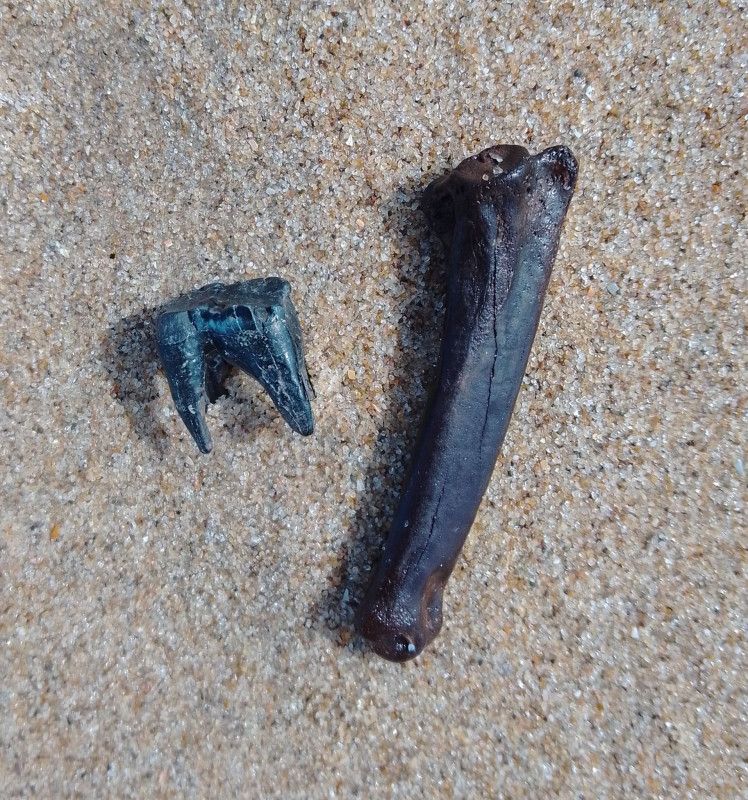
The great auk (Pinguinus impennis), also known as the penguin or garefowl, is an extinct species of flightless alcid that first appeared around 400,000 years ago and was driven to extinction by human exploitation in the mid-19th century.
- Kingdom
- Animalia
- Phylum
- Chordata
- Class
- Aves
- Order
- Charadriiformes
- Family
- Alcidae
- Genus
- Pinguinus
- Species
- Pinguinus impennis
Description
The great auk (Pinguinus impennis), also known as the penguin or garefowl, is an extinct species of flightless alcid that first appeared around 400,000 years ago and was driven to extinction by human exploitation in the mid-19th century. It was the only modern species in the genus Pinguinus. It was not closely related to the penguins of the Southern Hemisphere, which were named for their resemblance to this species. It bred on rocky, remote islands with easy access to the ocean and a plentiful food supply, a rarity in nature that provided only a few breeding sites for the great auks. During the non-breeding season, the auk foraged in the waters of the North Atlantic, ranging as far south as northern Spain and along the coastlines of Canada, Greenland, Iceland, the Faroe Islands, Norway, Ireland, and Great Britain. The bird was about 75 centimetres (29.5 inches) tall and weighed about 5 kilograms (11 pounds), making it the largest alcid to survive into the modern era, and the second-largest member of the alcid family overall (the prehistoric Miomancalla was larger). It had a black back and a white belly. The black beak was heavy and hooked, with grooves on its surface. During summer, great auk plumage showed a white patch over each eye. During winter, the great auk lost these patches, instead developing a white band stretching between the eyes. The wings were only 15 cm (6 in) long, rendering the bird flightless. Instead, the great auk was a powerful swimmer, a trait that it used in hunting. Its favourite prey were fish, including Atlantic menhaden and capelin, and crustaceans. Although agile in the water, it was clumsy on land. Great auk pairs mated for life. They nested in extremely dense and social colonies, laying one egg on bare rock. The egg was white with variable brown marbling. Both parents participated in the incubation of the egg for around six weeks before the young hatched. The young left the nest site after two to three weeks, although the parents continued to care for it. The great auk was an important part of many Native American cultures, both as a food source and as a symbolic item. Many Maritime Archaic people were buried with great auk bones. One burial discovered included a corpse covered by more than 200 great auk beaks, which are presumed to be the remnants of a cloak made of great auks' skins. Early European explorers to the Americas used the great auk as a convenient food source or as fishing bait, reducing its numbers. The bird's down was in high demand in Europe, a factor that largely eliminated the European populations by the mid-16th century. Around the same time, nations such as Great Britain began to realize that the great auk was disappearing, and it became the beneficiary of many early protection laws but despite them was still hunted. Its growing rarity increased interest from European museums and private collectors in obtaining skins and eggs of the bird. On 3 June 1844, the last two confirmed specimens were killed on Eldey, off the coast of Iceland, ending the last known breeding attempt. Later reports of roaming individuals being seen or caught are unconfirmed. A report of one great auk in 1852 is considered by some to be the last sighting of a member of the species. The great auk is mentioned in several novels, and the scientific journal of the American Ornithological Society (now Ornithology) was named The Auk in honour of the bird until 2021.
Ajouter des photos
Partagez vos photos de cette espèce (jusqu'à 20 à la fois) : elles sont vérifiées automatiquement, puis publiées.
Répartition
Occurrences observées (données GBIF). Les zones hors aire d'origine peuvent indiquer une présence introduite ou invasive.
Sources et crédits
Informations provenant de plusieurs sources vérifiées. Dernière mise à jour : .
Crédits photos (1)
- Photo : Arie Twigt · CC BY-NC 4.0 · via GBIF
Mentions de licence
Texte disponible sous licence CC BY-SA 4.0. Il adapte notamment Wikipedia (CC BY-SA) : Great auk (Wikipédia, auteurs dans l’historique de l’article).
- Taxonomie : GBIF Backbone Taxonomy (CC BY 4.0)
- Carte : occurrences GBIF, fond © contributeurs OpenStreetMap (ODbL)
- Statut de conservation : Liste rouge de l'UICN, via Wikidata (CC0)
Détail : Sources et licences.
Discussion (0)
Aucun message pour l’instant. Lancez la discussion sur cette fiche (sources, précisions, débats éditoriaux).
Connectez-vous pour participer à la discussion.