
Lesser Horned Owl
Bubo magellanicus
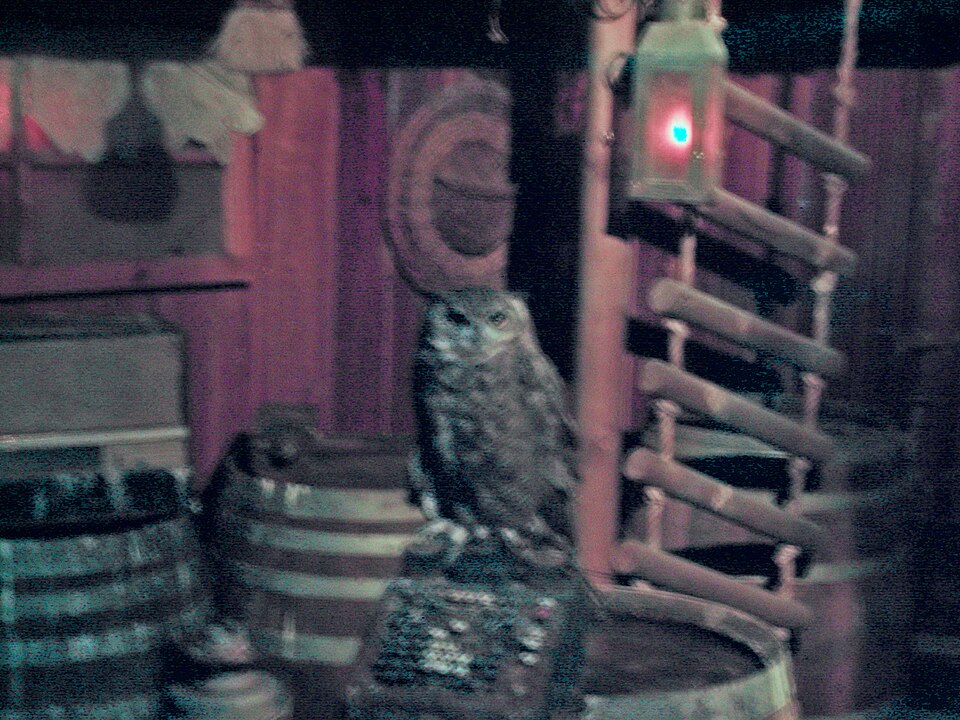
The lesser horned owl or Magellanic horned owl (Bubo magellanicus) is a large owl of the genus Bubo found in southern South America, extending north to the central Andes.
- Kingdom
- Animalia
- Phylum
- Chordata
- Class
- Aves
- Order
- Strigiformes
- Family
- Strigidae
- Genus
- Bubo
- Species
- Bubo magellanicus
Description
The lesser horned owl or Magellanic horned owl (Bubo magellanicus) is a large owl of the genus Bubo found in southern South America, extending north to the central Andes. It has traditionally been classified as a subspecies of the great horned owl (Bubo virginianus), but is now treated as a separate species based on differences in voice and size and because of the genetic distance between the two. It is about 45 cm (18 in) long with birds in the north of the range being largest. It has broad wings and a large head with two "ear" tufts. The plumage is mainly grey-brown but is quite variable in colour. The underparts are pale with narrow grey-brown bars and the breast has dark blotches. There is a black border to the facial disc and white stripes above the yellow eyes. The great horned owl is similar but larger with stronger feet and bill, broader bars on the underparts and longer ear-tufts. The deep hooting call consists of a double-note followed by a loud, vibrating note. The bird's local name tucúquere is imitative of the call. The range extends from central Peru and western Bolivia southwards through Chile and western Argentina as far as Tierra del Fuego. The bird occurs in a variety of habitats including open forest, scrubland, farmland and grassland. It hunts over open country, mainly at night. Rodents make up most of the diet but other mammals, birds, reptiles and insects are also taken. The species nests on cliffs or between rocks. The two or three eggs are incubated by the female, who is fed by the male.
Gallery
Ajouter des photos
Partagez vos photos de cette espèce (jusqu'à 20 à la fois) : elles sont vérifiées automatiquement, puis publiées.
Répartition
Occurrences observées (données GBIF). Les zones hors aire d'origine peuvent indiquer une présence introduite ou invasive.
Sources et crédits
Informations provenant de plusieurs sources vérifiées. Dernière mise à jour : .
Crédits photos (7)
- Photo : Lycaon.cl · CC BY-SA 4.0
- Photo : Benjamin Lablee · CC BY-SA 4.0
- Photo : Francisco González Táboas (@frangtaboas) · CC BY-NC 4.0 · via iNaturalist
- Photo : Eitel Carlos Thielemann Pinto (@eitel) · CC BY-NC 4.0 · via iNaturalist
- Photo : @romanlabrousse · CC BY-NC 4.0 · via iNaturalist
- Photo : Diego Carús (@diegocarau) · CC0 (domaine public) · via iNaturalist
- Photo : Gonzalo Diaz (@goncrisdi) · CC BY-NC 4.0 · via iNaturalist
Mentions de licence
Texte disponible sous licence CC BY-SA 4.0. Il adapte notamment Grand-duc de Magellanie, Wikipedia (CC BY-SA) : Lesser horned owl (Wikipédia, auteurs dans l’historique de l’article).
- Taxonomie : GBIF Backbone Taxonomy (CC BY 4.0)
- Carte : occurrences GBIF, fond © contributeurs OpenStreetMap (ODbL)
- Statut de conservation : Liste rouge de l'UICN, via Wikidata (CC0)
Détail : Sources et licences.
Discussion (0)
Aucun message pour l’instant. Lancez la discussion sur cette fiche (sources, précisions, débats éditoriaux).
Connectez-vous pour participer à la discussion.