
Northern Raven
Corvus corax
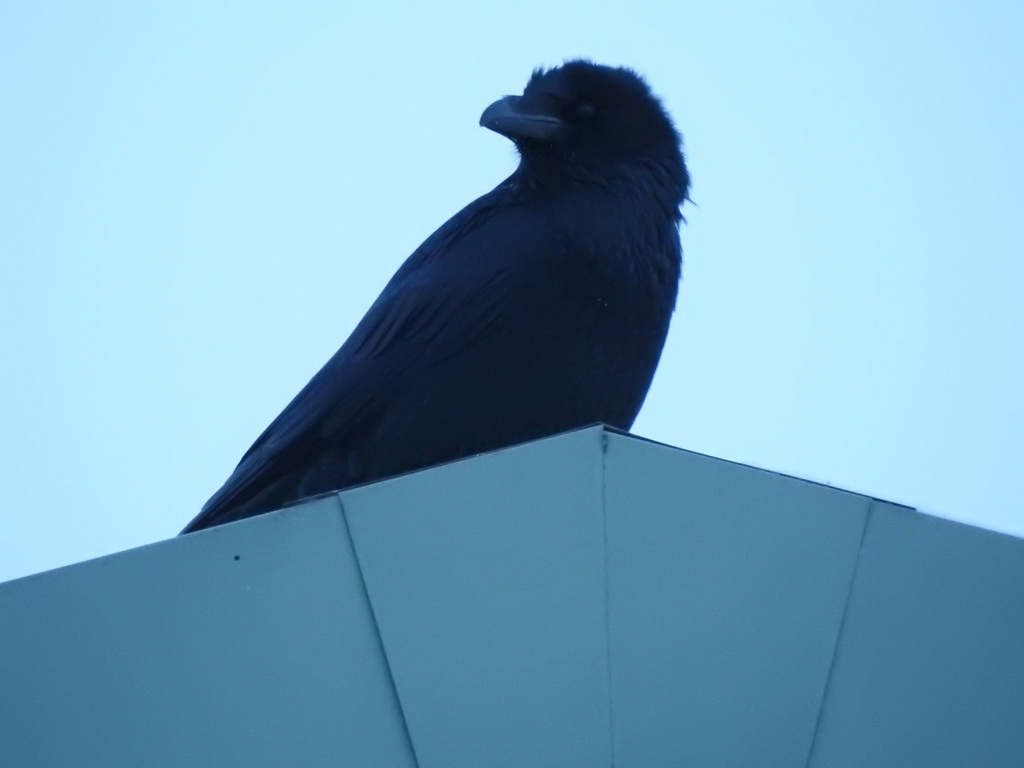
The common raven or northern raven (Corvus corax) is a large all-black passerine bird.
- Kingdom
- Animalia
- Phylum
- Chordata
- Class
- Aves
- Order
- Passeriformes
- Family
- Corvidae
- Genus
- Corvus
- Species
- Corvus corax
Description
The common raven or northern raven (Corvus corax) is a large all-black passerine bird. It is the most widely distributed of all corvids, found across the Northern Hemisphere. There are 11 accepted subspecies with little variation in appearance, although recent research has demonstrated significant genetic differences among populations from various regions. It is one of the two largest corvids, alongside the thick-billed raven, and is the heaviest passerine bird; at maturity, the common raven averages 63 centimetres (25 inches) in length and 1.47 kilograms (3.2 pounds) in weight, up to 2 kg (4.4 lb) in the heaviest individuals. Although their typical lifespan is considerably shorter, common ravens can live more than 23 years in the wild. Young birds may travel in flocks but later mate for life, with each mated pair defending a territory. Common ravens have coexisted with humans for thousands of years and in some areas have been so numerous that people have regarded them as pests. Part of their success as a species is due to their omnivorous diet; they are extremely versatile and opportunistic in finding sources of nutrition, feeding on carrion, insects, cereal grains, berries, fruit, small animals, nesting birds, and food waste. Some notable feats of problem-solving provide evidence that the common raven is unusually intelligent. Over the centuries, the raven has been the subject of mythology, folklore, art, and literature. In many cultures, including the indigenous cultures of Scandinavia, ancient Ireland and Wales, Bhutan, the northwest coast of North America, and Siberia and northeast Asia, the common raven has been revered as a spiritual figure or godlike creature.
Gallery
Ajouter des photos
Partagez vos photos de cette espèce (jusqu'à 20 à la fois) : elles sont vérifiées automatiquement, puis publiées.
Répartition
Occurrences observées (données GBIF). Les zones hors aire d'origine peuvent indiquer une présence introduite ou invasive.
Sources et crédits
Informations provenant de plusieurs sources vérifiées. Dernière mise à jour : .
Crédits photos (5)
- Photo : Danny Nelson (@dannynelson94) · CC BY-NC 4.0 · via iNaturalist
- Photo : Страхова Надя (@diuha) · CC BY-NC 4.0 · via iNaturalist
- Photo : Daniel Hetzel (@thesafarihiker) · CC BY-NC 4.0 · via iNaturalist
- Photo : Howard Friedman (@howardfriedman1) · CC BY-NC 4.0 · via iNaturalist
- Photo : Annette McClellan (@annettem) · CC BY-NC 4.0 · via iNaturalist
Mentions de licence
Texte disponible sous licence CC BY-SA 4.0. Il adapte notamment Wikipedia (CC BY-SA) : Common raven (Wikipédia, auteurs dans l’historique de l’article).
- Taxonomie : GBIF Backbone Taxonomy (CC BY 4.0)
- Carte : occurrences GBIF, fond © contributeurs OpenStreetMap (ODbL)
- Statut de conservation : Liste rouge de l'UICN, via Wikidata (CC0)
Détail : Sources et licences.
Discussion (0)
Aucun message pour l’instant. Lancez la discussion sur cette fiche (sources, précisions, débats éditoriaux).
Connectez-vous pour participer à la discussion.