
South Island kōkako
Callaeas cinereus
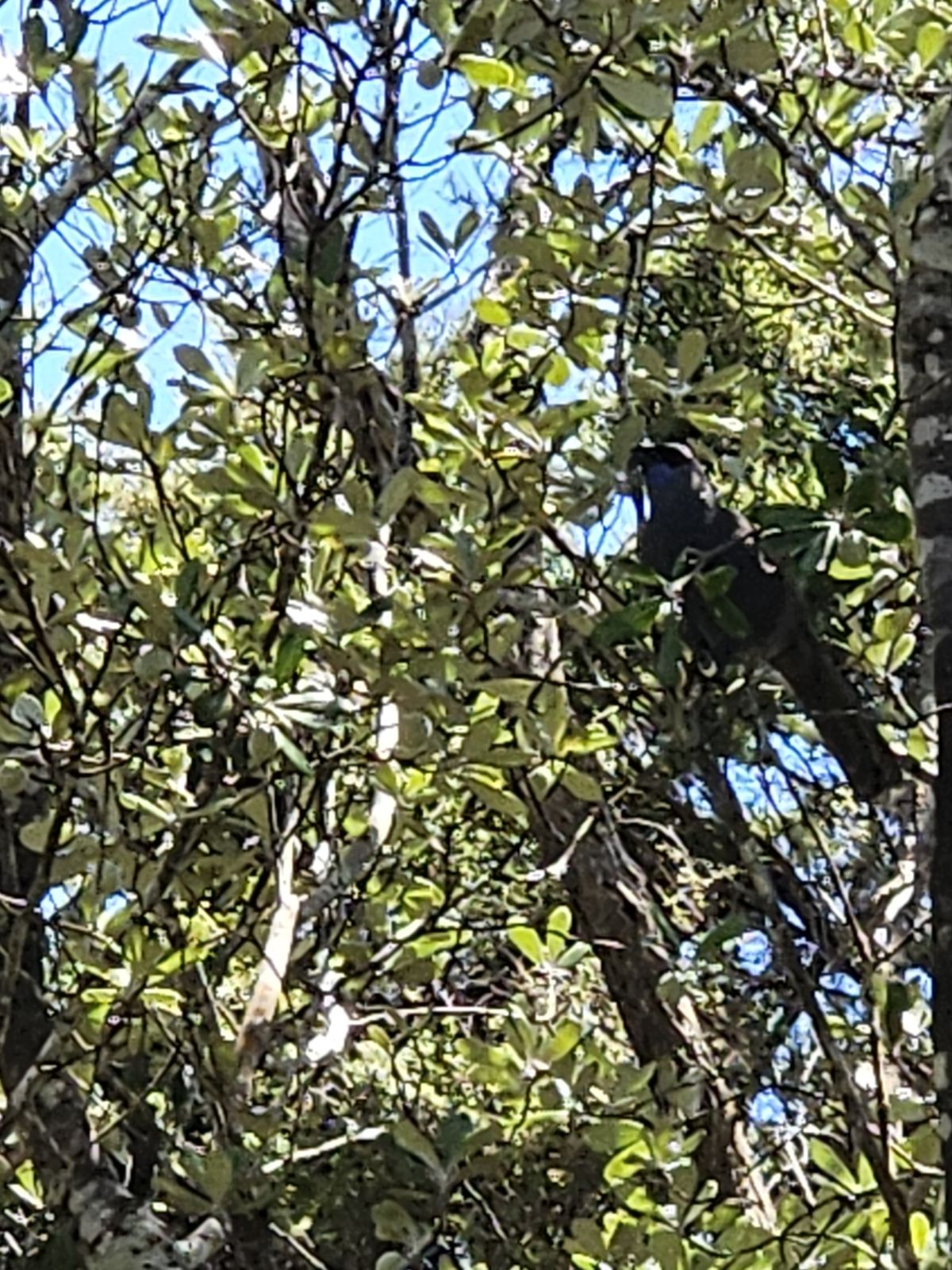
The South Island kōkako (Callaeas cinereus) is a forest bird endemic to the South Island and Stewart Island of New Zealand.
- Kingdom
- Animalia
- Phylum
- Chordata
- Class
- Aves
- Order
- Passeriformes
- Family
- Callaeatidae
- Genus
- Callaeas
- Species
- Callaeas cinereus
Description
The South Island kōkako (Callaeas cinereus) is a forest bird endemic to the South Island and Stewart Island of New Zealand. Unlike its close relative, the North Island kōkako (C. wilsoni), it has largely orange wattles, with only a small patch of blue at the base, and was also known as the orange-wattled crow (though it was not a corvid). The last accepted sighting in 2007 was the first considered genuine since 1967, although there have been several other unauthenticated reports - (and see note about search campaign below). In 2012 the Department of Conservation revised its criteria for species extinction to be consistent with international standards, meaning that "there is no reasonable doubt that the last individual has died", and only after "exhaustive surveys" of its known range have failed. After this change, the possible sighting of the bird near Reefton in 2007 was accepted. That decision was not unanimous: the panel chair didn't believe it, and doesn't believe that the bird still exists despite his name being associated with its 'rediscovery'. A department report said that the species was most likely "functionally extinct", but "we are not convinced beyond reasonable doubt that the last individual of these taxa have died".
Gallery
Ajouter des photos
Partagez vos photos de cette espèce (jusqu'à 20 à la fois) : elles sont vérifiées automatiquement, puis publiées.
Répartition
Occurrences observées (données GBIF). Les zones hors aire d'origine peuvent indiquer une présence introduite ou invasive.
Sources et crédits
Informations provenant de plusieurs sources vérifiées. Dernière mise à jour : .
Crédits photos (10)
- Photo : mothshark · CC BY-NC 4.0 · via GBIF
- Photo : kateboersma · CC BY-NC 4.0 · via GBIF
- Photo : blackbird17 · CC BY-NC 4.0 · via GBIF
- Photo : Jo Akker · CC BY-NC 4.0 · via GBIF
- Photo : Hyongchan Kim · CC BY-NC 4.0 · via GBIF
- Photo : Hyongchan Kim · CC BY-NC 4.0 · via GBIF
- Photo : Bruce Wedderburn · CC BY-NC 4.0 · via GBIF
- Photo : clicque · CC BY-NC 4.0 · via GBIF
- Photo : brock · CC BY-NC 4.0 · via GBIF
- Photo : alcedo77 · CC BY-NC 4.0 · via GBIF
Mentions de licence
Texte disponible sous licence CC BY-SA 4.0. Il adapte notamment Wikipedia (CC BY-SA) : South Island kōkako (Wikipédia, auteurs dans l’historique de l’article).
- Taxonomie : GBIF Backbone Taxonomy (CC BY 4.0)
- Carte : occurrences GBIF, fond © contributeurs OpenStreetMap (ODbL)
- Statut de conservation : Liste rouge de l'UICN, via Wikidata (CC0)
Détail : Sources et licences.
Discussion (0)
Aucun message pour l’instant. Lancez la discussion sur cette fiche (sources, précisions, débats éditoriaux).
Connectez-vous pour participer à la discussion.