
Black-banded Flycatcher
Ficedula timorensis
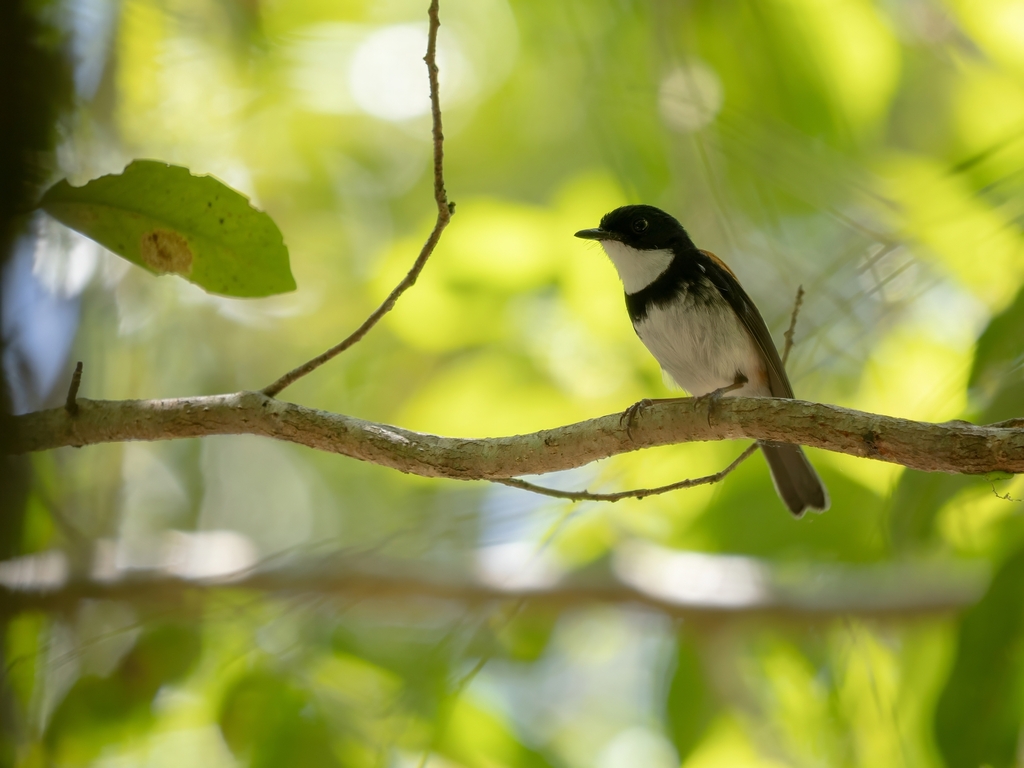
The black-banded flycatcher (Ficedula timorensis), also known as the Timor flycatcher, is a species of bird in the family Muscicapidae.
- Kingdom
- Animalia
- Phylum
- Chordata
- Class
- Aves
- Order
- Passeriformes
- Family
- Muscicapidae
- Genus
- Ficedula
- Species
- Ficedula timorensis
Description
The black-banded flycatcher (Ficedula timorensis), also known as the Timor flycatcher, is a species of bird in the family Muscicapidae. In the past the species was considered to be related to the Australasian robins but this was as the result of convergent evolution. It is endemic to Timor island. The black-banded flycatcher is small with a broad bill and distinctive plumage. The species has a white belly, lower rump and throat with a thin black band across the chest. The tail, neck and wings are black and the back, upper wing and shoulders rich chestnut. The plumage of the head is sexually dichromatic, with the head being black in the males and dark grey in the females. The eye and bill is black and the feet and legs are yellow. The calls consist of soft whistles, some of which sound similar to the Timor stubtail. The black-banded flycatcher is an uncommon species that is difficult to see and very little is known about its biology. The natural habitat of the species is lowland monsoon forests and hill forests up to 1200 m. Nothing is known about its breeding behaviour, the only observations of this are adults feeding recently fledged chicks in December. It feeds singly or in pairs on invertebrates, taking its prey mostly by gleaning with a few sallying flights to snatch aerial prey. The species is currently listed as near threatened. It is threatened by habitat loss.
Gallery
Ajouter des photos
Partagez vos photos de cette espèce (jusqu'à 20 à la fois) : elles sont vérifiées automatiquement, puis publiées.
Répartition
Occurrences observées (données GBIF). Les zones hors aire d'origine peuvent indiquer une présence introduite ou invasive.
Sources et crédits
Informations provenant de plusieurs sources vérifiées. Dernière mise à jour : .
Crédits photos (3)
- Photo : James Eaton (@james_birdtourasia) · CC0 (domaine public) · via iNaturalist
- Photo : Christoph Moning (@christoph_moning) · CC BY 4.0 · via iNaturalist
- Photo : Mitch Rose (@mroseup) · CC BY-NC 4.0 · via iNaturalist
Mentions de licence
Texte disponible sous licence CC BY-SA 4.0. Il adapte notamment Wikipedia (CC BY-SA) : Black-banded flycatcher (Wikipédia, auteurs dans l’historique de l’article).
- Taxonomie : GBIF Backbone Taxonomy (CC BY 4.0)
- Carte : occurrences GBIF, fond © contributeurs OpenStreetMap (ODbL)
- Statut de conservation : Liste rouge de l'UICN, via Wikidata (CC0)
Détail : Sources et licences.
Discussion (0)
Aucun message pour l’instant. Lancez la discussion sur cette fiche (sources, précisions, débats éditoriaux).
Connectez-vous pour participer à la discussion.