
Taiga Flycatcher
Ficedula albicilla
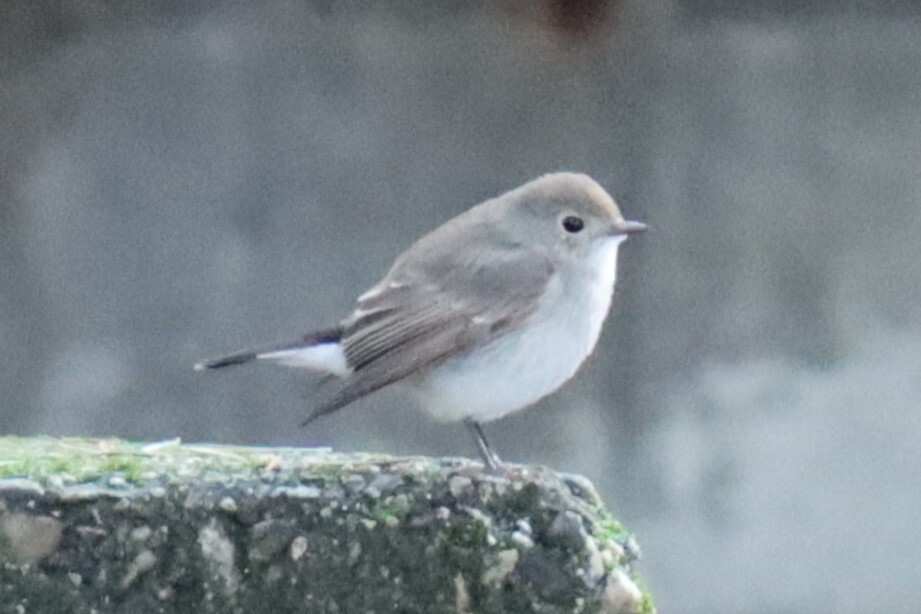
The taiga flycatcher or red-throated flycatcher (Ficedula albicilla) is a migratory bird in the family Muscicapidae.
- Kingdom
- Animalia
- Phylum
- Chordata
- Class
- Aves
- Order
- Passeriformes
- Family
- Muscicapidae
- Genus
- Ficedula
- Species
- Ficedula albicilla
Description
The taiga flycatcher or red-throated flycatcher (Ficedula albicilla) is a migratory bird in the family Muscicapidae. The species was first described by Peter Simon Pallas in 1811. The female has brown upper parts with a blackish tail flanked by white. The breast is buffish with underparts mostly white. The male has ear coverts and sides of the neck blue-tinged grey with breeding males having orange-red coloration on the throats. Unlike the taiga flycatcher, the female of the similar red-breasted flycatcher has a brown tail while the red colour in breeding males extends to the breast in the red-breasted flycatcher. It breeds in northern Eurasia from eastern Russia to Siberia and Mongolia. It is a winter visitor to South and South-east Asia in Bangladesh, Bhutan, India, Cambodia, Laos, Myanmar, Nepal, Malaysia, Thailand, China, Vietnam, and Japan. Its natural habitat is taiga forest. It is a rare vagrant to western Europe. It was formerly considered a subspecies of the red-breasted flycatcher. The genus name is from Latin and refers to a small fig-eating bird (ficus, fig) supposed to change into the blackcap in winter. The specific name albicilla is from Latin albus, white, and Neo-Latin cilla tail; this meaning of cilla arose from a misunderstanding of motacilla, the name for the wagtail.
Gallery
Ajouter des photos
Partagez vos photos de cette espèce (jusqu'à 20 à la fois) : elles sont vérifiées automatiquement, puis publiées.
Répartition
Occurrences observées (données GBIF). Les zones hors aire d'origine peuvent indiquer une présence introduite ou invasive.
Sources et crédits
Informations provenant de plusieurs sources vérifiées. Dernière mise à jour : .
Crédits photos (6)
- Photo : Steve Ansell · CC BY-NC 4.0 · via GBIF
- Photo : Rejoice Gassah (@rejoicegassah) · CC BY 4.0 · via iNaturalist
- Photo : @demina-masha · CC BY-NC 4.0 · via iNaturalist
- Photo : julien CLAUDE (@julienclaude2) · CC BY-NC 4.0 · via iNaturalist
- Photo : Dosdewaforesttrail (@dosdewaforesttrail) · CC BY-NC 4.0 · via iNaturalist
- Photo : Irina Krug (@irinakrug) · CC BY-NC 4.0 · via iNaturalist
Mentions de licence
Texte disponible sous licence CC BY-SA 4.0. Il adapte notamment Wikipedia (CC BY-SA) : Taiga flycatcher (Wikipédia, auteurs dans l’historique de l’article).
- Taxonomie : GBIF Backbone Taxonomy (CC BY 4.0)
- Carte : occurrences GBIF, fond © contributeurs OpenStreetMap (ODbL)
- Statut de conservation : Liste rouge de l'UICN, via Wikidata (CC0)
Détail : Sources et licences.
Discussion (0)
Aucun message pour l’instant. Lancez la discussion sur cette fiche (sources, précisions, débats éditoriaux).
Connectez-vous pour participer à la discussion.