
Western Subalpine Warbler
Curruca iberiae
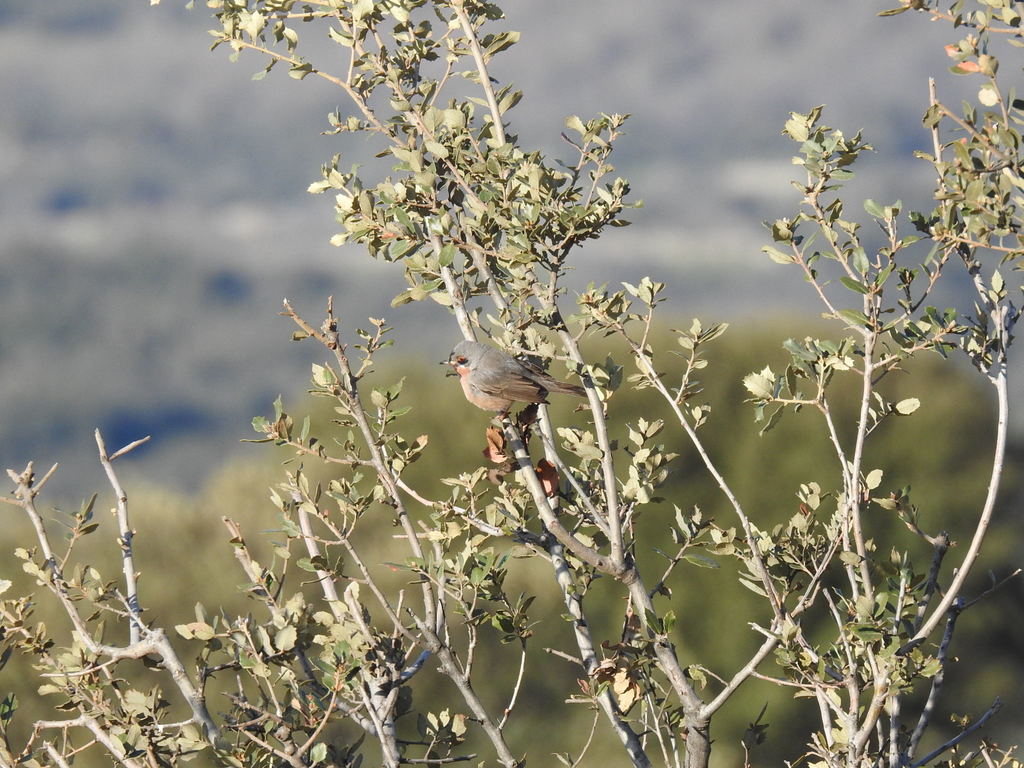
The western subalpine warbler (Curruca iberiae) is a small Sylviidae warbler which breeds in the southernmost areas of Europe and north-western Africa.
- Kingdom
- Animalia
- Phylum
- Chordata
- Class
- Aves
- Order
- Passeriformes
- Family
- Sylviidae
- Genus
- Curruca
- Species
- Curruca iberiae
Description
The western subalpine warbler (Curruca iberiae) is a small Sylviidae warbler which breeds in the southernmost areas of Europe and north-western Africa. Like most Curruca species, it has distinct male and female plumages. The adult male has a grey back and head, brick-red underparts, and white malar streaks ("moustaches"). The female is mainly brown above, with a greyer head, and whitish below with a pink flush. The subalpine warbler's song is fast and rattling, and is similar to the lesser whitethroat. This bird seems to be related to the Sardinian warbler–Menetries' warbler superspecies. They all have white malar areas, the heads being dark above in adult males, and naked eye-rings. These three species are related to a superspecies consisting of Rüppell's warbler and the Cyprus warbler, which also share the white malar area with blackish above (Shirihai et al. 2001, Jønsson & Fjeldså 2006 ). The subalpine warbler is divided into two distinct subspecies groups, which may possibly be sufficiently diverged to qualify as two separate species (Shirihai et al. 2001). The two groups have differing male plumages, distinctive calls, and are allopatric; further study is needed. In May 2020, the IOC world bird list the western and eastern subalpine warblers were split into two distinct species. This is a bird of dry open country, often on hill slopes, with bushes for nesting. The nest is built in low shrub or gorse, and 3–5 eggs are laid. Like most "warblers", it is insectivorous, but will also take berries.
Gallery
Ajouter des photos
Partagez vos photos de cette espèce (jusqu'à 20 à la fois) : elles sont vérifiées automatiquement, puis publiées.
Répartition
Occurrences observées (données GBIF). Les zones hors aire d'origine peuvent indiquer une présence introduite ou invasive.
Sources et crédits
Informations provenant de plusieurs sources vérifiées. Dernière mise à jour : .
Crédits photos (8)
- Photo : @pedrosanz-anapri · CC BY-NC 4.0 · via iNaturalist
- Photo : @paulinebsn · CC BY-NC 4.0 · via iNaturalist
- Photo : @ant-toniscla · CC BY-NC 4.0 · via iNaturalist
- Photo : ARSENIO GONZALEZ NAVARRO (@arseniogonzalez-anapri) · CC BY-NC 4.0 · via iNaturalist
- Photo : Ricardo Rodero Henández (@ricardo-anapri) · CC BY-NC 4.0 · via iNaturalist
- Photo : @pedrosanz-anapri · CC BY-NC 4.0 · via iNaturalist
- Photo : Eduard Codó Cónsol (@eduardcoco) · CC BY-NC 4.0 · via iNaturalist
- Photo : Pep Cantó (@pepcanto) · CC BY-NC 4.0 · via iNaturalist
Mentions de licence
Texte disponible sous licence CC BY-SA 4.0. Il adapte notamment Fauvette passerinette, Wikipedia (CC BY-SA) : Western subalpine warbler (Wikipédia, auteurs dans l’historique de l’article).
- Taxonomie : GBIF Backbone Taxonomy (CC BY 4.0)
- Carte : occurrences GBIF, fond © contributeurs OpenStreetMap (ODbL)
Détail : Sources et licences.
Discussion (0)
Aucun message pour l’instant. Lancez la discussion sur cette fiche (sources, précisions, débats éditoriaux).
Connectez-vous pour participer à la discussion.