
Western Barn Owl
Tyto alba
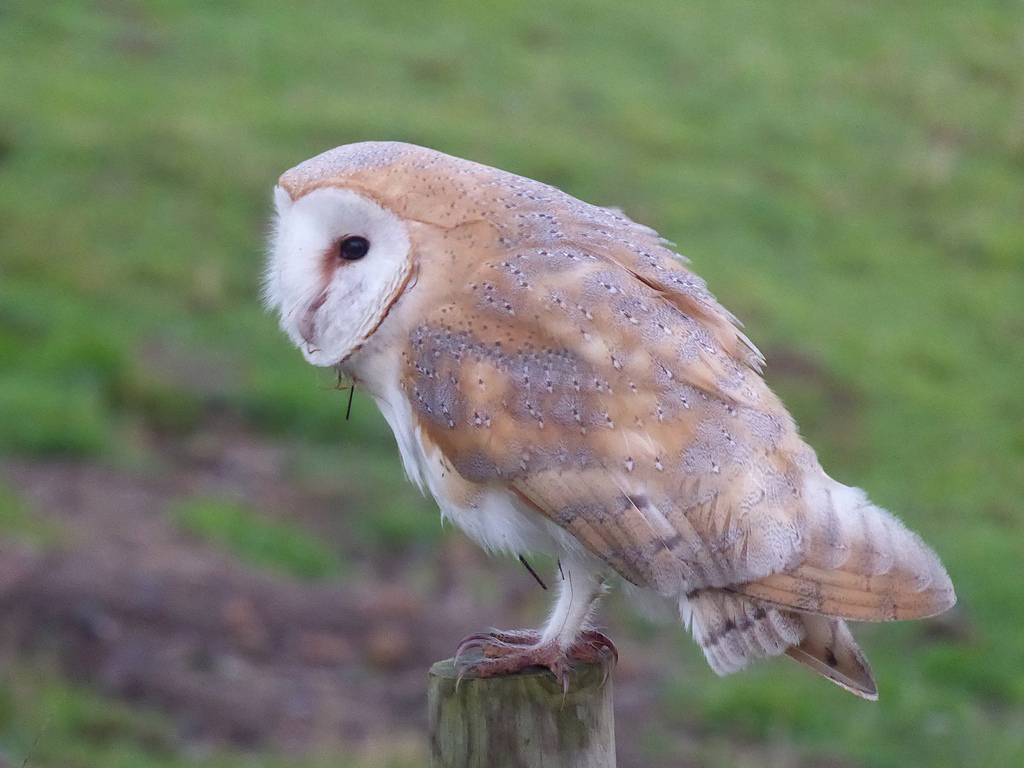
The western barn owl (Tyto alba) is a species of barn owl native to Europe, southwestern Asia, and Africa.
- Kingdom
- Animalia
- Phylum
- Chordata
- Class
- Aves
- Order
- Strigiformes
- Family
- Tytonidae
- Genus
- Tyto
- Species
- Tyto alba
Description
The western barn owl (Tyto alba) is a species of barn owl native to Europe, southwestern Asia, and Africa. It was formerly considered a subspecies group together with barn owls native to other parts of the world, but this classification was found to be paraphyletic with respect to some other members of the genus. The plumage on the head and back is a mottled shade of grey or brown; that on the underparts varies from white to brown and is sometimes speckled with dark markings. The facial disc is characteristically large and heart-shaped, with white plumage in most subspecies. This owl does not hoot, but utters an eerie, drawn-out screech. The western barn owl is nocturnal over most of its range, but in Great Britain, it also hunts by day. Barn owls specialise in hunting animals on the ground, and nearly all of their food consists of small mammals, which they locate by sound, their hearing being very acute. The owls usually mate for life unless one of the pair is killed, whereupon a new pair bond may be formed. Breeding takes place at varying times of the year, according to the locality, with a clutch of eggs, averaging about four in number, being laid in a nest in a hollow tree, old building, or fissure in a cliff. The female does all the incubation, and relies on the male to hunt for food. When large numbers of small prey are readily available, barn owl populations can expand rapidly, and globally the barn owl is listed Least Concern on the IUCN Red List. Some subspecies with restricted ranges are more threatened.
Gallery
Ajouter des photos
Partagez vos photos de cette espèce (jusqu'à 20 à la fois) : elles sont vérifiées automatiquement, puis publiées.
Répartition
Occurrences observées (données GBIF). Les zones hors aire d'origine peuvent indiquer une présence introduite ou invasive.
Sources et crédits
Informations provenant de plusieurs sources vérifiées. Dernière mise à jour : .
Crédits photos (5)
- Photo : Anthony McDonald (@eyorksmac) · CC BY 4.0 · via iNaturalist
- Photo : Mourad Harzallah (@mourad-harzallah) · CC BY 4.0 · via iNaturalist
- Photo : @terrapin_guy · CC BY-NC 4.0 · via iNaturalist
- Photo : Víctor Alonso (@naturalonso) · CC BY-NC 4.0 · via iNaturalist
- Photo : Stuart (@sturuss) · CC0 (domaine public) · via iNaturalist
Mentions de licence
Texte disponible sous licence CC BY-SA 4.0. Il adapte notamment Wikipedia (CC BY-SA) : Western barn owl (Wikipédia, auteurs dans l’historique de l’article).
- Taxonomie : GBIF Backbone Taxonomy (CC BY 4.0)
- Carte : occurrences GBIF, fond © contributeurs OpenStreetMap (ODbL)
- Statut de conservation : Liste rouge de l'UICN, via Wikidata (CC0)
Détail : Sources et licences.
Discussion (0)
Aucun message pour l’instant. Lancez la discussion sur cette fiche (sources, précisions, débats éditoriaux).
Connectez-vous pour participer à la discussion.