
Dodo
Raphus cucullatus
The dodo (Raphus cucullatus) is an extinct flightless bird that was endemic to Mauritius, an island east of Madagascar in the Indian Ocean.
- Kingdom
- Animalia
- Phylum
- Chordata
- Class
- Aves
- Order
- Columbiformes
- Family
- Columbidae
- Genus
- Raphus
- Species
- Raphus cucullatus
Description
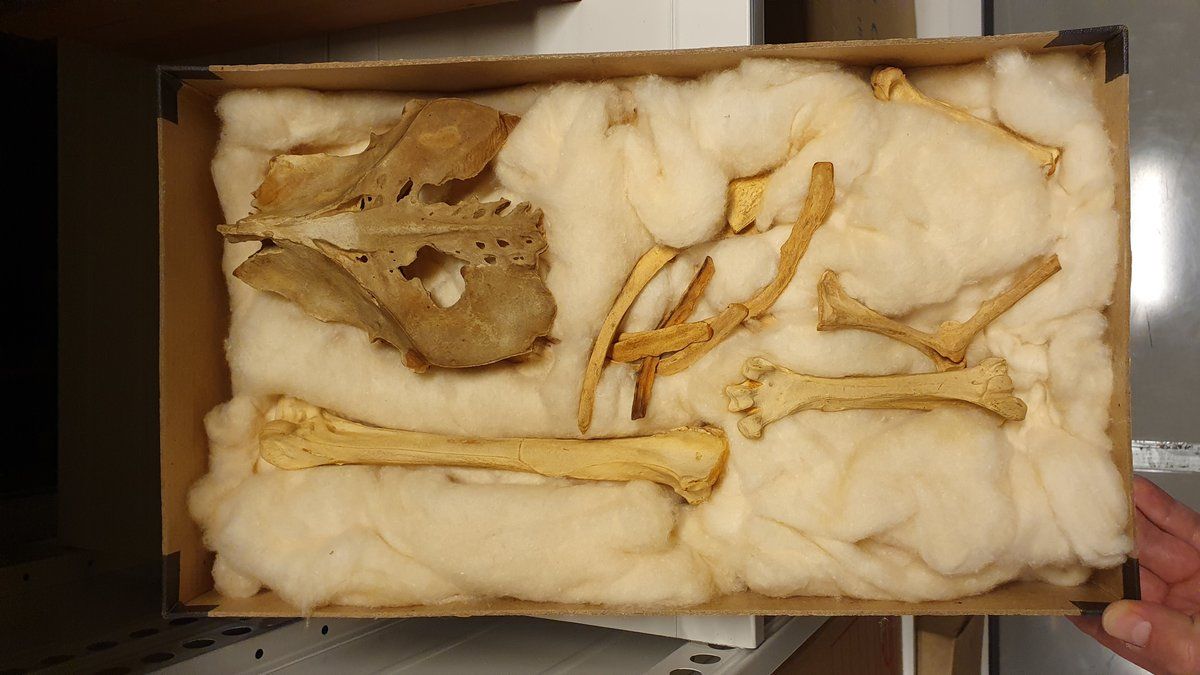
The dodo (Raphus cucullatus) is an extinct flightless bird that was endemic to Mauritius, an island east of Madagascar in the Indian Ocean. The dodo's closest relative was the also-extinct and flightless Rodrigues solitaire. The two formed the subtribe Raphina, a clade of extinct flightless birds that are a part of the group that includes pigeons and doves (the family Columbidae). The closest living relative of the dodo is the Nicobar pigeon. A white dodo was once thought to have existed on the nearby island of Réunion, but it is now believed that this assumption was merely confusion based on the also-extinct Réunion ibis and paintings of white dodos. Subfossil remains show the dodo measured about 62.6–75 centimetres (2.05–2.46 ft) in height and may have weighed 10.6–17.5 kg (23–39 lb) in the wild. The dodo's appearance in life is evidenced only by drawings, paintings, and written accounts from the 17th century. Since these portraits vary considerably, and since only some of the illustrations are known to have been drawn from live specimens, the dodos' exact appearance in life remains unresolved, and little is known about its behaviour. It has been depicted with brownish-grey plumage, yellow feet, a tuft of tail feathers, a grey, naked head, and a black, yellow, and green beak. It used gizzard stones to help digest its food, which is thought to have included fruits, and its main habitat is believed to have been the woods in the drier coastal areas of Mauritius. One account states its clutch consisted of a single egg. It is presumed that the dodo became flightless because of the ready availability of abundant food sources and a relative absence of predators on Mauritius. Though the dodo has historically been portrayed as being fat and clumsy, it is now thought to have been well-adapted for its ecosystem. The first recorded mention of the dodo was by Dutch sailors in 1598. In the following years, the bird was hunted by sailors and invasive species, while its habitat was being destroyed. The last widely accepted sighting of a dodo was in 1662. Its extinction was not immediately noticed, and some considered the bird to be a myth. In the 19th century, research was conducted on a small quantity of remains of four specimens that had been brought to Europe in the early 17th century. Among these is a dried head, the only soft tissue of the dodo that remains today. Since then, a large amount of subfossil material has been collected on Mauritius, mostly from the Mare aux Songes swamp. The extinction of the dodo less than a century after its discovery called attention to the previously unrecognised problem of human involvement in the disappearance of entire species. The dodo achieved widespread recognition from its role in the story of Alice's Adventures in Wonderland, and it has since become a fixture in popular culture, often as a symbol of extinction and obsolescence.
Gallery
Ajouter des photos
Partagez vos photos de cette espèce (jusqu'à 20 à la fois) : elles sont vérifiées automatiquement, puis publiées.
Répartition
Occurrences observées (données GBIF). Les zones hors aire d'origine peuvent indiquer une présence introduite ou invasive.
Sources et crédits
Informations provenant de plusieurs sources vérifiées. Dernière mise à jour : .
Crédits photos (10)
- Photo : Lars Erik Johannessen, NHM Oslo · CC BY 4.0 · via GBIF
- Photo : YPM Vertebrate Paleontology Staff · CC0 (domaine public) · via GBIF
- Photo : The Trustees of the Natural History Museum, London · CC BY 4.0 · via GBIF
- Photo : The Trustees of the Natural History Museum, London · CC BY 4.0 · via GBIF
- Photo : The Trustees of the Natural History Museum, London · CC BY 4.0 · via GBIF
- Photo : The Trustees of the Natural History Museum, London · CC BY 4.0 · via GBIF
- Photo : Sandra Chapman · CC BY 4.0 · via GBIF
- Photo : The Trustees of the Natural History Museum, London · CC BY 4.0 · via GBIF
- Photo : The Trustees of the Natural History Museum, London · CC BY 4.0 · via GBIF
- Photo : Sandra Chapman · CC BY 4.0 · via GBIF
Mentions de licence
Texte disponible sous licence CC BY-SA 4.0. Il adapte notamment Wikipedia (CC BY-SA) : Dodo (Wikipédia, auteurs dans l’historique de l’article).
- Taxonomie : GBIF Backbone Taxonomy (CC BY 4.0)
- Carte : occurrences GBIF, fond © contributeurs OpenStreetMap (ODbL)
- Statut de conservation : Liste rouge de l'UICN, via Wikidata (CC0)
Détail : Sources et licences.
Discussion (0)
Aucun message pour l’instant. Lancez la discussion sur cette fiche (sources, précisions, débats éditoriaux).
Connectez-vous pour participer à la discussion.