
Tundra Swan
Cygnus columbianus
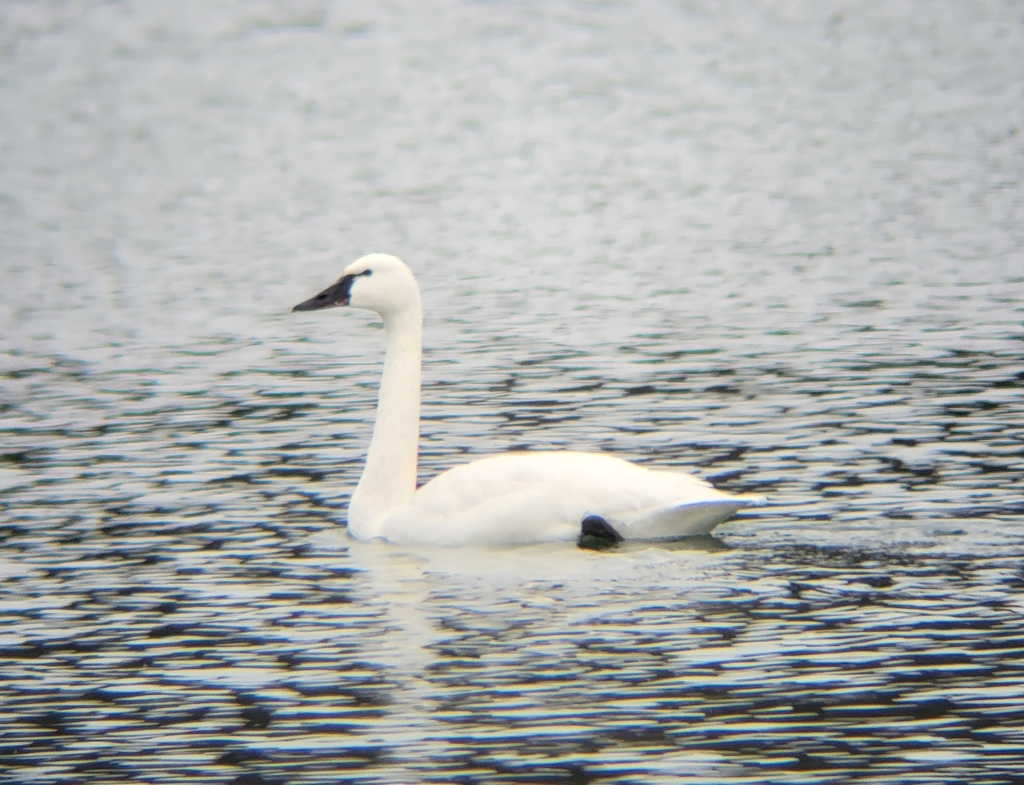
The tundra swan (Cygnus columbianus) is a species of swan which breeds in the arctic, and overwinters in North America, Europe, and Asia.
- Kingdom
- Animalia
- Phylum
- Chordata
- Class
- Aves
- Order
- Anseriformes
- Family
- Anatidae
- Genus
- Cygnus
- Species
- Cygnus columbianus
Description
The tundra swan (Cygnus columbianus) is a species of swan which breeds in the arctic, and overwinters in North America, Europe, and Asia. It is the smallest of the Holarctic swans, at 115–150 cm (45–59 in) in length, 168–211 cm (66–83 in) in wingspan and 3.4–9.6 kg (7.5–21.2 lb) in weight. Typically, the plumage of adults is entirely white, with solid black feet, a black beak that has varying amounts of yellow, and a thin streak of pink along the mouthline, although colour variation is common. In the summer, they mainly eat aquatic vegetation, while at other times of year they often eat leftover crops, such as potatoes. They have few natural predators, although sometimes Arctic foxes, parasitic jaegers, and glaucous gulls will prey upon their eggs and chicks. Their main cause of death is poaching. During the breeding season, tundra swans become aggressive, and may attack passing animals and other tundra swans; outside of the breeding season, they can form groups. They make a high-pitched honk, similar to a black goose. Tundra swans live for an average of 10 years in the wild. They mate in spring, and are monogamous, mating for life. In May, they build a nest beside water using plant material, and lay 2–7 eggs, which incubate for about 30 days. The young fledge quickly after 60–75 days, twice as fast as the young of mute swans. They remain with their parents for their first winter migration. Sometimes, in their winter grounds, the families are joined offspring from previous breeding seasons.
Gallery
Ajouter des photos
Partagez vos photos de cette espèce (jusqu'à 20 à la fois) : elles sont vérifiées automatiquement, puis publiées.
Répartition
Occurrences observées (données GBIF). Les zones hors aire d'origine peuvent indiquer une présence introduite ou invasive.
Sources et crédits
Informations provenant de plusieurs sources vérifiées. Dernière mise à jour : .
Crédits photos (8)
- Photo : Lucas Beaver (@lucasbeaver) · CC BY-NC 4.0 · via iNaturalist
- Photo : Carter Dorscht (@carterdorscht) · CC0 (domaine public) · via iNaturalist
- Photo : Susan Christman Williams (@nana10) · CC0 (domaine public) · via iNaturalist
- Photo : Howard Friedman (@howardfriedman1) · CC BY-NC 4.0 · via iNaturalist
- Photo : River Turner (@riverturner) · CC BY-NC 4.0 · via iNaturalist
- Photo : @ijamesmac71 · CC BY-NC 4.0 · via iNaturalist
- Photo : Mike Lesnik (@mikelesnik) · CC BY-NC 4.0 · via iNaturalist
- Photo : Manoli Strecker (@mstrecker) · CC BY-NC 4.0 · via iNaturalist
Mentions de licence
Texte disponible sous licence CC BY-SA 4.0. Il adapte notamment Wikipedia (CC BY-SA) : Tundra swan (Wikipédia, auteurs dans l’historique de l’article).
- Taxonomie : GBIF Backbone Taxonomy (CC BY 4.0)
- Carte : occurrences GBIF, fond © contributeurs OpenStreetMap (ODbL)
- Statut de conservation : Liste rouge de l'UICN, via Wikidata (CC0)
Détail : Sources et licences.
Discussion (0)
Aucun message pour l’instant. Lancez la discussion sur cette fiche (sources, précisions, débats éditoriaux).
Connectez-vous pour participer à la discussion.