
Horned Sungem
Heliactin bilophus
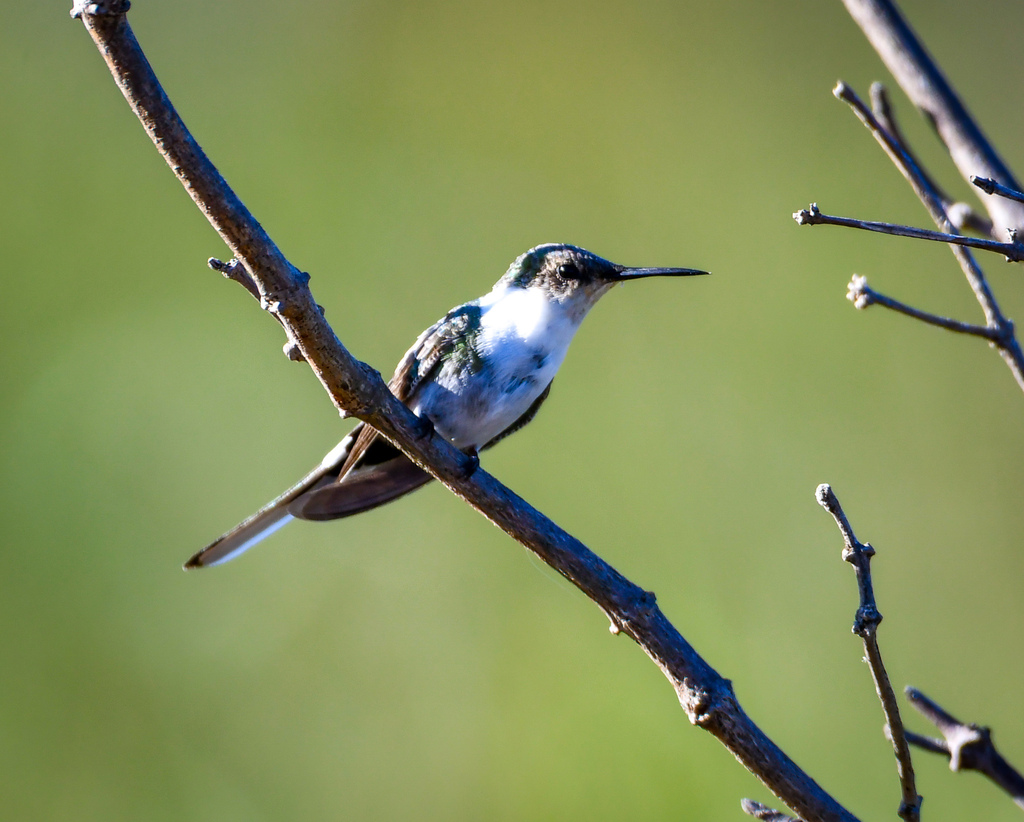
The horned sungem (Heliactin bilophus) is a species of hummingbird native to much of central Brazil and parts of Bolivia and Suriname.
- Kingdom
- Animalia
- Phylum
- Chordata
- Class
- Aves
- Order
- Apodiformes
- Family
- Trochilidae
- Genus
- Heliactin
- Species
- Heliactin bilophus
Description
The horned sungem (Heliactin bilophus) is a species of hummingbird native to much of central Brazil and parts of Bolivia and Suriname. It prefers open habitats such as savanna and grassland and readily occupies human-created habitats such as gardens. It recently expanded its range into southern Amazonas and Espírito Santo, probably as a result of deforestation; few other hummingbird species have recently expanded their range. The horned sungem is a small hummingbird with a long tail and a comparatively short, black bill. The sexes differ markedly in appearance, with males sporting two feather tufts ("horns") above the eyes that are shiny red, golden, and green. Males also have a shiny blue head crest and a black throat with a pointed "beard". The female is plainer and has a brown or yellow-buff throat. The species is the only one within its genus, Heliactin. The horned sungem is a nomadic species, moving between areas in response to the seasonal flowering of the plants on which it feeds. It relies on a broad variety of flowering plants for nectar. If the shape of the flower is incompatible with the bird's comparatively short bill, it may rob the nectar through a little hole at the base of the flower. The sungem does also consume small insects. Only the female builds the nest, incubates the eggs, and rears the chicks. She lays two white eggs in a small cup nest which are incubated for about 13 days. The chicks are naked and black after hatching, and can fly when 20 to 22 days old. The horned sungem has been reported to readily defend territories both against members of its own species and against subordinate hummingbird species. The species is currently classified as least concern by the International Union for Conservation of Nature, and its population is thought to be increasing.
Gallery
Ajouter des photos
Partagez vos photos de cette espèce (jusqu'à 20 à la fois) : elles sont vérifiées automatiquement, puis publiées.
Répartition
Occurrences observées (données GBIF). Les zones hors aire d'origine peuvent indiquer une présence introduite ou invasive.
Sources et crédits
Informations provenant de plusieurs sources vérifiées. Dernière mise à jour : .
Crédits photos (8)
- Photo : Leandro Rezende (@leandrorezende) · CC BY-NC 4.0 · via iNaturalist
- Photo : Silvio Wolff (@silviowolff-br-df) · CC BY-NC 4.0 · via iNaturalist
- Photo : Ivo Carlos Zecchin (@ivozecchin) · CC BY-NC 4.0 · via iNaturalist
- Photo : @agujaceratops · CC BY 4.0 · via iNaturalist
- Photo : Ruben D. Layme (@layme) · CC BY-NC 4.0 · via iNaturalist
- Photo : Thomaz de Carvalho Callado (@thomazcallado) · CC BY 4.0 · via iNaturalist
- Photo : Roberto Shimizu (@robertoshimizu) · CC BY-NC 4.0 · via iNaturalist
- Photo : @jhennif · CC BY-NC 4.0 · via iNaturalist
Mentions de licence
Texte disponible sous licence CC BY-SA 4.0. Il adapte notamment Wikipedia (CC BY-SA) : Horned sungem (Wikipédia, auteurs dans l’historique de l’article).
- Taxonomie : GBIF Backbone Taxonomy (CC BY 4.0)
- Carte : occurrences GBIF, fond © contributeurs OpenStreetMap (ODbL)
- Statut de conservation : Liste rouge de l'UICN, via Wikidata (CC0)
Détail : Sources et licences.
Discussion (0)
Aucun message pour l’instant. Lancez la discussion sur cette fiche (sources, précisions, débats éditoriaux).
Connectez-vous pour participer à la discussion.