
Western Jackdaw
Coloeus monedula
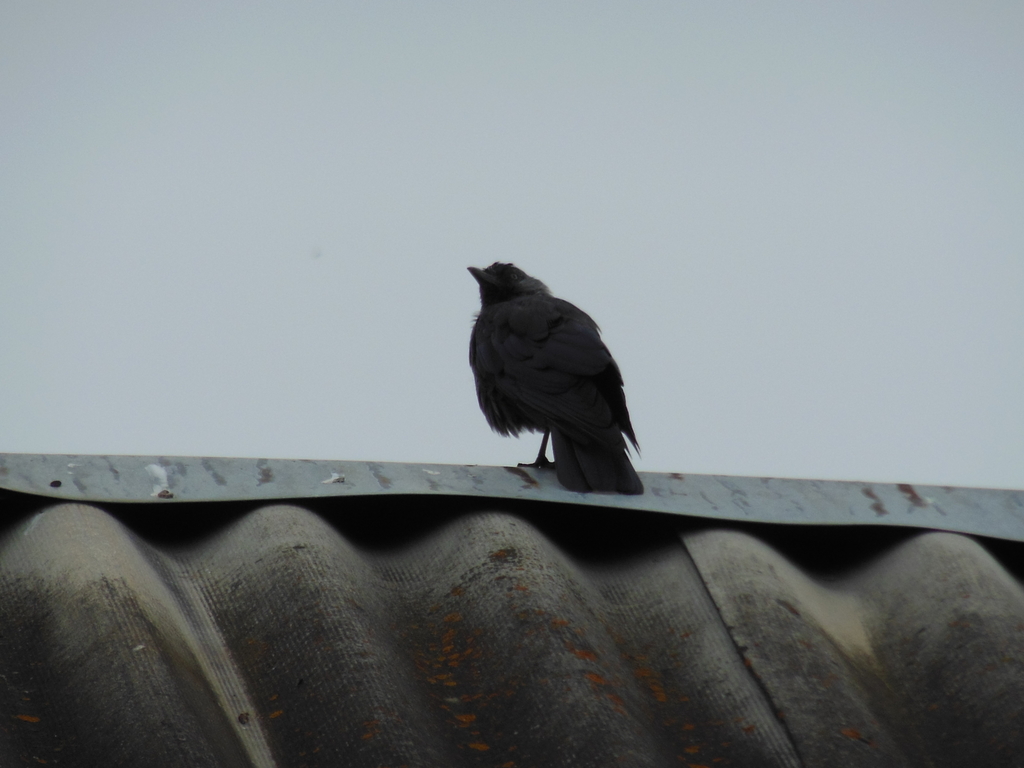
The western jackdaw (Coloeus monedula), also known as the Eurasian jackdaw, the European jackdaw, or simply the jackdaw, is a passerine bird in the crow family.
- Kingdom
- Animalia
- Phylum
- Chordata
- Class
- Aves
- Order
- Passeriformes
- Family
- Corvidae
- Genus
- Coloeus
- Species
- Coloeus monedula
Description
The western jackdaw (Coloeus monedula), also known as the Eurasian jackdaw, the European jackdaw, or simply the jackdaw, is a passerine bird in the crow family. It is found across Europe, western Asia and western North Africa; it is mostly resident, although northern and eastern populations migrate south in the winter. Four subspecies are recognised, which differ mainly in the darker or paler greyscale of the plumage on the head and nape. Linnaeus first described it formally, giving it the name Corvus monedula. The common name derives from the word jack, denoting "small", and daw, a less common synonym for "jackdaw", and the native English name for the bird. Measuring 34–39 centimetres (13–15 in) in length, the western jackdaw is a black-plumaged bird with a grey nape and distinctive pale iris. It is gregarious and vocal, living in small groups with a complex social structure in farmland, open woodland, on coastal cliffs, and in urban settings. Like its relatives, jackdaws are intelligent birds, and have been observed using tools. An omnivorous and opportunistic feeder, it eats a wide variety of plant material and invertebrates, as well as food waste from urban areas. Western jackdaws are monogamous and build simple nests of sticks in cavities in trees, cliffs, or buildings. About five pale blue or mint green eggs with brown to grey speckles are laid and incubated by the female. The young fledge in four to five weeks.
Gallery
Ajouter des photos
Partagez vos photos de cette espèce (jusqu'à 20 à la fois) : elles sont vérifiées automatiquement, puis publiées.
Répartition
Occurrences observées (données GBIF). Les zones hors aire d'origine peuvent indiquer une présence introduite ou invasive.
Sources et crédits
Informations provenant de plusieurs sources vérifiées. Dernière mise à jour : .
Crédits photos (8)
- Photo : Andy Bridges (@andybridges) · CC BY-NC 4.0 · via iNaturalist
- Photo : Nadezhda Zelenova (@npz) · CC BY-NC 4.0 · via iNaturalist
- Photo : Сиряченко-Полойко Людмила Яковлевна (@lyuda74) · CC BY-NC 4.0 · via iNaturalist
- Photo : @isax0139 · CC BY-NC 4.0 · via iNaturalist
- Photo : Dérozier Violette (@violettederozier) · CC BY-NC 4.0 · via iNaturalist
- Photo : Aleksey Levashkin (@nestboxer) · CC BY-NC 4.0 · via iNaturalist
- Photo : Sebastián Fornés (@seba_fornes) · CC BY 4.0 · via iNaturalist
- Photo : Merav Vonshak (@merav) · CC BY-NC 4.0 · via iNaturalist
Mentions de licence
Texte disponible sous licence CC BY-SA 4.0. Il adapte notamment Wikipedia (CC BY-SA) : Western jackdaw (Wikipédia, auteurs dans l’historique de l’article).
- Taxonomie : GBIF Backbone Taxonomy (CC BY 4.0)
- Carte : occurrences GBIF, fond © contributeurs OpenStreetMap (ODbL)
Détail : Sources et licences.
Discussion (0)
Aucun message pour l’instant. Lancez la discussion sur cette fiche (sources, précisions, débats éditoriaux).
Connectez-vous pour participer à la discussion.