
Drakensberg Rockjumper
Chaetops aurantius
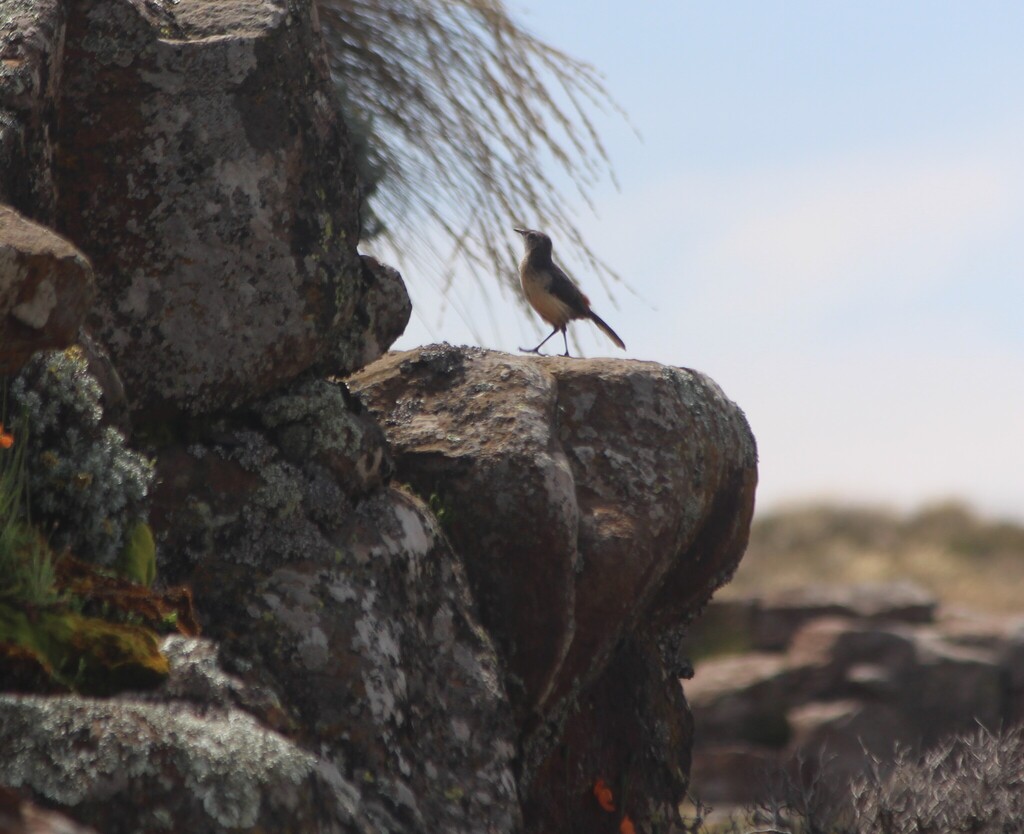
The Drakensberg rockjumper or orange-breasted rockjumper (Chaetops aurantius) is a medium-sized insectivorous passerine bird endemic to the alpine grasslands and rock outcrops of the Drakensberg Mountains of southeastern South Africa…
- Kingdom
- Animalia
- Phylum
- Chordata
- Class
- Aves
- Order
- Passeriformes
- Family
- Chaetopidae
- Genus
- Chaetops
- Species
- Chaetops aurantius
Description
The Drakensberg rockjumper or orange-breasted rockjumper (Chaetops aurantius) is a medium-sized insectivorous passerine bird endemic to the alpine grasslands and rock outcrops of the Drakensberg Mountains of southeastern South Africa and Lesotho. This taxon is closely related to the allopatric Cape rockjumper Chaetops frenatus; the two species of Chaetops are the only living members of the Chaetopidae (rockjumper family). This rockjumper is 23–25 cm long with a long black tail and strong legs. The male has a dark grey head with a thin white supercilium and a broad white moustache. The back and wings are dark grey. The underparts are orange and the rump is rufous red. The female and juvenile have a paler grey head, upperparts and wings, a duller head pattern, an orange rump, and buff underparts. The call is a loud wheeoo. The Cape rockjumper male has rufous red underparts, and the female and young are darker buff below than in C. aurantius. This is a ground-nesting species which forages on rocky slopes and scree. It frequently perches on rocks. Breeding is often cooperative; one or two additional individuals, usually a pair's offspring of the preceding breeding season, may assist the parents in territorial defence and alarm calling, and in the feeding of nestlings and fledglings.
Gallery
Ajouter des photos
Partagez vos photos de cette espèce (jusqu'à 20 à la fois) : elles sont vérifiées automatiquement, puis publiées.
Répartition
Occurrences observées (données GBIF). Les zones hors aire d'origine peuvent indiquer une présence introduite ou invasive.
Sources et crédits
Informations provenant de plusieurs sources vérifiées. Dernière mise à jour : .
Crédits photos (8)
- Photo : @janet_taylor · CC BY-NC 4.0 · via iNaturalist
- Photo : @hirosho · CC BY-NC 4.0 · via iNaturalist
- Photo : @afeather · CC BY-NC 4.0 · via iNaturalist
- Photo : Deon du Plessis (@deondup) · CC BY-NC 4.0 · via iNaturalist
- Photo : Kiley van Meer (@kileyvanmeer) · CC BY-NC 4.0 · via iNaturalist
- Photo : Valentin Moser (@vmoser) · CC BY 4.0 · via iNaturalist
- Photo : Bill Fintel (@bill6711) · CC BY-NC 4.0 · via iNaturalist
- Photo : Sandra Falanga (@sandraf) · CC BY-NC 4.0 · via iNaturalist
Mentions de licence
Texte disponible sous licence CC BY-SA 4.0. Il adapte notamment Wikipedia (CC BY-SA) : Drakensberg rockjumper, Chétopse doré (Wikipédia, auteurs dans l’historique de l’article).
- Taxonomie : GBIF Backbone Taxonomy (CC BY 4.0)
- Carte : occurrences GBIF, fond © contributeurs OpenStreetMap (ODbL)
- Statut de conservation : Liste rouge de l'UICN, via Wikidata (CC0)
Détail : Sources et licences.
Discussion (0)
Aucun message pour l’instant. Lancez la discussion sur cette fiche (sources, précisions, débats éditoriaux).
Connectez-vous pour participer à la discussion.