
New Zealand Pigeon
Hemiphaga novaeseelandiae
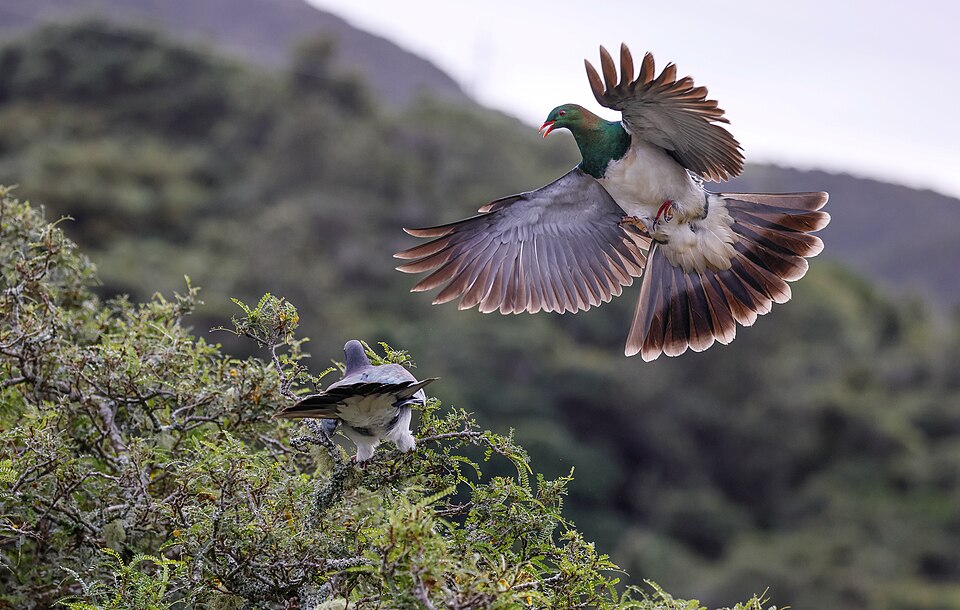
The kererū (Hemiphaga novaeseelandiae), also known as kūkupa (northern Māori dialects), New Zealand pigeon or wood pigeon, is a species of pigeon native to New Zealand.
- Kingdom
- Animalia
- Phylum
- Chordata
- Class
- Aves
- Order
- Columbiformes
- Family
- Columbidae
- Genus
- Hemiphaga
- Species
- Hemiphaga novaeseelandiae
Description
The kererū (Hemiphaga novaeseelandiae), also known as kūkupa (northern Māori dialects), New Zealand pigeon or wood pigeon, is a species of pigeon native to New Zealand. Johann Friedrich Gmelin described the bird in 1789 as a large, conspicuous pigeon up to 50 cm (20 in) in length and 550–850 g (19–30 oz) in weight, with a white breast and iridescent green–blue plumage. Two subspecies have been recognised; the second-the Norfolk pigeon of Norfolk Island-became extinct in the early 20th century. Kererū pairs are monogamous, breeding over successive seasons and remaining together when not breeding. They construct nests with twigs in trees, with a single egg clutch. Found in a variety of habitats across the country, the kererū feeds mainly on fruits, as well as leaves, buds and flowers. Although widespread in both forest and urban habitats, its numbers have declined significantly since European colonisation and the arrival of invasive mammals, such as rats, stoats and possums. However, the results of nationwide bird surveys indicate that there has been a significant recovery in the population in suburban areas. As of 2022, the IUCN Red List classifies the species as least concern, while the Department of Conservation (DOC) classifies the kererū as "not threatened" but conservation dependent. Considered a taonga (cultural treasure) to the Māori people, the kererū was historically a major food source in Māori culture. However, due to the decline in its population, hunting is illegal. Customary use of kererū is restricted to the use of feathers and bones obtained from dead birds collected by DOC. This issue has received significant public and political attention, as some people argue that bans on kererū hunting are detrimental to Māori traditions. In 2018, the kererū was designated Bird of the Year by the New Zealand organisation Forest & Bird, and in 2019, the exoplanet HD 137388 b was renamed Kererū in its honour.
Gallery
Ajouter des photos
Partagez vos photos de cette espèce (jusqu'à 20 à la fois) : elles sont vérifiées automatiquement, puis publiées.
Répartition
Occurrences observées (données GBIF). Les zones hors aire d'origine peuvent indiquer une présence introduite ou invasive.
Sources et crédits
Informations provenant de plusieurs sources vérifiées. Dernière mise à jour : .
Crédits photos (7)
- Photo : Tony Stoddard · CC BY-SA 4.0
- Photo : Tony Stoddard · CC BY-SA 4.0
- Photo : @kjpeters · CC BY-NC 4.0 · via iNaturalist
- Photo : Tony Stoddard (@kererucount) · CC BY-NC 4.0 · via iNaturalist
- Photo : John Barkla (@john_barkla) · CC BY 4.0 · via iNaturalist
- Photo : Tony Stoddard (@kererucount) · CC BY-NC 4.0 · via iNaturalist
- Photo : James Crofts-Bennett (@i_like_like_spiders) · CC BY 4.0 · via iNaturalist
Mentions de licence
Texte disponible sous licence CC BY-SA 4.0. Il adapte notamment Wikipedia (CC BY-SA) : Kererū (Wikipédia, auteurs dans l’historique de l’article).
- Taxonomie : GBIF Backbone Taxonomy (CC BY 4.0)
- Carte : occurrences GBIF, fond © contributeurs OpenStreetMap (ODbL)
- Statut de conservation : Liste rouge de l'UICN, via Wikidata (CC0)
Détail : Sources et licences.
Discussion (0)
Aucun message pour l’instant. Lancez la discussion sur cette fiche (sources, précisions, débats éditoriaux).
Connectez-vous pour participer à la discussion.