
Papuan Mountain Pigeon
Gymnophaps albertisii
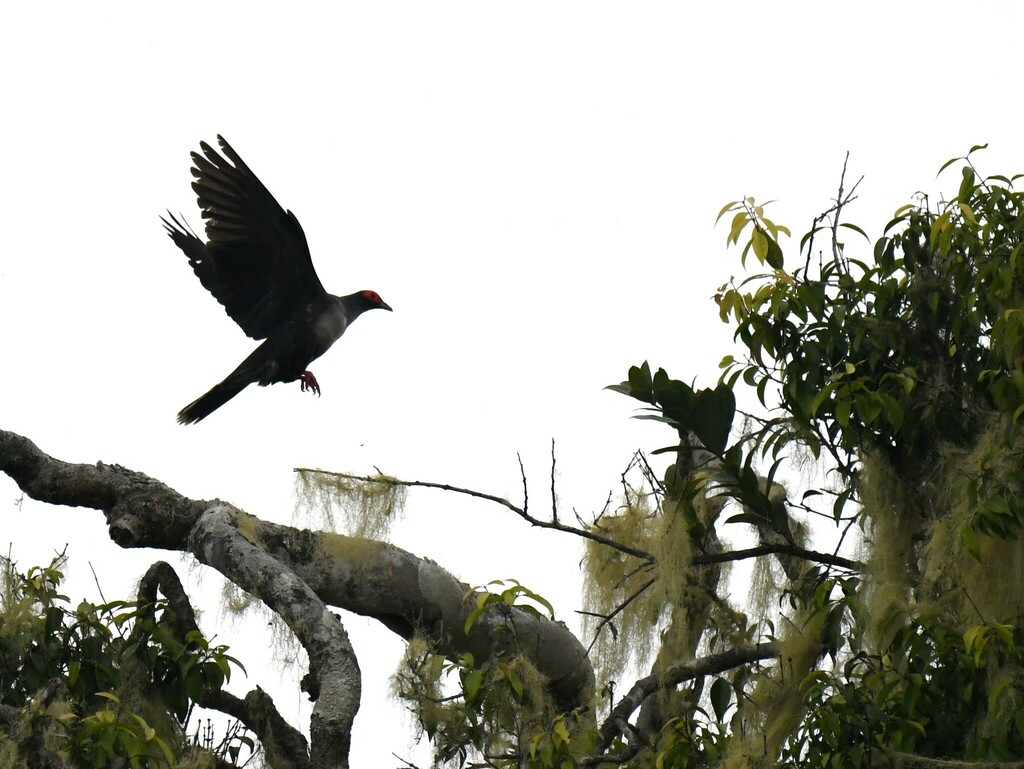
The Papuan mountain pigeon (Gymnophaps albertisii) is a species of bird in the pigeon family, Columbidae.
- Kingdom
- Animalia
- Phylum
- Chordata
- Class
- Aves
- Order
- Columbiformes
- Family
- Columbidae
- Genus
- Gymnophaps
- Species
- Gymnophaps albertisii
Description
The Papuan mountain pigeon (Gymnophaps albertisii) is a species of bird in the pigeon family, Columbidae. It is found in the Bacan Islands, New Guinea, the D'Entrecasteaux Islands, and the Bismarck Archipelago, where it inhabits primary forest, montane forest, and lowlands. It is a medium-sized species of pigeon, being 33–36 cm (13–14 in) long and weighing 259 g (9.1 oz) on average. Adult males have slate-grey upperparts, chestnut-maroon throats and bellies, whitish breasts, and a pale grey terminal tail band. The lores and orbital region are bright red. Females are similar, but have grayish breasts and grey edges to the throat feathers. The Papuan mountain pigeon is frugivorous, feeding on figs and drupes. It breeds from October to March in the Schrader Range, but may breed throughout the year across its range. It builds nests out of sticks and twigs in a tree or makes a ground nest in short dry grass, and lays a single egg. The species is very social and is usually seen in flocks of 10–40 birds, although some groups can have as many as 80 individuals. It is listed as being of least concern by the International Union for Conservation of Nature (IUCN) on the IUCN Red List due to its large range and lack of significant population decline.
Gallery
Ajouter des photos
Partagez vos photos de cette espèce (jusqu'à 20 à la fois) : elles sont vérifiées automatiquement, puis publiées.
Répartition
Occurrences observées (données GBIF). Les zones hors aire d'origine peuvent indiquer une présence introduite ou invasive.
Sources et crédits
Informations provenant de plusieurs sources vérifiées. Dernière mise à jour : .
Crédits photos (8)
- Photo : Jean-Marie Frenoux (@janmar) · CC BY-NC 4.0 · via iNaturalist
- Photo : @alcedo77 · CC BY-NC 4.0 · via iNaturalist
- Photo : Eric Carpenter (@ecarpe) · CC BY-NC 4.0 · via iNaturalist
- Photo : Светлана Царахова (@svetlanarussia) · CC0 (domaine public) · via iNaturalist
- Photo : Nigel Voaden (@terathopius) · CC BY 4.0 · via iNaturalist
- Photo : Zara (@zara_n) · CC BY 4.0 · via iNaturalist
- Photo : Benoît Segerer (@benoit_segerer) · CC BY-NC 4.0 · via iNaturalist
- Photo : Nik Borrow (@nikborrow) · CC BY-NC 4.0 · via iNaturalist
Mentions de licence
Texte disponible sous licence CC BY-SA 4.0. Il adapte notamment Wikipedia (CC BY-SA) : Papuan mountain pigeon (Wikipédia, auteurs dans l’historique de l’article).
- Taxonomie : GBIF Backbone Taxonomy (CC BY 4.0)
- Carte : occurrences GBIF, fond © contributeurs OpenStreetMap (ODbL)
- Statut de conservation : Liste rouge de l'UICN, via Wikidata (CC0)
Détail : Sources et licences.
Discussion (0)
Aucun message pour l’instant. Lancez la discussion sur cette fiche (sources, précisions, débats éditoriaux).
Connectez-vous pour participer à la discussion.