
Eurasian Bittern
Botaurus stellaris
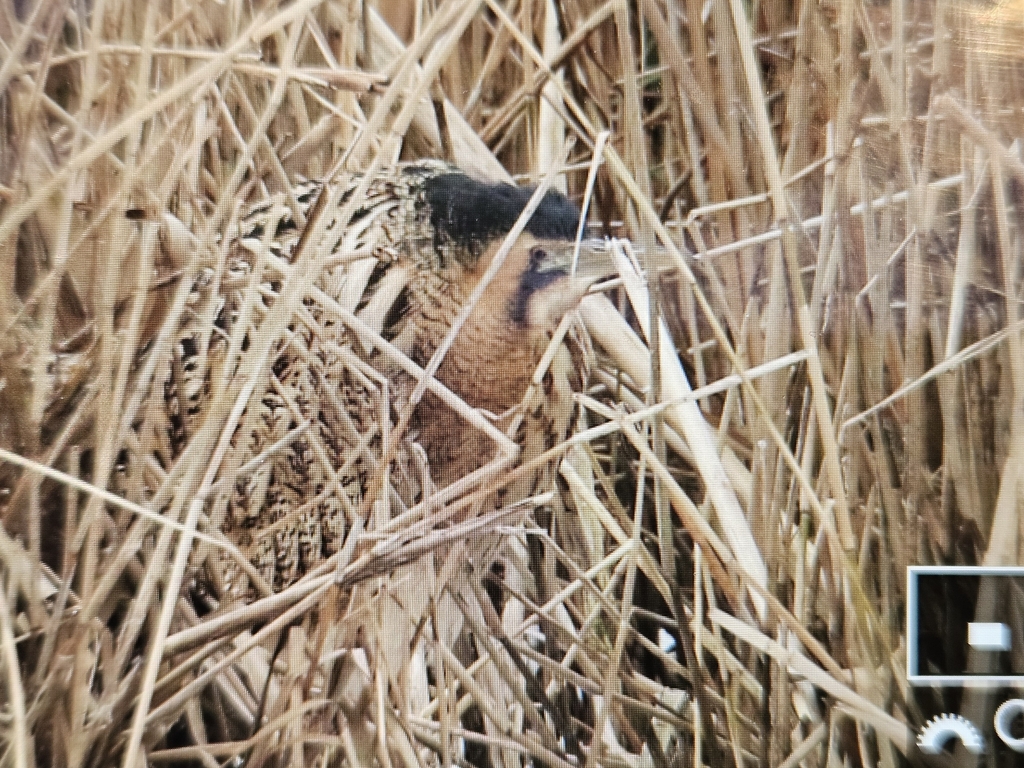
The Eurasian bittern or great bittern (Botaurus stellaris) is a wading bird in the bittern subfamily (Botaurinae) of the heron family Ardeidae.
- Kingdom
- Animalia
- Phylum
- Chordata
- Class
- Aves
- Order
- Pelecaniformes
- Family
- Ardeidae
- Genus
- Botaurus
- Species
- Botaurus stellaris
Description
The Eurasian bittern or great bittern (Botaurus stellaris) is a wading bird in the bittern subfamily (Botaurinae) of the heron family Ardeidae. There are two subspecies, the northern race (B. s. stellaris) breeding in parts of Europe and across the Palearctic, as well as on the northern coast of Africa, while the southern race (B. s. capensis) is endemic to parts of southern Africa. It is a secretive bird, seldom seen in the open as it prefers to skulk in reed beds and thick vegetation near water bodies. Its presence is apparent in the spring, when the booming call of the male during the breeding season can be heard. It feeds on fish, small mammals, fledgling birds, amphibians, crustaceans and insects. The nest is usually built among reeds at the edge of bodies of water. The female incubates the clutch of eggs and feeds the young chicks, which leave the nest when about two weeks old. She continues to care for them until they are fully fledged some six weeks later. With its specific habitat requirements and the general reduction in wetlands across its range, the population is thought to be in decline globally. However the decline is slow, and the International Union for Conservation of Nature has assessed its overall conservation status as being of "least concern". Nevertheless, some local populations are at risk and the population of the southern race has declined more dramatically and is cause for concern. In the United Kingdom it is one of the most threatened of all bird species.
Gallery
Ajouter des photos
Partagez vos photos de cette espèce (jusqu'à 20 à la fois) : elles sont vérifiées automatiquement, puis publiées.
Répartition
Occurrences observées (données GBIF). Les zones hors aire d'origine peuvent indiquer une présence introduite ou invasive.
Sources et crédits
Informations provenant de plusieurs sources vérifiées. Dernière mise à jour : .
Crédits photos (8)
- Photo : Daniël Pos (@posmeister) · CC BY-NC 4.0 · via iNaturalist
- Photo : @luc-125 · CC BY-NC 4.0 · via iNaturalist
- Photo : Roberto Ghiglia (@roberto421) · CC BY-NC 4.0 · via iNaturalist
- Photo : @velocidromeus · CC BY-NC 4.0 · via iNaturalist
- Photo : Janice Sutton (@janicesutton) · CC BY-NC 4.0 · via iNaturalist
- Photo : 阿尔马兹 (@aermazi) · CC BY-NC 4.0 · via iNaturalist
- Photo : Frederik Lerouge (@frederikl) · CC BY-NC 4.0 · via iNaturalist
- Photo : Victor B (@vbe01) · CC BY-NC 4.0 · via iNaturalist
Mentions de licence
Texte disponible sous licence CC BY-SA 4.0. Il adapte notamment Wikipedia (CC BY-SA) : Eurasian bittern (Wikipédia, auteurs dans l’historique de l’article).
- Taxonomie : GBIF Backbone Taxonomy (CC BY 4.0)
- Carte : occurrences GBIF, fond © contributeurs OpenStreetMap (ODbL)
- Statut de conservation : Liste rouge de l'UICN, via Wikidata (CC0)
Détail : Sources et licences.
Discussion (0)
Aucun message pour l’instant. Lancez la discussion sur cette fiche (sources, précisions, débats éditoriaux).
Connectez-vous pour participer à la discussion.