
Crested Honey Buzzard
Pernis ptilorhynchus
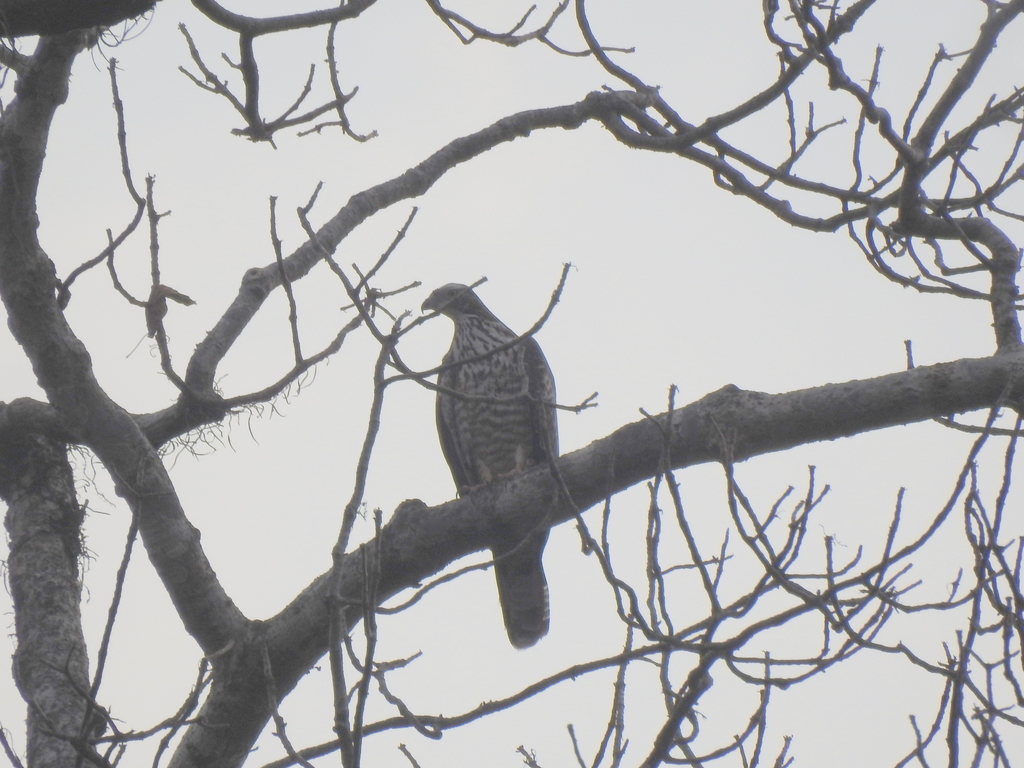
The crested honey buzzard (Pernis ptilorhynchus), also known as the Oriental, Asiatic, or Eastern honey buzzard, is a bird of prey in the family Accipitridae, which also includes many other diurnal raptors such as kites, eagles, and…
- Kingdom
- Animalia
- Phylum
- Chordata
- Class
- Aves
- Order
- Accipitriformes
- Family
- Accipitridae
- Genus
- Pernis
- Species
- Pernis ptilorhynchus
Description
The crested honey buzzard (Pernis ptilorhynchus), also known as the Oriental, Asiatic, or Eastern honey buzzard, is a bird of prey in the family Accipitridae, which also includes many other diurnal raptors such as kites, eagles, and harriers. It is a fairly large raptor, larger than the European honey buzzard. The name honey buzzard is derived from their diets, which consist mainly of the larvae of bees and wasps extracted from honey combs. It is sexually dimorphic and has six subspecies. Crested honey buzzards migrate for breeding to Siberia and Japan during the summer. They then spend the winter in Southeast Asia and the Indian subcontinent. They are also a year-round resident in these latter areas. They prefer well-forested areas with open spaces and are found from sea level up to 1,800 m (5,900 ft). The species has several adaptations for its specialist diet. These include an elongated head for foraging on underground nests and a groove in the tongue for extracting wasp grubs from their comb cells. A mass of short, dense feathers on the head and neck protect against stinging attacks by social wasps. Juveniles may have adopted Batesian mimicry to deter predators.
Gallery
Ajouter des photos
Partagez vos photos de cette espèce (jusqu'à 20 à la fois) : elles sont vérifiées automatiquement, puis publiées.
Répartition
Occurrences observées (données GBIF). Les zones hors aire d'origine peuvent indiquer une présence introduite ou invasive.
Sources et crédits
Informations provenant de plusieurs sources vérifiées. Dernière mise à jour : .
Crédits photos (6)
- Photo : Saniya Chaplod (@saniyachaplod) · CC BY-NC 4.0 · via iNaturalist
- Photo : Masami Kuroda (@masamikuroda) · CC BY-NC 4.0 · via iNaturalist
- Photo : @vasensuli · CC BY-NC 4.0 · via iNaturalist
- Photo : Zoltan BAGOSI (@zoltanbagosi) · CC BY-NC 4.0 · via iNaturalist
- Photo : Ian Dugdale (@ian_dugdale) · CC BY 4.0 · via iNaturalist
- Photo : Nick Volpe (@nickvolpe) · CC BY-NC 4.0 · via iNaturalist
Mentions de licence
Texte disponible sous licence CC BY-SA 4.0. Il adapte notamment Wikipedia (CC BY-SA) : Crested honey buzzard (Wikipédia, auteurs dans l’historique de l’article).
- Taxonomie : GBIF Backbone Taxonomy (CC BY 4.0)
- Carte : occurrences GBIF, fond © contributeurs OpenStreetMap (ODbL)
- Statut de conservation : Liste rouge de l'UICN, via Wikidata (CC0)
Détail : Sources et licences.
Discussion (0)
Aucun message pour l’instant. Lancez la discussion sur cette fiche (sources, précisions, débats éditoriaux).
Connectez-vous pour participer à la discussion.