
Long-billed dowitcher
Limnodromus scolopaceus
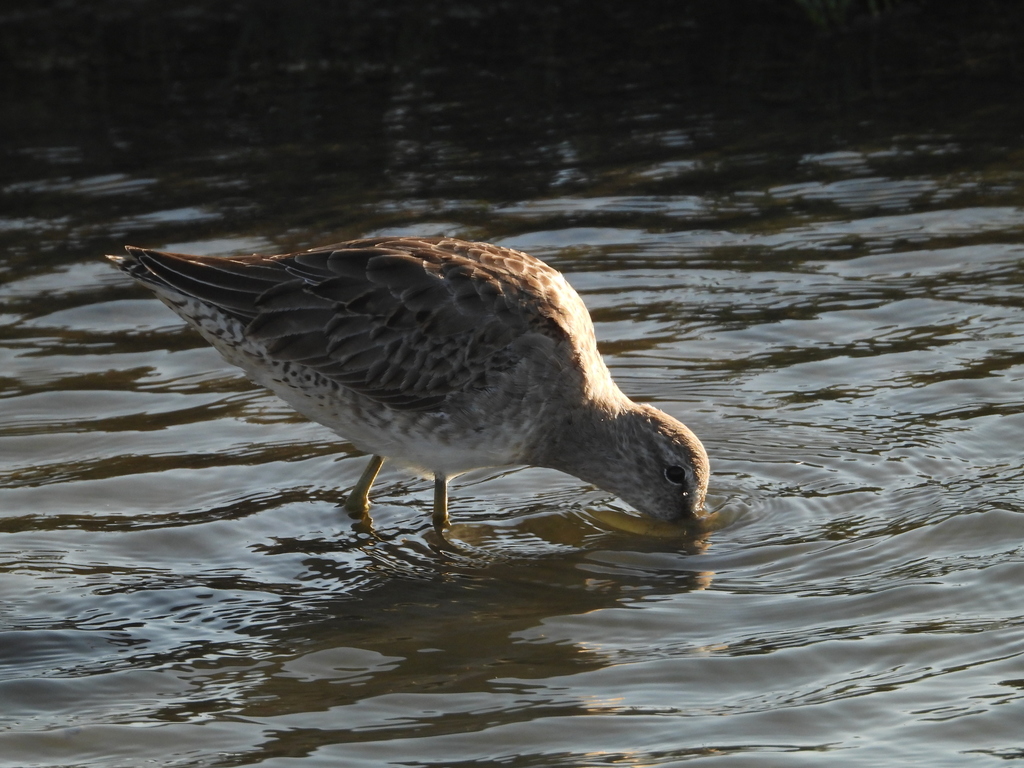
The long-billed dowitcher (Limnodromus scolopaceus) is a medium-sized shorebird with a relatively long bill belonging to the sandpiper family, Scolopacidae.
- Kingdom
- Animalia
- Phylum
- Chordata
- Class
- Aves
- Order
- Charadriiformes
- Family
- Scolopacidae
- Genus
- Limnodromus
- Species
- Limnodromus scolopaceus
Description
The long-billed dowitcher (Limnodromus scolopaceus) is a medium-sized shorebird with a relatively long bill belonging to the sandpiper family, Scolopacidae. In breeding plumage, adults are characterized by a rufous head and underparts with a darker mottled back and a large white upper rump only seen in flight. They feed in various freshwater habitats with their bill underwater in a "sewing machine" motion and have a mating display where males chase females in flight. The genus, Limnodromus is Ancient Greek from limne, "marsh" and dromos, "racer". The specific scolopaceus is Neo-Latin for "snipe-like", from Latin scolopax, scolopacis, a snipe or woodcock. The English name is from Iroquois and was first recorded in 1841. The long-billed dowitcher is similar in appearance to the short-billed dowitcher and was only recognized as a separate species in 1950. Between the two, the best distinguishing field mark is their flight call, especially in winter, when the two species' plumage can be nearly identical. However, the two species differ ecologically in their habitat preferences and breeding locations. Long-billed dowitchers generally prefer freshwater habitats, and breed in northern Alaska and Siberia; their short-billed counterparts favor saltwater habitats and breed farther east, from southern Alaska across Canada to the maritime provinces.
Gallery
Ajouter des photos
Partagez vos photos de cette espèce (jusqu'à 20 à la fois) : elles sont vérifiées automatiquement, puis publiées.
Répartition
Occurrences observées (données GBIF). Les zones hors aire d'origine peuvent indiquer une présence introduite ou invasive.
Sources et crédits
Informations provenant de plusieurs sources vérifiées. Dernière mise à jour : .
Crédits photos (8)
- Photo : Howard Friedman (@howardfriedman1) · CC BY-NC 4.0 · via iNaturalist
- Photo : Smith Family (@gljcrsmith) · CC BY-NC 4.0 · via iNaturalist
- Photo : Bob Lalonde (@toddbooster) · CC BY-NC 4.0 · via iNaturalist
- Photo : Alina Martin (@alinamartin) · CC BY 4.0 · via iNaturalist
- Photo : @elenapalkaflores · CC BY-NC 4.0 · via iNaturalist
- Photo : James Wittke (@jameswittke) · CC BY-NC 4.0 · via iNaturalist
- Photo : Sandy Thomas (@naturejeanne) · CC BY-NC 4.0 · via iNaturalist
- Photo : Annika Lindqvist (@annikaml) · CC BY 4.0 · via iNaturalist
Mentions de licence
Texte disponible sous licence CC BY-SA 4.0. Il adapte notamment Wikipedia (CC BY-SA) : Long-billed dowitcher (Wikipédia, auteurs dans l’historique de l’article).
- Taxonomie : GBIF Backbone Taxonomy (CC BY 4.0)
- Carte : occurrences GBIF, fond © contributeurs OpenStreetMap (ODbL)
- Statut de conservation : Liste rouge de l'UICN, via Wikidata (CC0)
Détail : Sources et licences.
Discussion (0)
Aucun message pour l’instant. Lancez la discussion sur cette fiche (sources, précisions, débats éditoriaux).
Connectez-vous pour participer à la discussion.