
Long-toed Stint
Calidris subminuta
The long-toed stint (Calidris subminuta) is a small wader.
- Kingdom
- Animalia
- Phylum
- Chordata
- Class
- Aves
- Order
- Charadriiformes
- Family
- Scolopacidae
- Genus
- Calidris
- Species
- Calidris subminuta
Description
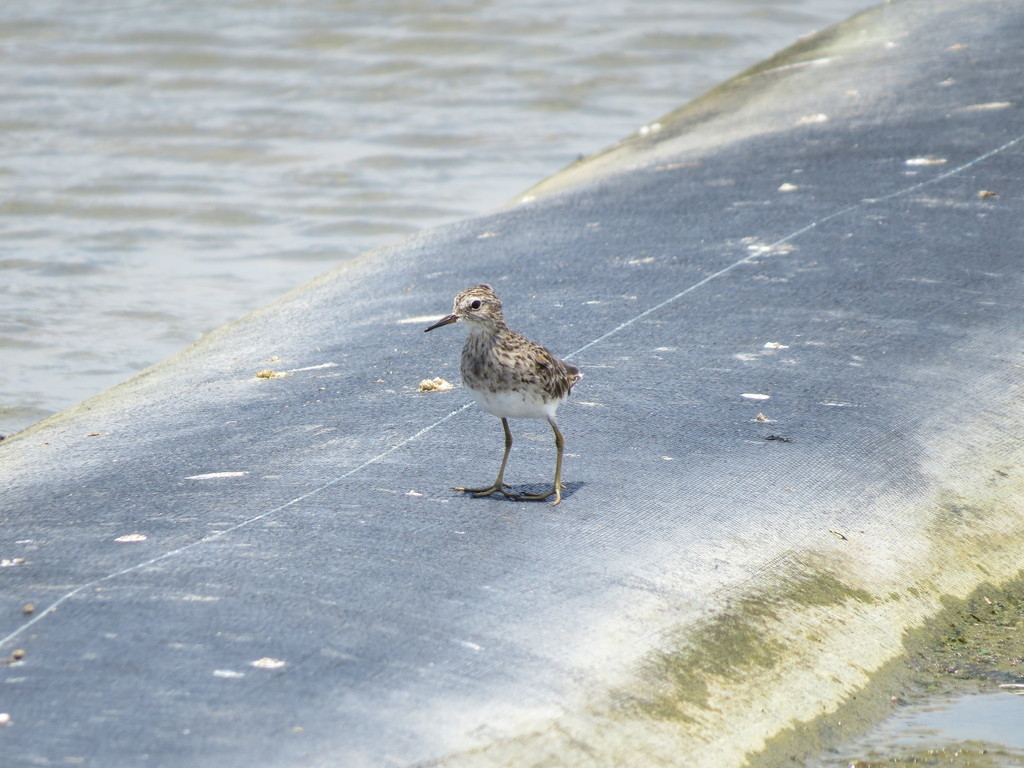
The long-toed stint (Calidris subminuta) is a small wader. The genus name is from Ancient Greek kalidris or skalidris, a term used by Aristotle for some grey-coloured waterside birds. The specific subminuta is from Latin sub, "near to" and minuta, "small" from its similarity to the little stint, Calidris minuta. Within the genus Calidris the long-toed stint is most closely related to Temminck's stint (Calidris temminckii). It breeds across northern Asia and is strongly migratory, wintering in south and south east Asia and Australasia. It occurs in western Europe only as a very rare vagrant. This bird has yellowish legs and a short thin dark bill. Breeding adults are a rich brown with darker feather centres above and white underneath. They have a light line above the eye and a brown crown. In winter, long-toed stints are grey above. The juveniles are brightly patterned above with rufous colouration and white mantle stripes. This bird can be difficult to distinguish from other similar tiny waders which are known collectively as "peeps" or "stints". In particular, the long-toed stint is very similar to its North American counterpart, the least sandpiper. It differs from that species in its more slender, longer-necked appearance, longer toes, somewhat brighter colours, and weaker wingbar. These birds forage on mudflats, picking up food by sight, sometimes by probing. They mainly eat small crustaceans, insects and snails. Little is known of the breeding habits of this species, although it nests on the ground, and the male has a display flight.
Gallery
Ajouter des photos
Partagez vos photos de cette espèce (jusqu'à 20 à la fois) : elles sont vérifiées automatiquement, puis publiées.
Répartition
Occurrences observées (données GBIF). Les zones hors aire d'origine peuvent indiquer une présence introduite ou invasive.
Sources et crédits
Informations provenant de plusieurs sources vérifiées. Dernière mise à jour : .
Crédits photos (8)
- Photo : Redbird Wu (@redbirdwu) · CC BY 4.0 · via iNaturalist
- Photo : @abujudy · CC BY-NC 4.0 · via iNaturalist
- Photo : @abujudy · CC BY-NC 4.0 · via iNaturalist
- Photo : @lava_chen · CC BY-NC 4.0 · via iNaturalist
- Photo : @yu_tzu-ying · CC BY-NC 4.0 · via iNaturalist
- Photo : Kym Nicolson (@knicolson) · CC BY 4.0 · via iNaturalist
- Photo : Hong (@doggy0406) · CC BY-NC 4.0 · via iNaturalist
- Photo : Paul Ha (@durubird) · CC BY-NC 4.0 · via iNaturalist
Mentions de licence
Texte disponible sous licence CC BY-SA 4.0. Il adapte notamment Wikipedia (CC BY-SA) : Long-toed stint (Wikipédia, auteurs dans l’historique de l’article).
- Taxonomie : GBIF Backbone Taxonomy (CC BY 4.0)
- Carte : occurrences GBIF, fond © contributeurs OpenStreetMap (ODbL)
- Statut de conservation : Liste rouge de l'UICN, via Wikidata (CC0)
Détail : Sources et licences.
Discussion (0)
Aucun message pour l’instant. Lancez la discussion sur cette fiche (sources, précisions, débats éditoriaux).
Connectez-vous pour participer à la discussion.