
American Woodcock
Scolopax minor
The American woodcock (Scolopax minor), sometimes colloquially referred to as the timberdoodle, mudbat, becasse, bogsucker, brush snipe, night partridge, or Labrador twister is a small shorebird species found primarily in the eastern…
- Kingdom
- Animalia
- Phylum
- Chordata
- Class
- Aves
- Order
- Charadriiformes
- Family
- Scolopacidae
- Genus
- Scolopax
- Species
- Scolopax minor
Description
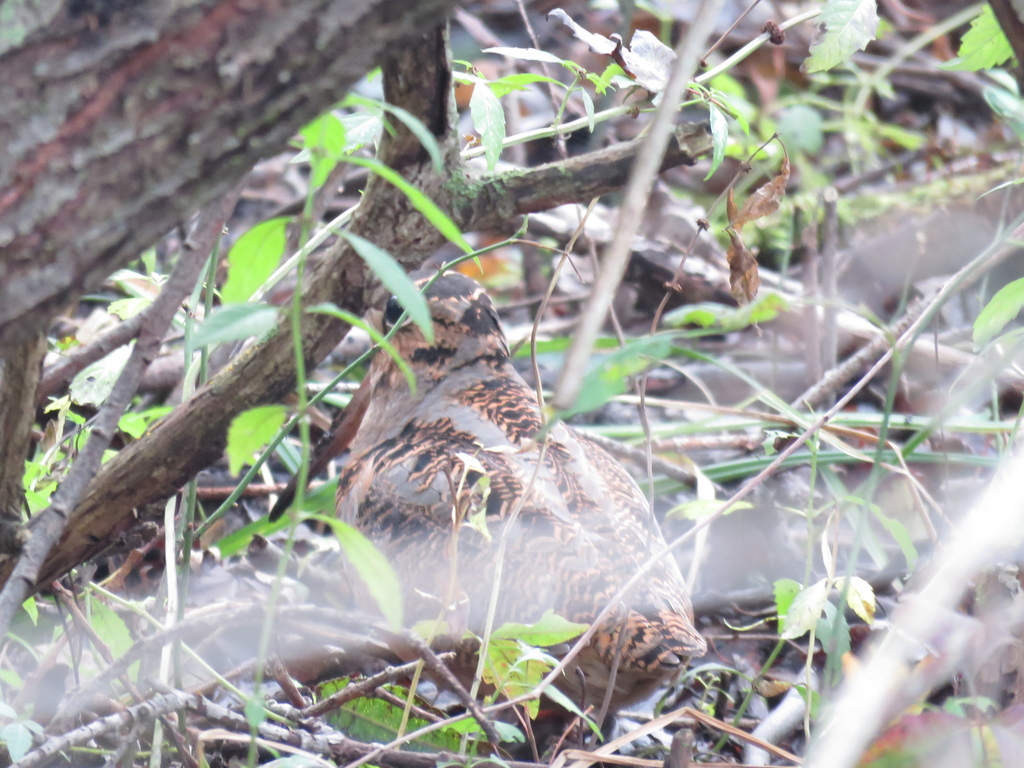
The American woodcock (Scolopax minor), sometimes colloquially referred to as the timberdoodle, mudbat, becasse, bogsucker, brush snipe, night partridge, or Labrador twister is a small shorebird species found primarily in the eastern half of North America. Woodcocks spend most of their time on the ground in brushy, young-forest habitats, where the birds' brown, black, and gray plumage provides excellent camouflage. The American woodcock is the only species of woodcock inhabiting North America. Although classified with the sandpipers and shorebirds in the family Scolopacidae, the American woodcock lives mainly in upland settings. The population of the American woodcock has fallen by an average of slightly more than 1% annually since the 1960s. Most authorities attribute this decline to a loss of habitat caused by forest maturation and urban development. It is also a popular game bird, with about 540,000 killed annually by some 133,000 hunters in the United States. In 2008, wildlife biologists and conservationists released an American woodcock conservation plan presenting figures for the acreage of early successional habitat that must be created and maintained in the United States and Canada to stabilize the woodcock population at current levels, and to return it to 1970s densities.
Gallery
Ajouter des photos
Partagez vos photos de cette espèce (jusqu'à 20 à la fois) : elles sont vérifiées automatiquement, puis publiées.
Répartition
Occurrences observées (données GBIF). Les zones hors aire d'origine peuvent indiquer une présence introduite ou invasive.
Sources et crédits
Informations provenant de plusieurs sources vérifiées. Dernière mise à jour : .
Crédits photos (7)
- Photo : @sasquatchbiologist · CC BY-NC 4.0 · via iNaturalist
- Photo : Ryan Collister (@dracorjc) · CC BY-NC 4.0 · via iNaturalist
- Photo : Jon Merryman (@jtmerryman) · CC BY-NC 4.0 · via iNaturalist
- Photo : @woodywoodrow · CC BY-NC 4.0 · via iNaturalist
- Photo : Derek Spencer (@djs39) · CC BY 4.0 · via iNaturalist
- Photo : Rich Kostecke (@rkostecke) · CC BY-NC 4.0 · via iNaturalist
- Photo : Dan Jones (@antshrike1) · CC BY-NC 4.0 · via iNaturalist
Mentions de licence
Texte disponible sous licence CC BY-SA 4.0. Il adapte notamment Wikipedia (CC BY-SA) : American woodcock (Wikipédia, auteurs dans l’historique de l’article).
- Taxonomie : GBIF Backbone Taxonomy (CC BY 4.0)
- Carte : occurrences GBIF, fond © contributeurs OpenStreetMap (ODbL)
- Statut de conservation : Liste rouge de l'UICN, via Wikidata (CC0)
Détail : Sources et licences.
Discussion (0)
Aucun message pour l’instant. Lancez la discussion sur cette fiche (sources, précisions, débats éditoriaux).
Connectez-vous pour participer à la discussion.