
White-naped Xenopsaris
Xenopsaris albinucha
The white-naped xenopsaris (; Xenopsaris albinucha), also known as the reed becard and white-naped becard, is a species of suboscine bird in the family Tityridae, the only member of the genus Xenopsaris.
- Kingdom
- Animalia
- Phylum
- Chordata
- Class
- Aves
- Order
- Passeriformes
- Family
- Cotingidae
- Genus
- Xenopsaris
- Species
- Xenopsaris albinucha
Description
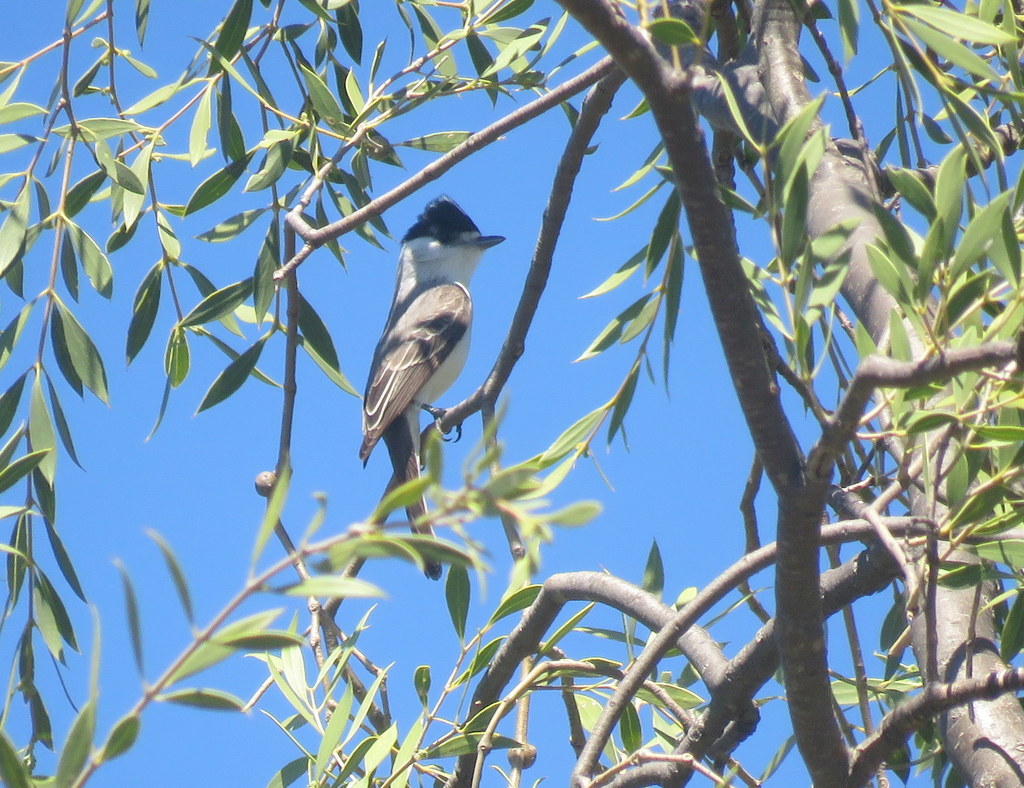
The white-naped xenopsaris (; Xenopsaris albinucha), also known as the reed becard and white-naped becard, is a species of suboscine bird in the family Tityridae, the only member of the genus Xenopsaris. It is found in South America, in humid subtropical and tropical savanna climates in most of the countries east of the Andes: Venezuela, Brazil, Bolivia, Paraguay, Uruguay, and Argentina. Living in open woodland and other open forest habitats, it is mostly sedentary, though some populations may be migratory. The species, which is closely related to becards and tityras, was thought to be either a tyrant-flycatcher or cotinga, before it was placed in Tityridae. The bird is 12.5 to 13 cm (4.9–5.1 in) in length, with whitish undersides, a black crown, and grey-brown upperparts. The sexes are similar in appearance, though the females have duller upperparts. It feeds on insects in the foliage of trees and bushes, and sometimes on the ground. Nesting occurs in a simple cup nest placed in the fork of a tree. Both parents incubate the eggs and help feed the chicks. When the chicks fledge, the parents may divide up the brood to continue helping. The species is not common and little is known about it, but it is not considered in danger of extinction, and has been classified as of least concern by the International Union for Conservation of Nature.
Gallery
Ajouter des photos
Partagez vos photos de cette espèce (jusqu'à 20 à la fois) : elles sont vérifiées automatiquement, puis publiées.
Répartition
Occurrences observées (données GBIF). Les zones hors aire d'origine peuvent indiquer une présence introduite ou invasive.
Sources et crédits
Informations provenant de plusieurs sources vérifiées. Dernière mise à jour : .
Crédits photos (8)
- Photo : Diego Carús (@diegocarau) · CC0 (domaine public) · via iNaturalist
- Photo : Carlos Sanchez (@csanchezj7) · CC BY-NC 4.0 · via iNaturalist
- Photo : Sebastián Gómez Barboza Silveira (@sgomez-barboza) · CC0 (domaine public) · via iNaturalist
- Photo : Gonzalo Diaz (@goncrisdi) · CC BY-NC 4.0 · via iNaturalist
- Photo : Gonzalo Roget (@gonsaro) · CC BY 4.0 · via iNaturalist
- Photo : Federico Muñoz (@fede_munoz) · CC0 (domaine public) · via iNaturalist
- Photo : @reinaldogibin · CC BY-NC 4.0 · via iNaturalist
- Photo : Manuel A. Pérez R. (@manuelprez) · CC BY-NC 4.0 · via iNaturalist
Mentions de licence
Texte disponible sous licence CC BY-SA 4.0. Il adapte notamment Wikipedia (CC BY-SA) : White-naped xenopsaris (Wikipédia, auteurs dans l’historique de l’article).
- Taxonomie : GBIF Backbone Taxonomy (CC BY 4.0)
- Carte : occurrences GBIF, fond © contributeurs OpenStreetMap (ODbL)
- Statut de conservation : Liste rouge de l'UICN, via Wikidata (CC0)
Détail : Sources et licences.
Discussion (0)
Aucun message pour l’instant. Lancez la discussion sur cette fiche (sources, précisions, débats éditoriaux).
Connectez-vous pour participer à la discussion.