
Yellow-spotted Barbet
Buccanodon duchaillui
The yellow-spotted barbet (Buccanodon duchaillui) is a bird species in the monotypic genus Buccanodon.
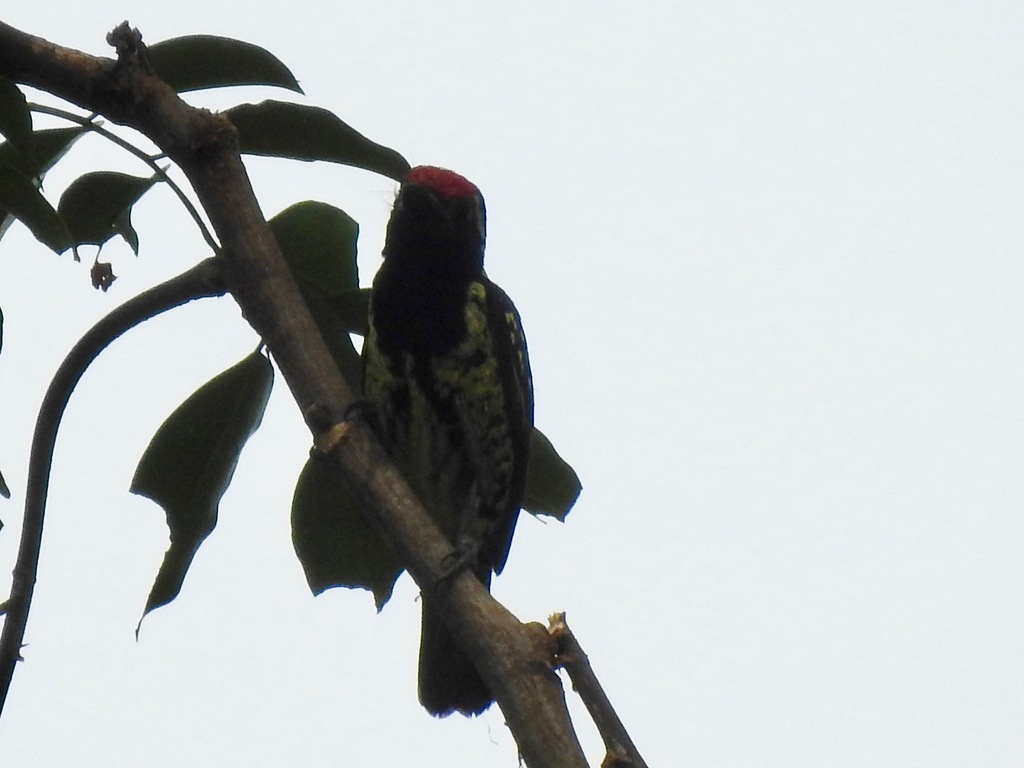
- Kingdom
- Animalia
- Phylum
- Chordata
- Class
- Aves
- Order
- Piciformes
- Family
- Lybiidae
- Genus
- Buccanodon
- Species
- Buccanodon duchaillui
Description
The yellow-spotted barbet (Buccanodon duchaillui) is a bird species in the monotypic genus Buccanodon. It belongs to the African barbet family (Lybiidae) which was formerly included in the Capitonidae and sometimes in the Ramphastidae. Two subspecies are known: B. d. duchailllui (Cassin, 1856) (eastern yellow-spotted barbet) - eastern and central Africa, west to Nigeria B. d. dowsetti Boesman & Collar, 2019 (western yellow-spotted barbet) - Sierra Leone to Togo The western subspecies was described in 2019 as a distinct species based on its unique song. The western yellow-spotted barbet has a song described by Nigel James Collar and Peter Boesman as "a series of 7–10 accelerating notes similar to a song of hairy-breasted barbet (Tricholaema hirsuta)" (phoneticized as "oop"), while the eastern yellow-spotted barbet has a song described by Collar and Boesman as a "characteristic purring (lasting 1–2 seconds), unique among [African] barbets" (phoneticized as "rrurrrrrr…"). These song differences led to the description of B. dowsetti as a distinct species. In 2023, the International Ornithological Congress recognized dowsetti as a distinct taxon, but tentatively kept it as a subspecies of duchailllui due to other studies finding significant divergences elsewhere within the species' range, indicating that B. duchaillui as a whole may represent a species complex. It is found in Angola, Cameroon, Central African Republic, Republic of the Congo, Democratic Republic of the Congo, Ivory Coast, Equatorial Guinea, Gabon, Ghana, Guinea, Kenya, Liberia, Nigeria, Sierra Leone, Tanzania, and Uganda.
Gallery
Ajouter des photos
Partagez vos photos de cette espèce (jusqu'à 20 à la fois) : elles sont vérifiées automatiquement, puis publiées.
Répartition
Occurrences observées (données GBIF). Les zones hors aire d'origine peuvent indiquer une présence introduite ou invasive.
Sources et crédits
Informations provenant de plusieurs sources vérifiées. Dernière mise à jour : .
Crédits photos (8)
- Photo : Dérozier Violette (@violettederozier) · CC BY-NC 4.0 · via iNaturalist
- Photo : @asanoth · CC BY-NC 4.0 · via iNaturalist
- Photo : @jim_sweeney · CC BY-NC 4.0 · via iNaturalist
- Photo : @usavalli · CC BY-NC 4.0 · via iNaturalist
- Photo : @christophrandler · CC BY-NC 4.0 · via iNaturalist
- Photo : @max_hof_mann · CC BY-NC 4.0 · via iNaturalist
- Photo : @morkvonork · CC BY-NC 4.0 · via iNaturalist
- Photo : pygmaeus (@pongo10) · CC BY-NC 4.0 · via iNaturalist
Mentions de licence
Texte disponible sous licence CC BY-SA 4.0. Il adapte notamment Wikipedia (CC BY-SA) : Yellow-spotted barbet, Barbican à taches jaunes (Wikipédia, auteurs dans l’historique de l’article).
- Taxonomie : GBIF Backbone Taxonomy (CC BY 4.0)
- Carte : occurrences GBIF, fond © contributeurs OpenStreetMap (ODbL)
- Statut de conservation : Liste rouge de l'UICN, via Wikidata (CC0)
Détail : Sources et licences.
Discussion (0)
Aucun message pour l’instant. Lancez la discussion sur cette fiche (sources, précisions, débats éditoriaux).
Connectez-vous pour participer à la discussion.