
Mountain Bamboo Partridge
Bambusicola fytchii
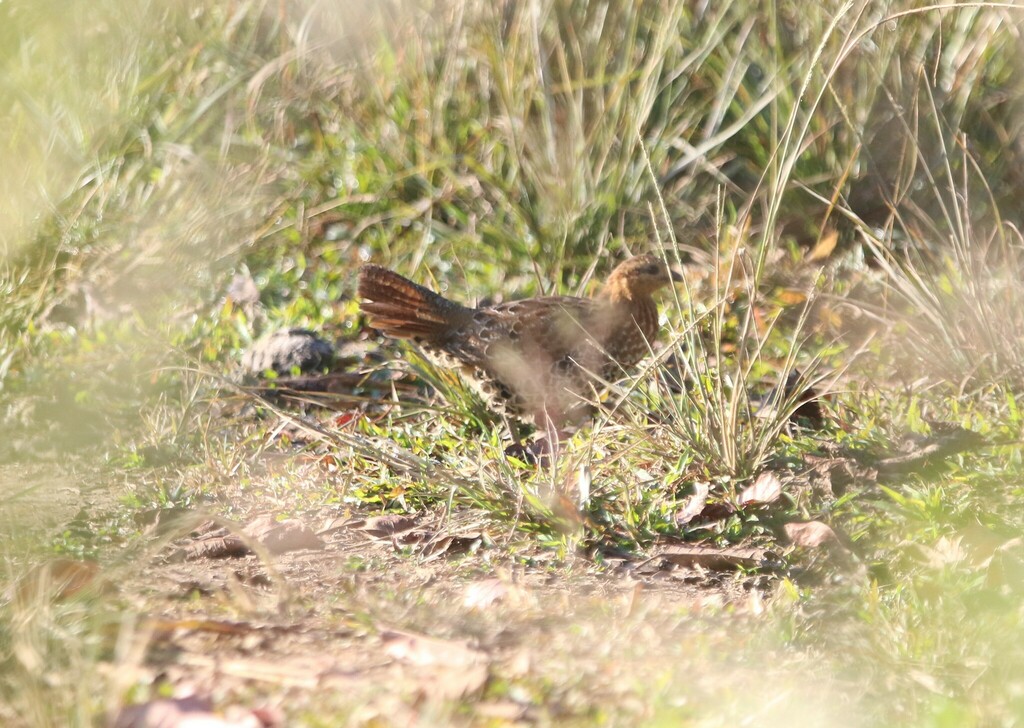
The mountain bamboo partridge (Bambusicola fytchii) is a species of bird in the family Phasianidae.
- Kingdom
- Animalia
- Phylum
- Chordata
- Class
- Aves
- Order
- Galliformes
- Family
- Phasianidae
- Genus
- Bambusicola
- Species
- Bambusicola fytchii
Description
The mountain bamboo partridge (Bambusicola fytchii) is a species of bird in the family Phasianidae. It is found in Bangladesh, Tibet, India, Laos, Myanmar, Thailand, and Vietnam. The binomial commemorates Major-General Albert Fytche. Their plumage is a mix of browns, cream and grey. They have distinctive black and white eye stripes and their breast and abdomen is pale with brown speckles. Mountain bamboo partridges live close to water in bamboo scrub forest, tall grassland and degraded forest areas with bamboo groves. They remain under shrub cover for much of the day, moving into the open in the early morning and late evening to feed. They will only fly when threatened, returning to cover quickly. Breeding occurs in the summer months between March and September. The nest is a simple scraped out dip in the ground lined with grass. The female incubates the eggs for 18 to 19 days. The male meanwhile stays close to the nest and feeds the female and, once hatched, the chicks. The diet of the mountain bamboo partridge is primarily tender, young bamboo shoots and the fresh, young foliage, but also includes a wide variety of seeds, berries, shoots and invertebrates. The mountain bamboo partridge is fairly common throughout its range. However, population numbers do appear to be declining. Areas of the bamboo partridges' habitat is cleared for agriculture but they have been seen living on the cultivated land. There is some evidence of hunting in parts of their range.
Gallery
Ajouter des photos
Partagez vos photos de cette espèce (jusqu'à 20 à la fois) : elles sont vérifiées automatiquement, puis publiées.
Répartition
Occurrences observées (données GBIF). Les zones hors aire d'origine peuvent indiquer une présence introduite ou invasive.
Sources et crédits
Informations provenant de plusieurs sources vérifiées. Dernière mise à jour : .
Crédits photos (8)
- Photo : Fadzrun (@fadzrun) · CC BY-NC 4.0 · via iNaturalist
- Photo : Sourav Halder (@souravnaturalist) · CC BY-NC 4.0 · via iNaturalist
- Photo : Rejoice Gassah (@rejoicegassah) · CC BY 4.0 · via iNaturalist
- Photo : Eric Carpenter (@ecarpe) · CC BY-NC 4.0 · via iNaturalist
- Photo : Kittakorn (@kittakorn) · CC BY-NC 4.0 · via iNaturalist
- Photo : 通通 (@tong-tong-) · CC BY-NC 4.0 · via iNaturalist
- Photo : Thijs Valkenburg (@thijsvalkenburg) · CC BY-NC 4.0 · via iNaturalist
- Photo : Sila Viriyautsahakul (@silavkul) · CC BY-NC 4.0 · via iNaturalist
Mentions de licence
Texte disponible sous licence CC BY-SA 4.0. Il adapte notamment Bambusicole de Fytch, Wikipedia (CC BY-SA) : Mountain bamboo partridge (Wikipédia, auteurs dans l’historique de l’article).
- Taxonomie : GBIF Backbone Taxonomy (CC BY 4.0)
- Carte : occurrences GBIF, fond © contributeurs OpenStreetMap (ODbL)
- Statut de conservation : Liste rouge de l'UICN, via Wikidata (CC0)
Détail : Sources et licences.
Discussion (0)
Aucun message pour l’instant. Lancez la discussion sur cette fiche (sources, précisions, débats éditoriaux).
Connectez-vous pour participer à la discussion.