
Pied Avocet
Recurvirostra avosetta
The pied avocet (Recurvirostra avosetta) is a species of wader in the Recurvirostridae family, the only member of the avocet genus Recurvirostra found in Europe, Africa, and Asia.
- Kingdom
- Animalia
- Phylum
- Chordata
- Class
- Aves
- Order
- Charadriiformes
- Family
- Recurvirostridae
- Genus
- Recurvirostra
- Species
- Recurvirostra avosetta
Description
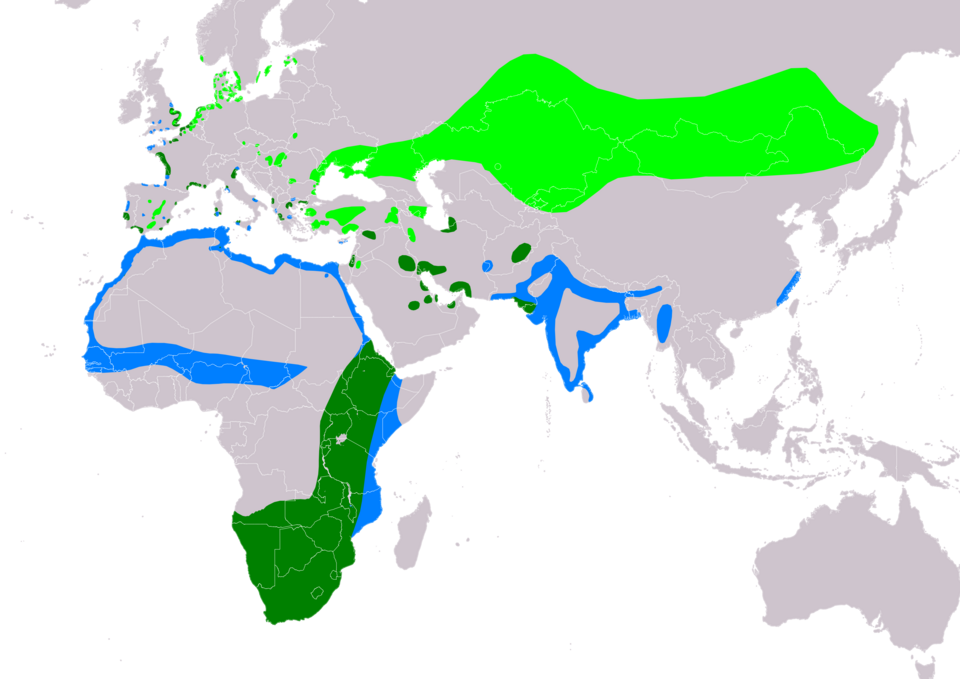
The pied avocet (Recurvirostra avosetta) is a species of wader in the Recurvirostridae family, the only member of the avocet genus Recurvirostra found in Europe, Africa, and Asia. This characteristic wader of coastal lagoons and marshes is easily recognisable by its long, upturned bill, long legs, and striking black-and-white plumage. Measuring approximately 40 cm (16 in) in length with a wingspan of about 70 cm (28 in), it is a relatively large species that feeds on various invertebrates in water and mudflats, captured using its distinctive bill. It typically nests in colonies of 10 to 70 pairs on islets or dikes near water, laying usually four eggs in a simple, shallow scrape in the sand. It is highly territorial when defending its chicks against conspecifics, or predators such as various raptors, corvids, and mammals. The pied avocet has a lifespan of about 20 years, with a record of 36 years. The species has a wide distribution, spanning western Europe, central Asia, the Indian subcontinent, and Africa. Part of its population is migratory, undertaking long journeys south to its wintering grounds, while others are resident. In France, it is found along the English Channel, Atlantic coast, and Mediterranean, with northern populations joining in winter, while some individuals winter in Southern Europe or Africa. Described by Carl Linnaeus in 1758, the pied avocet is one of four species in its genus, the others inhabiting different continents. Classified as Least Concern (LC) by the IUCN due to its extensive range and relatively large population, it nonetheless faces threats from anthropogenic factors such as habitat destruction, climate change, and pollution. Numerous scientific programs aim to better understand its biology, particularly its migratory routes, to enhance its protection.
Gallery
Ajouter des photos
Partagez vos photos de cette espèce (jusqu'à 20 à la fois) : elles sont vérifiées automatiquement, puis publiées.
Répartition
Occurrences observées (données GBIF). Les zones hors aire d'origine peuvent indiquer une présence introduite ou invasive.
Sources et crédits
Informations provenant de plusieurs sources vérifiées. Dernière mise à jour : .
Crédits photos (6)
- Photo : SanoAK: Alexander Kürthy · CC BY-SA 3.0
- Photo : Ricardo Rodero Henández (@ricardo-anapri) · CC BY-NC 4.0 · via iNaturalist
- Photo : @abujudy · CC BY-NC 4.0 · via iNaturalist
- Photo : Marisha Bewley (@bigonbirding) · CC BY-NC 4.0 · via iNaturalist
- Photo : Tiago Carrapiço (@tiagojrc) · CC BY-NC 4.0 · via iNaturalist
- Photo : R. Ziebarth (@r-ziebarth) · CC BY-NC 4.0 · via iNaturalist
Mentions de licence
Texte disponible sous licence CC BY-SA 4.0. Il adapte notamment Wikipedia (CC BY-SA) : Pied avocet (Wikipédia, auteurs dans l’historique de l’article).
- Taxonomie : GBIF Backbone Taxonomy (CC BY 4.0)
- Carte : occurrences GBIF, fond © contributeurs OpenStreetMap (ODbL)
- Statut de conservation : Liste rouge de l'UICN, via Wikidata (CC0)
Détail : Sources et licences.
Discussion (0)
Aucun message pour l’instant. Lancez la discussion sur cette fiche (sources, précisions, débats éditoriaux).
Connectez-vous pour participer à la discussion.