
Common Ostrich
Struthio camelus
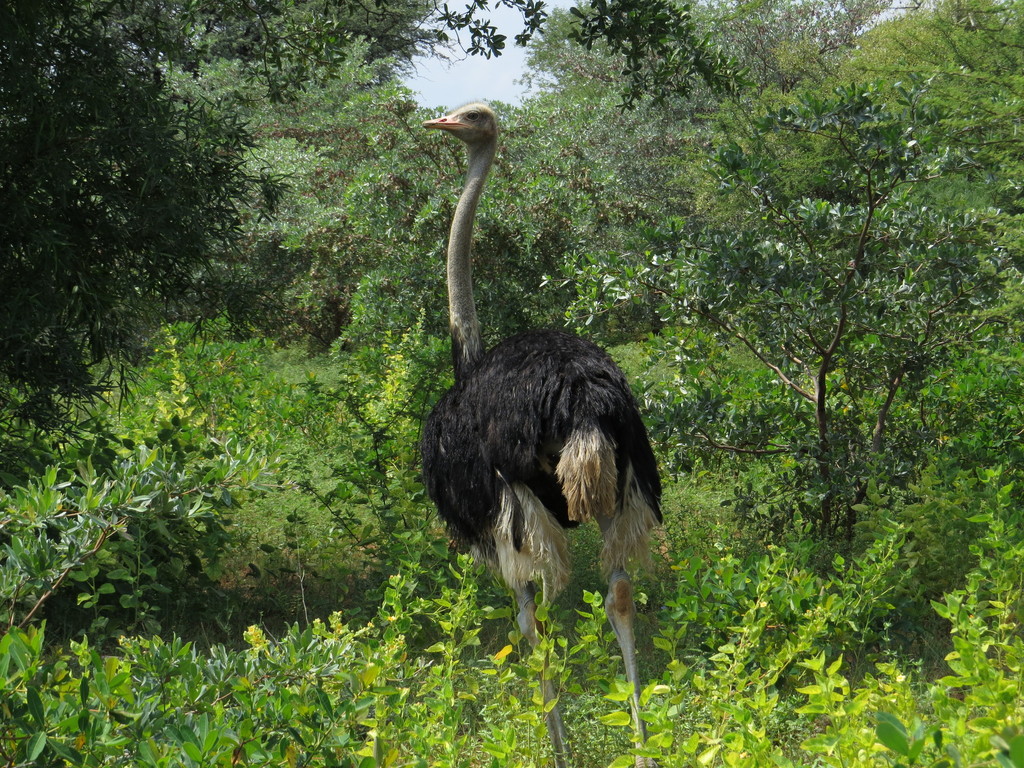
The common ostrich (Struthio camelus), or simply ostrich, is a species of flightless bird native to certain areas of Africa (and historically, Arabia) and is the largest living species of bird.
- Kingdom
- Animalia
- Phylum
- Chordata
- Class
- Aves
- Order
- Struthioniformes
- Family
- Struthionidae
- Genus
- Struthio
- Species
- Struthio camelus
Description
The common ostrich (Struthio camelus), or simply ostrich, is a species of flightless bird native to certain areas of Africa (and historically, Arabia) and is the largest living species of bird. The common ostrich is one of two extant species of ostriches, the only living members of the genus Struthio in the ratite group of birds. The other is the Somali ostrich (Struthio molybdophanes), which has been recognised as a distinct species by BirdLife International since 2014, having been previously considered a distinctive subspecies of ostrich. The common ostrich belongs to the order Struthioniformes. Struthioniformes previously contained all the ratites, such as the kiwis, emus, rheas, and cassowaries. However, a recent genetic analysis has found that the group is not monophyletic, as it is paraphyletic with respect to the tinamous, so the ostriches are now classified as the only members of the order. Phylogenetic studies have shown that it is the sister group to all other members of Palaeognathae, and that the flighted tinamous are the sister group to the extinct moa. It is distinctive in its appearance, with a long neck and legs, and can run for a long time at a speed of 55 km/h (34 mph) with short bursts up to about 70 km/h (43 mph), the fastest land speed of any bipedal animal. It lays the largest eggs of any living bird, though the extinct giant elephant bird (Aepyornis maximus) of Madagascar and the South Island giant moa (Dinornis robustus) of New Zealand both laid larger eggs. The common ostrich's diet consists mainly of plant matter, though it also eats invertebrates and small reptiles. It lives in nomadic groups of 5 to 50 birds. When threatened, the ostrich will either hide itself by lying flat against the ground or run away. If cornered, it can attack with a kick of its powerful legs. Mating patterns differ by geographical region, but territorial males fight for a harem of two to seven females. The common ostrich is farmed around the world, particularly for its feathers, which are decorative and are also used as feather dusters. Its skin is used for leather products and its meat is sold commercially, with its leanness a common marketing point.
Gallery
Ajouter des photos
Partagez vos photos de cette espèce (jusqu'à 20 à la fois) : elles sont vérifiées automatiquement, puis publiées.
Répartition
Occurrences observées (données GBIF). Les zones hors aire d'origine peuvent indiquer une présence introduite ou invasive.
Sources et crédits
Informations provenant de plusieurs sources vérifiées. Dernière mise à jour : .
Crédits photos (8)
- Photo : Gawie Malan (@gawie) · CC BY-NC 4.0 · via iNaturalist
- Photo : Mike King (@glosterbirder) · CC BY-NC 4.0 · via iNaturalist
- Photo : @tnaturalist · CC BY-NC 4.0 · via iNaturalist
- Photo : Luca Berardi (@palebluedotterel) · CC BY-NC 4.0 · via iNaturalist
- Photo : Egels en Zo (@egelsenzo) · CC BY-NC 4.0 · via iNaturalist
- Photo : @travellerthomas · CC BY-NC 4.0 · via iNaturalist
- Photo : Mary Kimberly (@mmkimberly) · CC BY-NC 4.0 · via iNaturalist
- Photo : Gerrit Öhm (@gerrit_oehm) · CC BY-NC 4.0 · via iNaturalist
Mentions de licence
Texte disponible sous licence CC BY-SA 4.0. Il adapte notamment Wikipedia (CC BY-SA) : Common ostrich (Wikipédia, auteurs dans l’historique de l’article).
- Taxonomie : GBIF Backbone Taxonomy (CC BY 4.0)
- Carte : occurrences GBIF, fond © contributeurs OpenStreetMap (ODbL)
- Statut de conservation : Liste rouge de l'UICN, via Wikidata (CC0)
Détail : Sources et licences.
Discussion (0)
Aucun message pour l’instant. Lancez la discussion sur cette fiche (sources, précisions, débats éditoriaux).
Connectez-vous pour participer à la discussion.