
Eurasian Skylark
Alauda arvensis
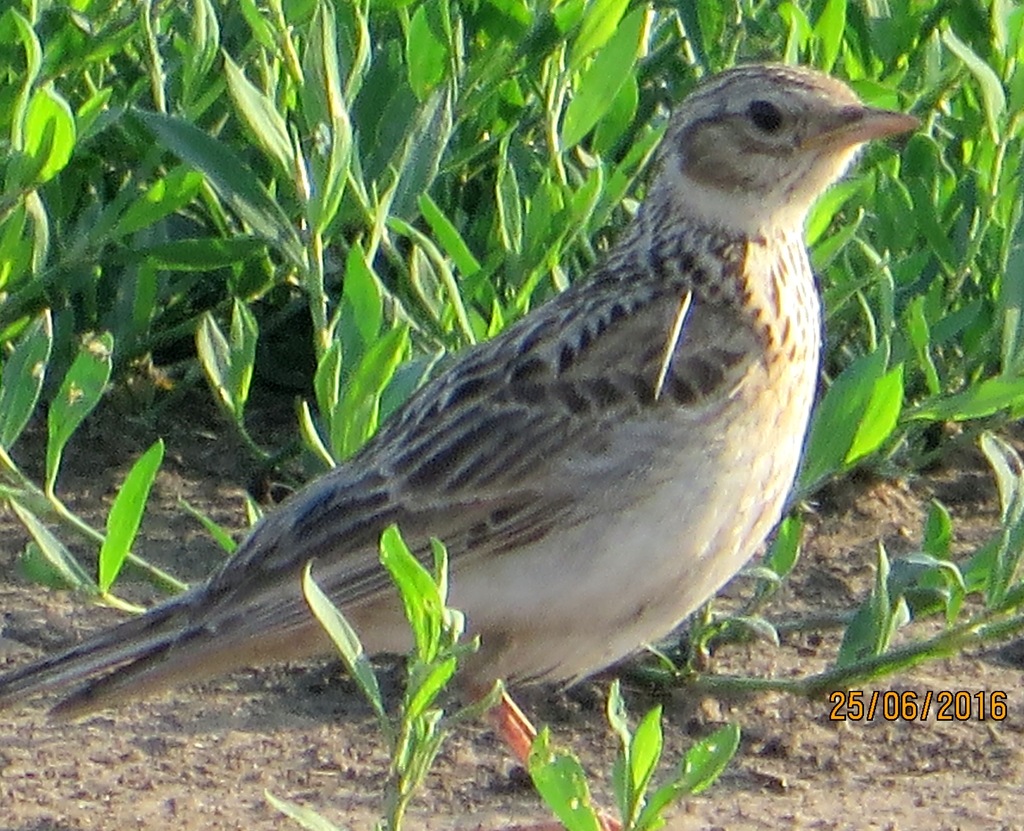
The Eurasian skylark (Alauda arvensis), commonly referred to in Europe as the lark, is a passerine bird in the lark family, Alaudidae.
- Kingdom
- Animalia
- Phylum
- Chordata
- Class
- Aves
- Order
- Passeriformes
- Family
- Alaudidae
- Genus
- Alauda
- Species
- Alauda arvensis
Description
The Eurasian skylark (Alauda arvensis), commonly referred to in Europe as the lark, is a passerine bird in the lark family, Alaudidae. It is a widespread species found across Europe and the Palearctic with introduced populations in Australia, New Zealand, Canada, and on the Hawaiian Islands. It is a bird of open farmland and heath, known for the song of the male, which is delivered in hovering flight from heights of 50 to 100 metres (160 to 330 ft). The sexes are alike. It is streaked greyish-brown above and on the breast and has a buff-white belly. The female Eurasian skylark builds an open nest in a shallow depression on open ground well away from trees, bushes and hedges. She lays three to five eggs which she incubates for around 11 days. The chicks are fed by both parents but leave the nest after eight to ten days, well before they can fly. They scatter and hide in the vegetation but continue to be fed by the parents until they can fly at 18 to 20 days of age. Nests are subject to high predation rates by larger birds and small mammals. The parents can have several broods in a single season.
Gallery
Ajouter des photos
Partagez vos photos de cette espèce (jusqu'à 20 à la fois) : elles sont vérifiées automatiquement, puis publiées.
Répartition
Occurrences observées (données GBIF). Les zones hors aire d'origine peuvent indiquer une présence introduite ou invasive.
Sources et crédits
Informations provenant de plusieurs sources vérifiées. Dernière mise à jour : .
Crédits photos (8)
- Photo : Алина Боксорн (@alinaboksorn) · CC BY-NC 4.0 · via iNaturalist
- Photo : Dennis Hocking (@dennis_hocking) · CC BY-NC 4.0 · via iNaturalist
- Photo : @lwnrngr · CC BY-NC 4.0 · via iNaturalist
- Photo : @lenit · CC BY-NC 4.0 · via iNaturalist
- Photo : Paul Lewis (@birdmanuk68) · CC BY 4.0 · via iNaturalist
- Photo : Константин Селивёрстов (@konstantinseliverstov) · CC BY 4.0 · via iNaturalist
- Photo : Kenton (@sirkendizzle) · CC BY-NC 4.0 · via iNaturalist
- Photo : @iancoull · CC BY-NC 4.0 · via iNaturalist
Mentions de licence
Texte disponible sous licence CC BY-SA 4.0. Il adapte notamment Wikipedia (CC BY-SA) : Eurasian skylark (Wikipédia, auteurs dans l’historique de l’article).
- Taxonomie : GBIF Backbone Taxonomy (CC BY 4.0)
- Carte : occurrences GBIF, fond © contributeurs OpenStreetMap (ODbL)
- Statut de conservation : Liste rouge de l'UICN, via Wikidata (CC0)
Détail : Sources et licences.
Discussion (0)
Aucun message pour l’instant. Lancez la discussion sur cette fiche (sources, précisions, débats éditoriaux).
Connectez-vous pour participer à la discussion.