
Golden Eagle
Aquila chrysaetos
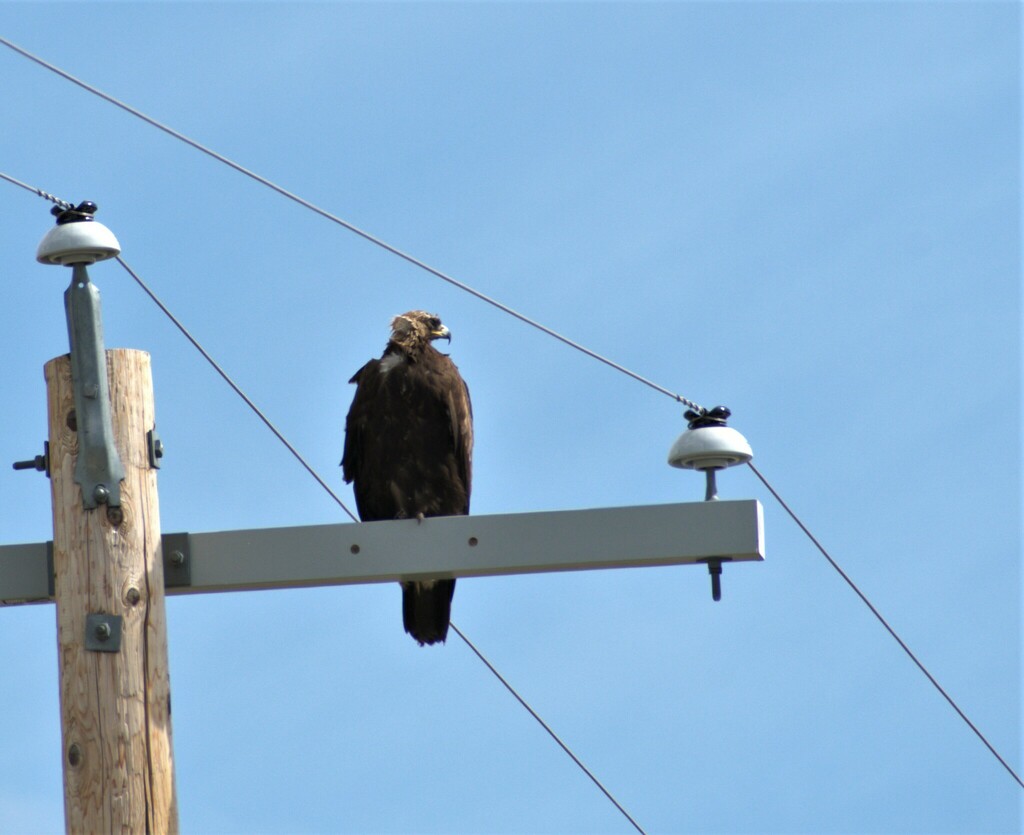
The golden eagle (Aquila chrysaetos) is a bird of prey living in the Northern Hemisphere.
- Kingdom
- Animalia
- Phylum
- Chordata
- Class
- Aves
- Order
- Accipitriformes
- Family
- Accipitridae
- Genus
- Aquila
- Species
- Aquila chrysaetos
Description
The golden eagle (Aquila chrysaetos) is a bird of prey living in the Northern Hemisphere. It is the most widely distributed species of eagle. Like all eagles, it belongs to the family Accipitridae. They are one of the best-known birds of prey in the Northern Hemisphere. These birds are dark brown, with lighter golden-brown plumage on their napes. Immature eagles of this species typically have white on the tail and often have white markings on the wings. Golden eagles use their agility and speed combined with powerful feet and large, sharp talons to hunt a variety of prey, mainly hares, rabbits, and marmots and other ground squirrels. Golden eagles maintain home ranges or territories that may be as large as 200 km2 (77 sq mi). They build large nests in cliffs and other high places to which they may return for several breeding years. Most breeding activities take place in the spring; they are monogamous and may remain together for several years or possibly for life. Females lay up to four eggs, and then incubate them for six weeks. Typically, one or two young survive to fledge in about three months. These juvenile golden eagles usually attain full independence in the fall, after which they wander widely until establishing a territory for themselves in four to five years. Once widespread across the Holarctic, it has disappeared from many areas that are heavily populated by humans. Despite being extirpated from or uncommon in some of its former range, the species is still widespread, being present in sizeable stretches of Eurasia, North America, and parts of North Africa. It is the largest and least populous of the five species of true accipitrid to occur as a breeding species in both the Palearctic and the Nearctic. For centuries, this species has been one of the most highly regarded birds used in falconry. Because of its hunting prowess, the golden eagle is regarded with great mystic reverence in some ancient, tribal cultures. It is one of the most extensively studied species of raptor in the world in some parts of its range, such as the Western United States and the Western Palearctic.
Gallery
Ajouter des photos
Partagez vos photos de cette espèce (jusqu'à 20 à la fois) : elles sont vérifiées automatiquement, puis publiées.
Répartition
Occurrences observées (données GBIF). Les zones hors aire d'origine peuvent indiquer une présence introduite ou invasive.
Sources et crédits
Informations provenant de plusieurs sources vérifiées. Dernière mise à jour : .
Crédits photos (5)
- Photo : Johnal Palahniuk (@johnal) · CC BY-NC 4.0 · via iNaturalist
- Photo : Kate Turner (@kathawk) · CC BY-NC 4.0 · via iNaturalist
- Photo : Riley-Brendan Walsh (@rileywalsh) · CC BY-NC 4.0 · via iNaturalist
- Photo : @dsich · CC BY-NC 4.0 · via iNaturalist
- Photo : Mourad Harzallah (@mourad-harzallah) · CC BY 4.0 · via iNaturalist
Mentions de licence
Texte disponible sous licence CC BY-SA 4.0. Il adapte notamment Wikipedia (CC BY-SA) : Golden eagle (Wikipédia, auteurs dans l’historique de l’article).
- Taxonomie : GBIF Backbone Taxonomy (CC BY 4.0)
- Carte : occurrences GBIF, fond © contributeurs OpenStreetMap (ODbL)
- Statut de conservation : Liste rouge de l'UICN, via Wikidata (CC0)
Détail : Sources et licences.
Discussion (0)
Aucun message pour l’instant. Lancez la discussion sur cette fiche (sources, précisions, débats éditoriaux).
Connectez-vous pour participer à la discussion.