
Siberian Accentor
Prunella montanella
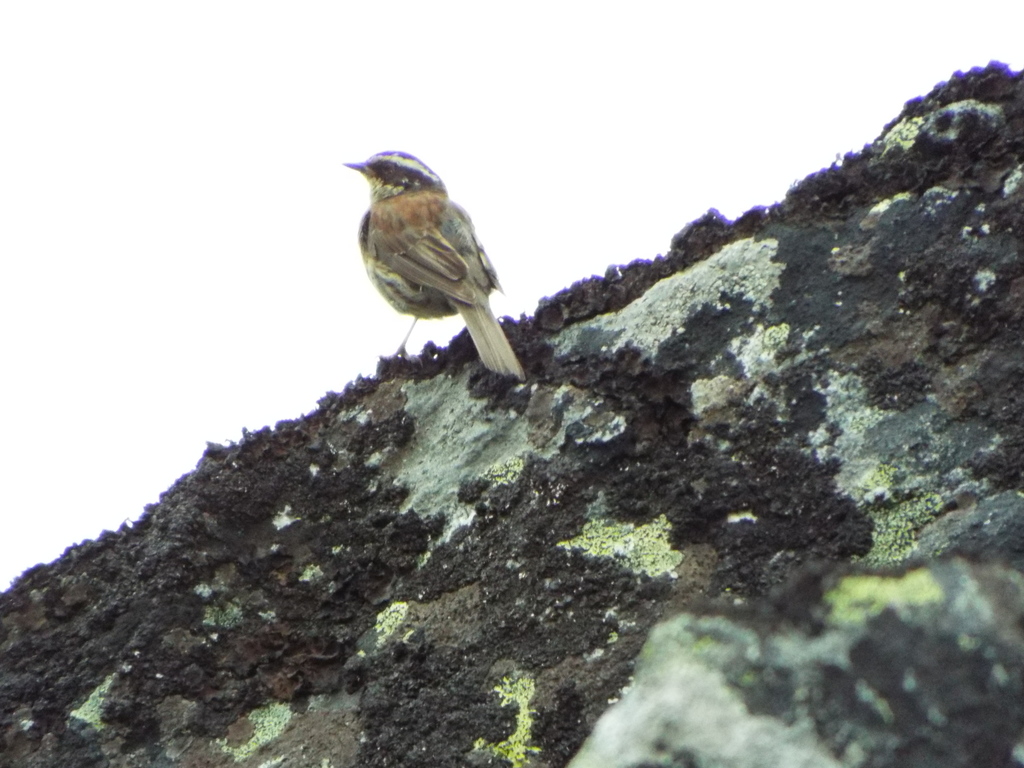
The Siberian accentor (Prunella montanella) is a small passerine bird that breeds in northern Russia from the Ural Mountains eastwards across Siberia.
- Kingdom
- Animalia
- Phylum
- Chordata
- Class
- Aves
- Order
- Passeriformes
- Family
- Prunellidae
- Genus
- Prunella
- Species
- Prunella montanella
Description
The Siberian accentor (Prunella montanella) is a small passerine bird that breeds in northern Russia from the Ural Mountains eastwards across Siberia. It is migratory, wintering in Korea and eastern China, with rare occurrences in western Europe and northwestern North America. Its typical breeding habitat is subarctic deciduous forests and open coniferous woodland, often close to water, although it also occurs in mountains and spruce taiga. It inhabits bushes and shrubs in winter, frequently near streams, but may also be found in dry grassland and woods. The Siberian accentor has brown upperparts and wings, with bright chestnut streaking on its back and a greyish-brown rump and tail. The head has a dark brown crown and a long, wide pale yellow supercilium ("eyebrow"). All plumages are quite similar. The nest is an open cup in dense shrub or a tree into which the female lays four to six glossy deep blue-green eggs that hatch in about ten days. Adults and chicks feed mainly on insects, typically picked off the ground, but sometimes taken from vegetation. In winter, the accentors may also consume seeds or feed near human habitation. Breeding over a huge area, the Siberian accentor has a large and stable population. It is therefore evaluated as a species of least concern by the International Union for Conservation of Nature (IUCN), although, as a northern breeding species, it may be affected by climate change in the long term. October and November 2016 saw an unprecedented influx of this species into western Europe, reaching as far as the United Kingdom.
Gallery
Ajouter des photos
Partagez vos photos de cette espèce (jusqu'à 20 à la fois) : elles sont vérifiées automatiquement, puis publiées.
Répartition
Occurrences observées (données GBIF). Les zones hors aire d'origine peuvent indiquer une présence introduite ou invasive.
Sources et crédits
Informations provenant de plusieurs sources vérifiées. Dernière mise à jour : .
Crédits photos (8)
- Photo : @alekseyfaraway · CC BY-NC 4.0 · via iNaturalist
- Photo : Анна Мостовая (@ankhen) · CC BY-NC 4.0 · via iNaturalist
- Photo : 茶棚 (@chapeng) · CC BY-NC 4.0 · via iNaturalist
- Photo : @alekseyfaraway · CC BY-NC 4.0 · via iNaturalist
- Photo : Charles (@easy_to_distinguish) · CC BY-NC 4.0 · via iNaturalist
- Photo : Анна Мостовая (@ankhen) · CC BY-NC 4.0 · via iNaturalist
- Photo : Светлана Черепанова (@svetlanacherepanova) · CC BY-NC 4.0 · via iNaturalist
- Photo : Анна Васильченко (@naturalist4631) · CC BY 4.0 · via iNaturalist
Mentions de licence
Texte disponible sous licence CC BY-SA 4.0. Il adapte notamment Wikipedia (CC BY-SA) : Siberian accentor (Wikipédia, auteurs dans l’historique de l’article).
- Taxonomie : GBIF Backbone Taxonomy (CC BY 4.0)
- Carte : occurrences GBIF, fond © contributeurs OpenStreetMap (ODbL)
- Statut de conservation : Liste rouge de l'UICN, via Wikidata (CC0)
Détail : Sources et licences.
Discussion (0)
Aucun message pour l’instant. Lancez la discussion sur cette fiche (sources, précisions, débats éditoriaux).
Connectez-vous pour participer à la discussion.