
Voluta ebraea
Voluta ebraea
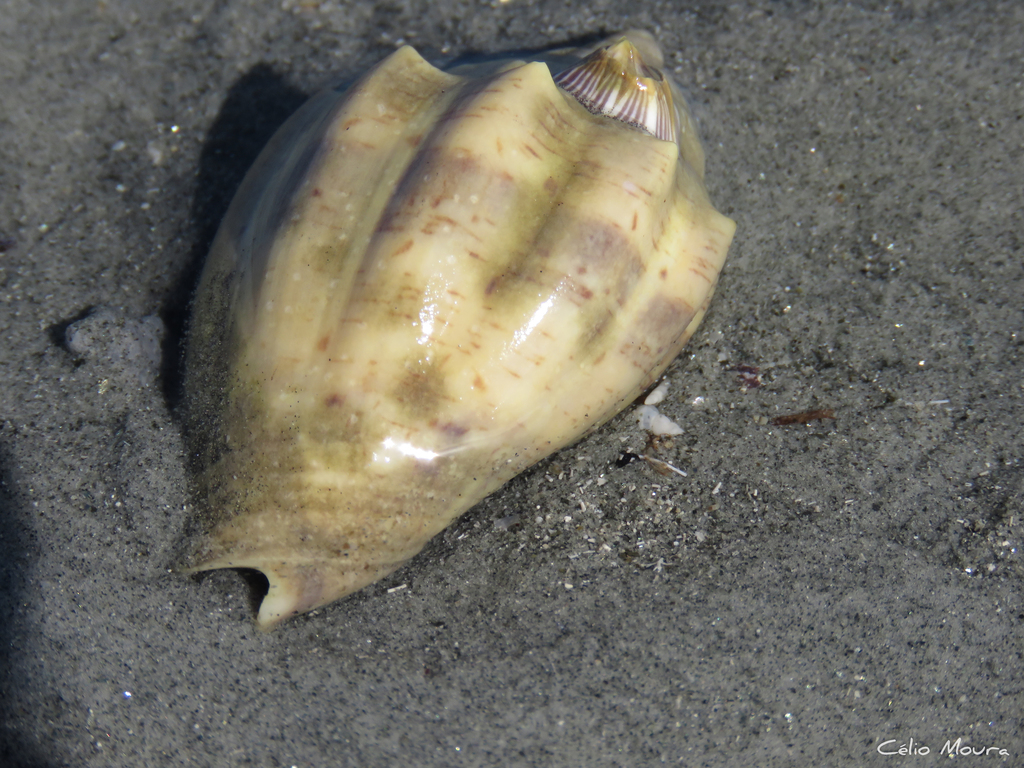
Voluta ebraea, commonly known as the Hebrew volute, is a species of medium-sized carnivorous sea snail, a marine gastropod mollusk in the family Volutidae, the volutes.
- Kingdom
- Animalia
- Phylum
- Mollusca
- Class
- Gastropoda
- Order
- Neogastropoda
- Family
- Volutidae
- Genus
- Voluta
- Species
- Voluta ebraea
Description
Voluta ebraea, commonly known as the Hebrew volute, is a species of medium-sized carnivorous sea snail, a marine gastropod mollusk in the family Volutidae, the volutes. It is endemic to the northern and northeastern coasts of Brazil, and inhabits the littoral zone in a variety of substrates, including sandy bottoms, coral reefs, and rocky areas from shallow waters to depths of up to 70 meters. It is known for its robust, cream-colored shell marked with reddish-brown patterns said to resemble Hebrew script. V. ebraea preys primarily on bivalves such as Dallocardia muricata, as well as other gastropods. It is dioecious and exhibits sexual dimorphism, with females typically having a broader shell than males. Reproduction involves laying flattened, circular egg capsules, usually on the calcareous green alga Udotea occidentalis or on broken shells, yielding a small number of well-developed juveniles. The ornate shell of V. ebraea has made it a target of the ornamental shell trade, and its meat is consumed by some coastal communities, leading to population declines in certain regions. It is also affected by imposex, a condition caused by marine pollution, particularly tributyltin (TBT) from ship antifouling paints.
Gallery
Ajouter des photos
Partagez vos photos de cette espèce (jusqu'à 20 à la fois) : elles sont vérifiées automatiquement, puis publiées.
Répartition
Occurrences observées (données GBIF). Les zones hors aire d'origine peuvent indiquer une présence introduite ou invasive.
Sources et crédits
Informations provenant de plusieurs sources vérifiées. Dernière mise à jour : .
Crédits photos (6)
- Photo : Célio Moura Neto (@celiomoura) · CC BY-NC 4.0 · via iNaturalist
- Photo : Hugo Vinicius de Sousa Albuquerque Filho (@hugosousavinicius) · CC BY-NC 4.0 · via iNaturalist
- Photo : Helena Ody Neves (@lenaody) · CC BY-NC 4.0 · via iNaturalist
- Photo : Aline Martinez (@asmartinez) · CC BY-NC 4.0 · via iNaturalist
- Photo : R Vasconcellos (@rvasconcellos) · CC BY 4.0 · via iNaturalist
- Photo : @ronaldo_alves1 · CC BY-NC 4.0 · via iNaturalist
Mentions de licence
Texte disponible sous licence CC BY-SA 4.0. Il adapte notamment Wikipedia (CC BY-SA) : Voluta ebraea (Wikipédia, auteurs dans l’historique de l’article).
- Taxonomie : GBIF Backbone Taxonomy (CC BY 4.0)
- Carte : occurrences GBIF, fond © contributeurs OpenStreetMap (ODbL)
Détail : Sources et licences.
Discussion (0)
Aucun message pour l’instant. Lancez la discussion sur cette fiche (sources, précisions, débats éditoriaux).
Connectez-vous pour participer à la discussion.