
Vampire squid
Vampyroteuthis infernalis
The vampire squid (Vampyroteuthis infernalis, lit.
- Kingdom
- Animalia
- Phylum
- Mollusca
- Class
- Cephalopoda
- Order
- Vampyromorpha
- Family
- Vampyroteuthidae
- Genus
- Vampyroteuthis
- Species
- Vampyroteuthis infernalis
Description
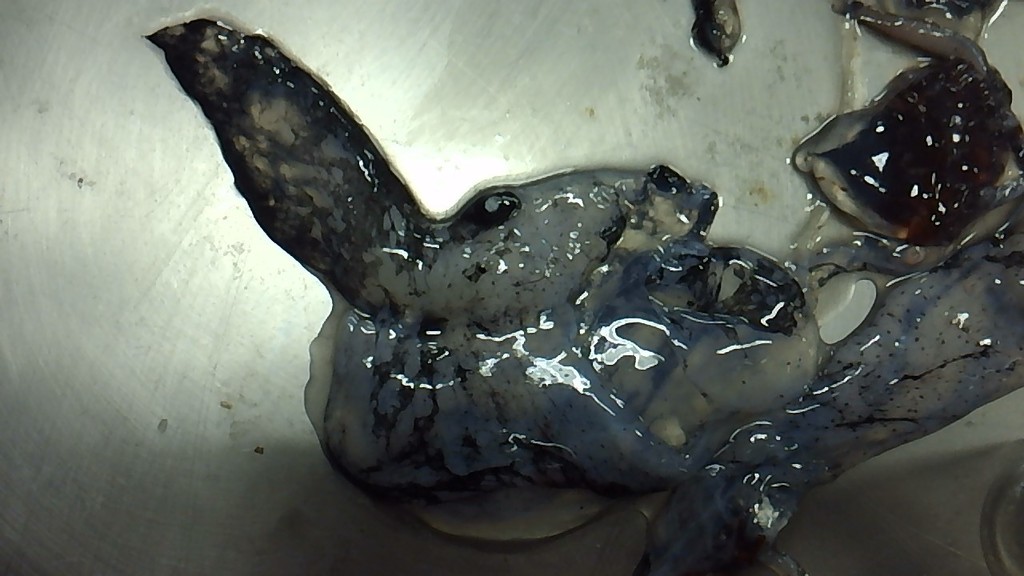
The vampire squid (Vampyroteuthis infernalis, lit. 'vampire squid from hell') is a small cephalopod found throughout temperate and tropical oceans in extreme deep sea conditions. The vampire squid uses its bioluminescent organs and its unique oxygen metabolism to thrive in the parts of the ocean with the lowest concentrations of oxygen. It has two long retractile filaments, located between the first two pairs of arms on its dorsal side, which distinguish it from both octopuses and squids, though its closest relatives are octopuses. As a phylogenetic relict, it is the only known surviving member of the order Vampyromorphida. The first specimens were collected on the Valdivia Expedition and were originally described as an octopus in 1903 by German teuthologist Carl Chun, but later assigned to a new order together with several extinct taxa.
Gallery
Ajouter des photos
Partagez vos photos de cette espèce (jusqu'à 20 à la fois) : elles sont vérifiées automatiquement, puis publiées.
Répartition
Occurrences observées (données GBIF). Les zones hors aire d'origine peuvent indiquer une présence introduite ou invasive.
Sources et crédits
Informations provenant de plusieurs sources vérifiées. Dernière mise à jour : .
Crédits photos (2)
- Photo : Alfonso Medellin (@medellin_ortiz) · CC BY-NC 4.0 · via iNaturalist
- Photo : Annie (@fishfiend3000) · CC BY-NC 4.0 · via iNaturalist
Mentions de licence
Texte disponible sous licence CC BY-SA 4.0. Il adapte notamment Wikipedia (CC BY-SA) : Vampire squid (Wikipédia, auteurs dans l’historique de l’article).
- Taxonomie : GBIF Backbone Taxonomy (CC BY 4.0)
- Carte : occurrences GBIF, fond © contributeurs OpenStreetMap (ODbL)
Détail : Sources et licences.
Discussion (0)
Aucun message pour l’instant. Lancez la discussion sur cette fiche (sources, précisions, débats éditoriaux).
Connectez-vous pour participer à la discussion.