
Atlantic pygmy octopus
Octopus joubini
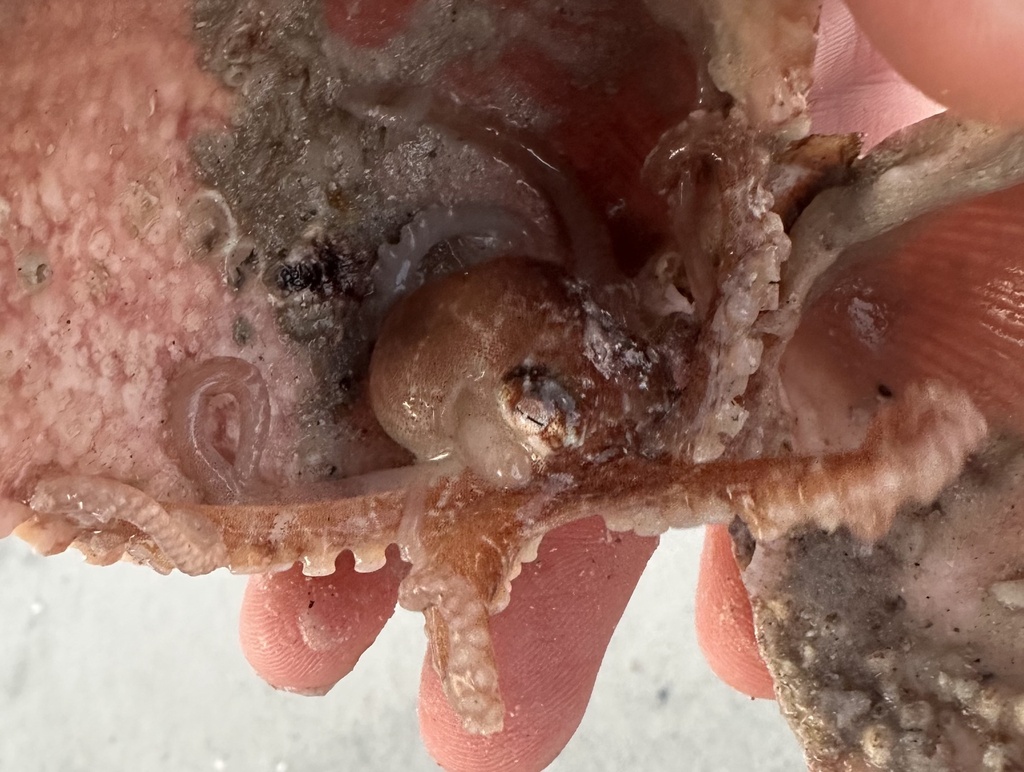
The Atlantic pygmy octopus (Octopus joubini), also known as the small-egg Caribbean pygmy octopus, is a small species of octopus in the order Octopoda.
- Kingdom
- Animalia
- Phylum
- Mollusca
- Class
- Cephalopoda
- Order
- Octopoda
- Family
- Octopodidae
- Genus
- Octopus
- Species
- Octopus joubini
Description
The Atlantic pygmy octopus (Octopus joubini), also known as the small-egg Caribbean pygmy octopus, is a small species of octopus in the order Octopoda. Fully grown, this cephalopod reaches a mantle length of 4.5 cm (1.8 inches) with arms up to 9 cm (3.5 inches) long. They are known for being intelligent creatures with keen senses, particularly good sight. O. joubini often seeks shelter from predators in empty clamshells, cans or small openings, pulling the opening closed with its arms, combining sand and gravel to form a lid. It employs the two defensive mechanisms typical of all octopuses: ink sacs and camouflage. All Cephalopods have chromatophores, special pigmented and light reflecting cells on their skin which allows them to change colour and texture quickly. They are found in the Atlantic Ocean, particularly in the tropical waters of the Caribbean and the Gulf of Mexico. The first holotype was collected in 1929 by Guy Coburn Robson and became a key factor in distinguishing between O. joubini and the closely related Octopus mercatoris (or in some cases, an unidentified species referred to as Octopus sp. X). Much of the information about O. joubini was obtained through laboratory studies of captive specimens and what little is known about their behavior in a natural environment is inferential.
Gallery
Ajouter des photos
Partagez vos photos de cette espèce (jusqu'à 20 à la fois) : elles sont vérifiées automatiquement, puis publiées.
Répartition
Occurrences observées (données GBIF). Les zones hors aire d'origine peuvent indiquer une présence introduite ou invasive.
Sources et crédits
Informations provenant de plusieurs sources vérifiées. Dernière mise à jour : .
Crédits photos (7)
- Photo : @jpknudsen · CC BY-NC 4.0 · via iNaturalist
- Photo : Brice C. (@brice_c) · CC BY-NC 4.0 · via iNaturalist
- Photo : @naturesacademy · CC BY-NC 4.0 · via iNaturalist
- Photo : Dan Schofield (@djscho) · CC BY 4.0 · via iNaturalist
- Photo : @spirula · CC BY-NC 4.0 · via iNaturalist
- Photo : @dollyjeb · CC BY-NC 4.0 · via iNaturalist
- Photo : @plawrynpx · CC BY-NC 4.0 · via iNaturalist
Mentions de licence
Texte disponible sous licence CC BY-SA 4.0. Il adapte notamment Wikipedia (CC BY-SA) : Atlantic pygmy octopus (Wikipédia, auteurs dans l’historique de l’article).
- Taxonomie : GBIF Backbone Taxonomy (CC BY 4.0)
- Carte : occurrences GBIF, fond © contributeurs OpenStreetMap (ODbL)
- Statut de conservation : Liste rouge de l'UICN, via Wikidata (CC0)
Détail : Sources et licences.
Discussion (0)
Aucun message pour l’instant. Lancez la discussion sur cette fiche (sources, précisions, débats éditoriaux).
Connectez-vous pour participer à la discussion.