
Neritina pulligera
Neritina pulligera
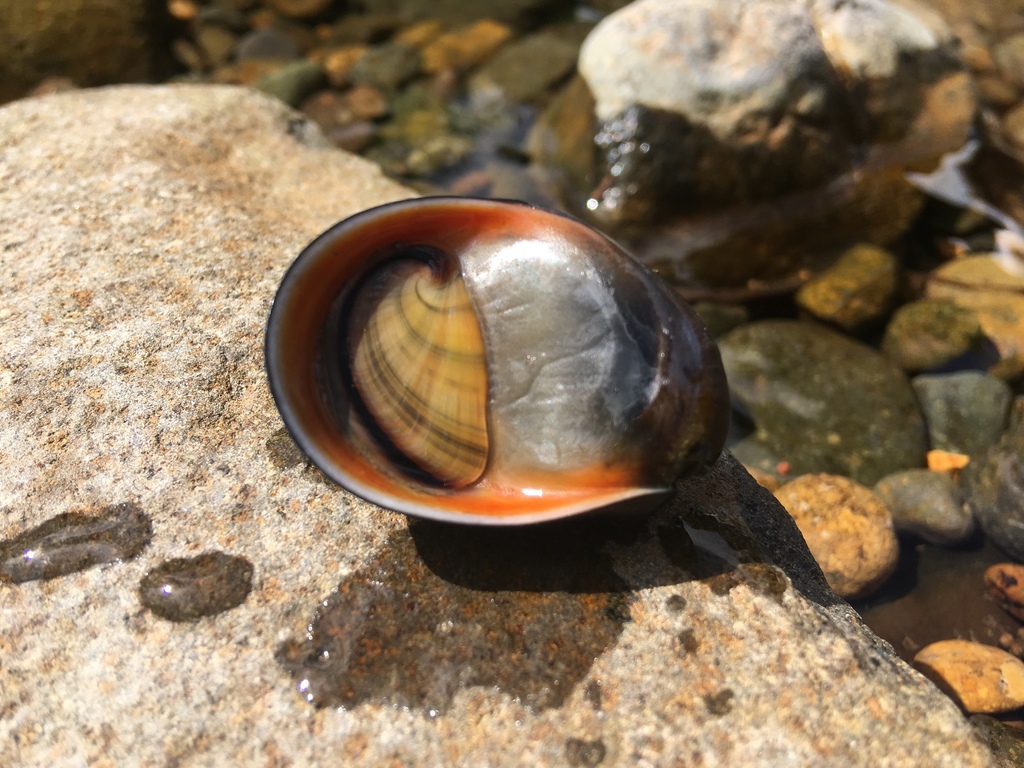
Neritina pulligera, also known as dusky nerite, black racer, black helmet snail, or steel helmet snail, is a species of freshwater snail of the family Neritidae.
- Kingdom
- Animalia
- Phylum
- Mollusca
- Class
- Gastropoda
- Order
- Cycloneritida
- Family
- Neritidae
- Genus
- Neritina
- Species
- Neritina pulligera
Description
Neritina pulligera, also known as dusky nerite, black racer, black helmet snail, or steel helmet snail, is a species of freshwater snail of the family Neritidae. Its shell is olive-green to black, typically 20–26 mm (0.79–1.0 in) long, and covers almost the snail's entire body. N. pulligera has an operculum, a "trapdoor" used by the snail to close its shell. Females have a specialised organ (the crystal or reinforcement sac) which stores solid material used to produce a hardened egg capsule. N. pulligera was first described in 1767 by Carl Linnaeus and is the type species (reference species) of the genus Neritina. N. pulligera is native across the Indo-west Pacific. Despite being sold worldwide as part of the aquarium trade, it has not been recorded outside of its native range as of 2023. The species lives in fast-flowing streams and rivers. Females attach their eggs on the shells of other living snails, which reduces the risk of predation by other snails. Like other neritids, larvae of N. pulligera drift downstream to the sea and juveniles migrate back upstream to reproduce. During this migration, they often carry juveniles of the smaller Neritina asperulata, which "hitchhike" on N. pulligera to save energy. N. pulligera is a popular ornamental species in aquariums and often introduced to combat algae growth. Since juveniles do not develop in fresh water, all traded individuals are wild caught, which raises concerns about impacts of the practice on local N. pulligera populations.
Gallery
Ajouter des photos
Partagez vos photos de cette espèce (jusqu'à 20 à la fois) : elles sont vérifiées automatiquement, puis publiées.
Répartition
Occurrences observées (données GBIF). Les zones hors aire d'origine peuvent indiquer une présence introduite ou invasive.
Sources et crédits
Informations provenant de plusieurs sources vérifiées. Dernière mise à jour : .
Crédits photos (4)
- Photo : @bindiyarashni · CC BY-NC 4.0 · via iNaturalist
- Photo : Juan José Areso (@juanjo37) · CC BY-NC 4.0 · via iNaturalist
- Photo : Liselle Santos (@liselle) · CC BY-NC 4.0 · via iNaturalist
- Photo : @diplommatina · CC BY-NC 4.0 · via iNaturalist
Mentions de licence
Texte disponible sous licence CC BY-SA 4.0. Il adapte notamment Wikipedia (CC BY-SA) : Neritina pulligera (Wikipédia, auteurs dans l’historique de l’article).
- Taxonomie : GBIF Backbone Taxonomy (CC BY 4.0)
- Carte : occurrences GBIF, fond © contributeurs OpenStreetMap (ODbL)
- Statut de conservation : Liste rouge de l'UICN, via Wikidata (CC0)
Détail : Sources et licences.
Discussion (0)
Aucun message pour l’instant. Lancez la discussion sur cette fiche (sources, précisions, débats éditoriaux).
Connectez-vous pour participer à la discussion.