
Gonatus onyx
Gonatus onyx
Gonatus onyx is in the class Cephalopoda and in the phylum Mollusca.
- Kingdom
- Animalia
- Phylum
- Mollusca
- Class
- Cephalopoda
- Order
- Oegopsida
- Family
- Gonatidae
- Genus
- Gonatus
- Species
- Gonatus onyx
Description
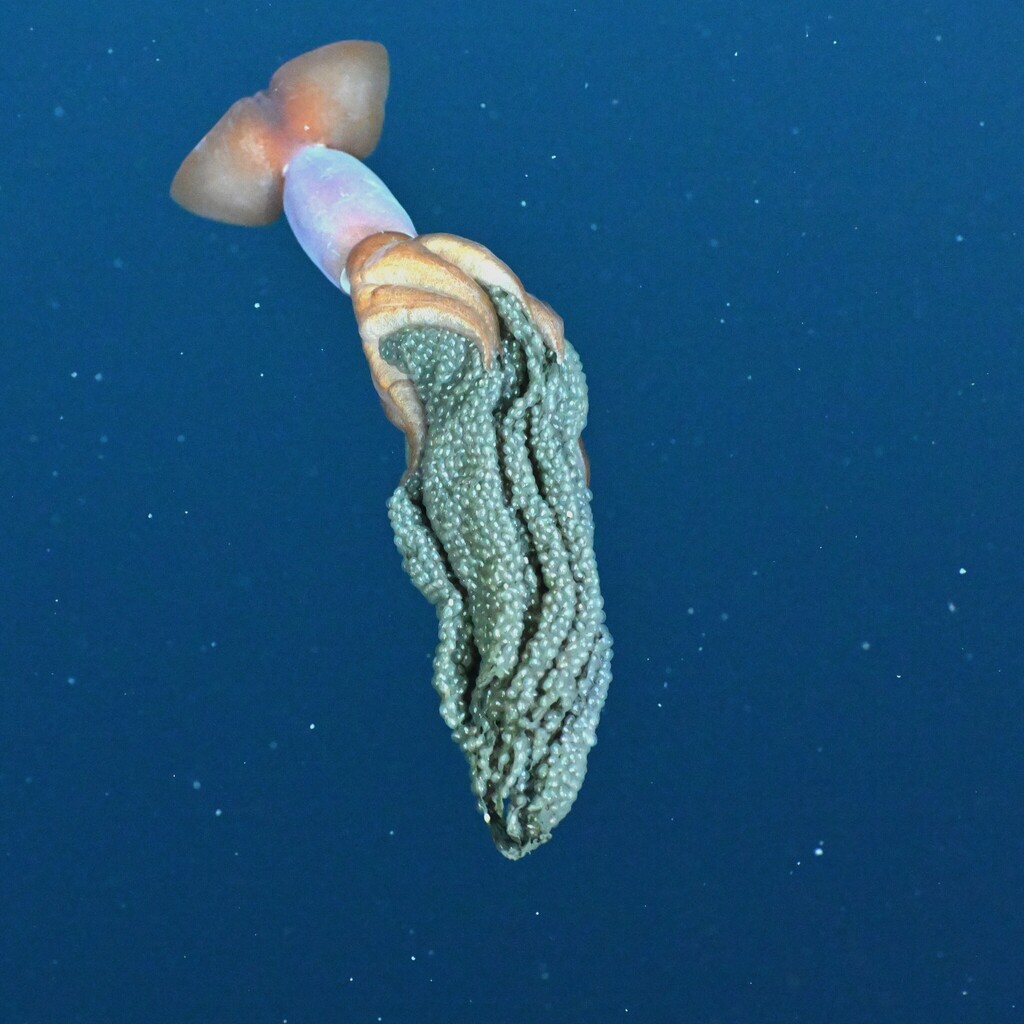
Gonatus onyx is in the class Cephalopoda and in the phylum Mollusca. It is also known as the clawed arm hook squid or the black-eyed squid. It got these names from the characteristic black eye and from its two arms with clawed hooks on the end that extend a bit further than the other arms. It is a squid in the family Gonatidae, found most commonly in the northern Pacific Ocean from Japan to California. They are one of the most abundant cephalopods off the coast of California, mostly found at deeper depths, rising during the day most likely to feed. The mantle size of G. onyx has been known to reach up to 18 cm (7.1 in). G. onyx size varies from region to region, with larger members of the species being found in warmer areas. The type specimen was collected off the coast of California and was deposited at the Santa Barbara Museum of Natural History.
Ajouter des photos
Partagez vos photos de cette espèce (jusqu'à 20 à la fois) : elles sont vérifiées automatiquement, puis publiées.
Répartition
Occurrences observées (données GBIF). Les zones hors aire d'origine peuvent indiquer une présence introduite ou invasive.
Sources et crédits
Informations provenant de plusieurs sources vérifiées. Dernière mise à jour : .
Crédits photos (1)
- Photo : Fisheries and Oceans Canada (@dfo_deep_sea_ecology) · CC BY-NC 4.0 · via iNaturalist
Mentions de licence
Texte disponible sous licence CC BY-SA 4.0. Il adapte notamment Wikipedia (CC BY-SA) : Gonatus onyx (Wikipédia, auteurs dans l’historique de l’article).
- Taxonomie : GBIF Backbone Taxonomy (CC BY 4.0)
- Carte : occurrences GBIF, fond © contributeurs OpenStreetMap (ODbL)
- Statut de conservation : Liste rouge de l'UICN, via Wikidata (CC0)
Détail : Sources et licences.
Discussion (0)
Aucun message pour l’instant. Lancez la discussion sur cette fiche (sources, précisions, débats éditoriaux).
Connectez-vous pour participer à la discussion.